On the Beginnings of the Notation of Georgian Folk Songs
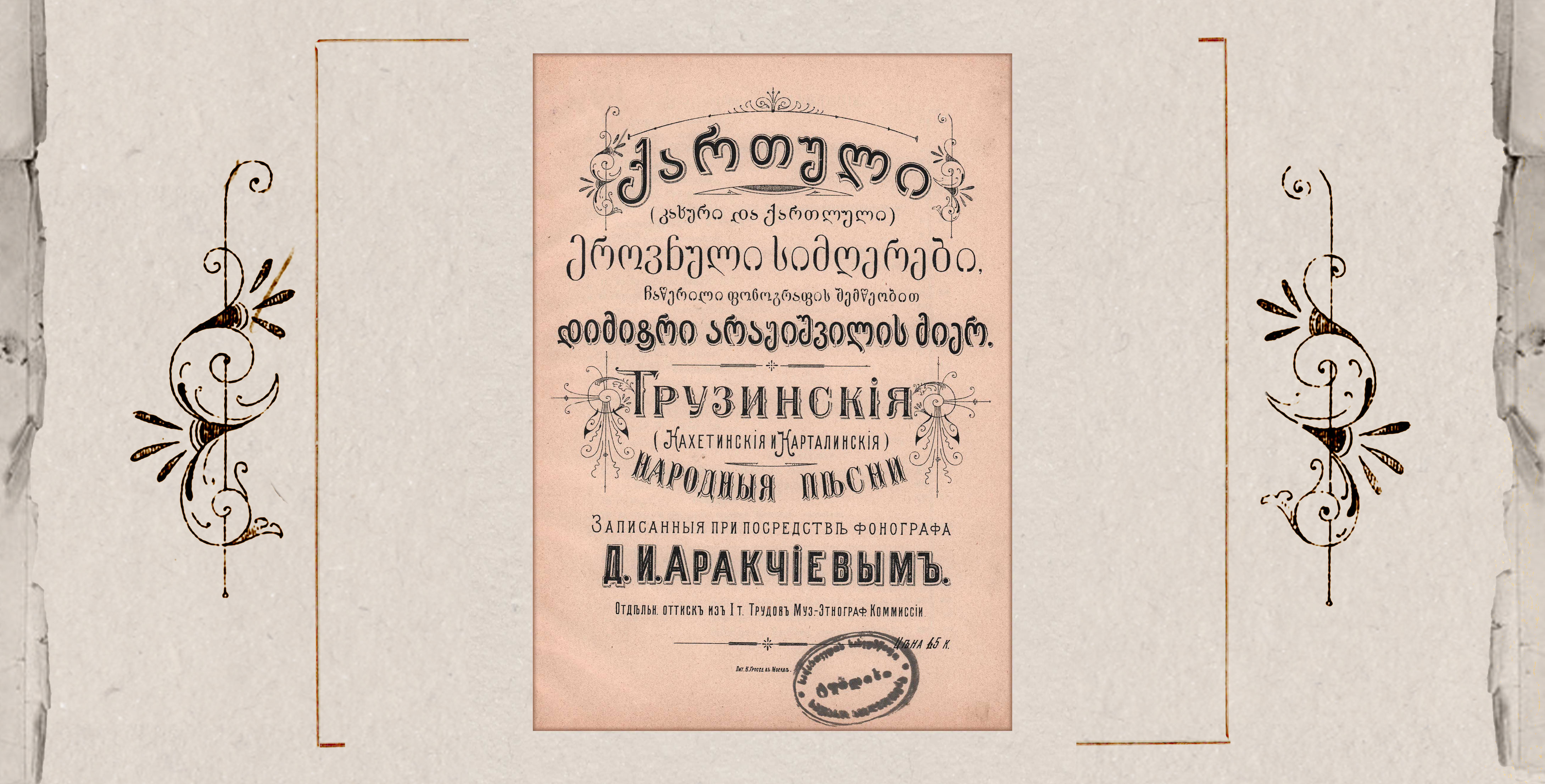
The history of documenting Georgian traditional music spans more than a millennium. Here I am referring to the neumatic notation found in Georgian hymnographic manuscripts, the earliest examples of which date back to the tenth century. Despite the existence of these early neumed chant manuscripts, our understanding of the musical dimension of Georgian chant relies primarily on examples transcribed into European five-line staff notation during the nineteenth century.
Naturally, alongside ecclesiastical chant, folk (secular) music also formed an active part of Georgia’s creative life in earlier periods. However, there is no evidence that it was recorded using any kind of musical notation—not only before the tenth century, but indeed at any time prior to the nineteenth century. As in other European countries, the nineteenth century in Georgia witnessed the emergence of folklore studies as an academic discipline. The very term folklore itself, after all, was coined only in 1846 by the English writer and scholar William Thoms.[1] The foundations of Georgian musical folklore studies—that is, Georgian ethnomusicology—were likewise established toward the end of the nineteenth century. Its founder, as is well known, is recognized to be Dimitri Arakishvili. It is noteworthy that the emergence of this field of music scholarship in Georgia coincided with the development of the discipline in both Europe and Russia.
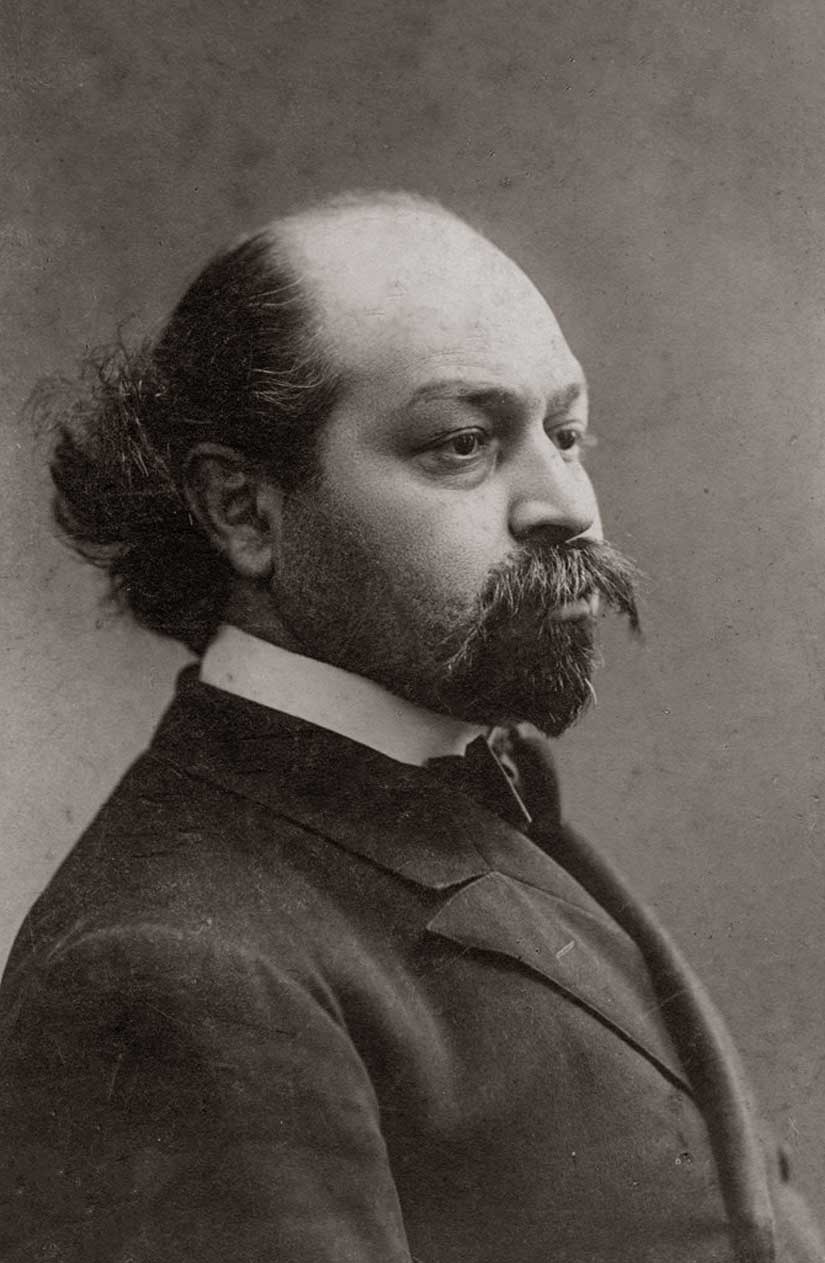
Dimitri Arakishvili
The invention of the phonograph by Thomas Edison in 1877 revolutionised the history of music[2] and, among its many consequences, provided a landmark impetus and unprecedented opportunity for the recording and preservation of traditional music. Only twenty-four years after its invention, in 1901, the sound recording device reached Georgia, marking the beginning of the establishment and subsequent expansion of the Georgian sound archive.
Today, when only a handful of elderly master singers who perform in the traditional, authentic manner remain, it is only natural that, in the context of a rich sound archive, the primary source for both the practical and scholarly study of Georgian folk music is archival sound recordings. This is justified, since it is only through sound recordings (and, of course, video material) that it is possible to document and perceive all the distinctive features of ethnomusic. Unlike Georgian chant, for which the vast majority of material—thousands of examples—is preserved in notated form, in the case of folk song audio recordings numerically far outnumber notated sources. However, I believe that the somewhat sceptical attitude towards musical notation in contemporary Georgian ethnomusicology, and particularly in the field of performance practice, as well as its relative neglect, is a mistake comparable to the one that, for decades, characterised the treatment of thousands of notated chant examples.
In relation to the above topic, several key questions arise:
- When does the history of the notation of Georgian folk music and song begin?
- What kinds of insights can early musical notated transcriptions provide?
- What significance and function do folk music transcriptions carry, particularly those produced before the advent of the phonograph in Georgia?
In order to address these questions, it became necessary to consult old manuscripts. To this end, I visited various archives in Tbilisi where nineteenth-century notated manuscripts of Georgian folk music might be preserved. In particular, I visited the National Archives of Georgia, the National Centre of Manuscripts, the Tbilisi State Conservatoire, the State Folklore Centre, and the Art Palace (at this stage, I have not yet had access to archives in other cities or to private collections).
Most of the manuscript sources documenting Georgian folk music that I was able to consult are either dated to the twentieth century or are undated. For example, the earliest manuscripts preserved at the State Folklore Centre date from 1900, while the Folklore Department of the Tbilisi State Conservatoire also holds only twentieth-century materials. In the National Archives of Georgia, I have so far identified only a small number of nineteenth-century musical manuscripts.
According to the current state of research, among the above-mentioned archives, the Art Palace appears to hold the oldest known manuscript of notated folk music. Within its manuscript and archival collections, specifically in the D. Arakishvili archive, there is a manuscript of Svan songs notated by V. Tepzov,[3] dated 9 October 1890 (I use “so far” deliberately, as further systematic research in this field is still required).
However, the fact that the notation of folk songs had begun much earlier is also confirmed by musical collections published in Georgia, the history of which starts in 1878 (it is worth emphasising that in Georgia, systematic publication of musical notation began only one year after the invention of Edison’s phonograph). In particular, the first such collection is Samshoblo Khmebi [Voices of the Homeland],[4] compiled by Mikheil Matchavariani. It should also be noted that this is the same M. Matchavariani who was appointed in 1860 by the “Committee for the Revival of Georgian Chant” as the first recorder of liturgical chants in musical notation. However, his work did not produce the desired results, and the process of chant transcription was temporarily suspended (a task later undertaken by Pilimon Koridze).
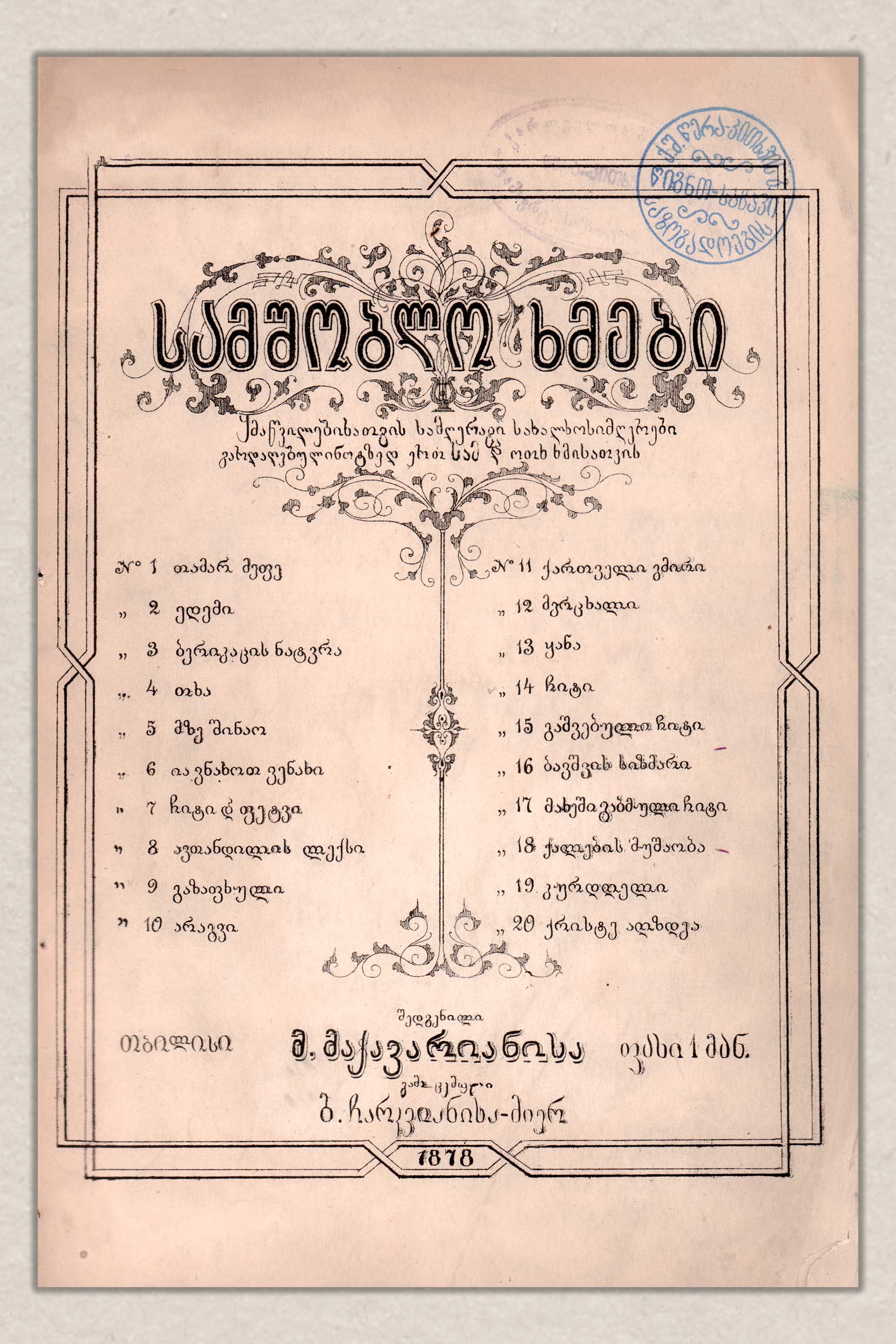
Mikheil Matchavariani’s collection "Samshoblo Khmebi" [Voices of the Homeland]
As in the case of chant, M. Matchavariani’s collection Samshoblo Khmebi, which, in the author’s own words, presents “folk songs for young people to sing,” raises several questions regarding the melodic, intonational, and rhythmic accuracy and coherence of the transcriptions. Nevertheless, the collection remains an important source of material from both historical and musical–textual perspectives. It contains 20 songs, among which, alongside older traditional examples, there are also newly composed songs influenced by European harmony. As an example of an older song, we present the first piece in the collection, “Tamar Mepe” (“King Tamar”).
The difference between the well-known version of this song and the notated example provided in the collection is clearly noticeable. The transcriber appears to have chosen a metre of two quarter-notes instead of the compound 6/8 time typical of this round dance song. Of particular interest is the cadential formula, in which the first voice joins the other voices in unison through a leap of a fourth. While this cadence is not unusual in itself, it should be noted that it occurs particularly frequently in early notations of folk songs.
Attention should also be drawn to a letter dated 1878 by Iakob Gogebashvili,[5] which refers to his intention to include notated folk songs in his Deda Ena [Mother Tongue]:
Two years ago, I published Mother Tongue. In it, I included many works of folklore that children could absorb with full understanding and enthusiasm. What was lacking, however, were folk songs transcribed into musical notation. The reader is well aware of the great importance of folk and youth songs for the progress and success of schooling. Singing is rightly considered, in our time, to be the very soul and heart of the school. It develops the child’s ear, accustoms them to harmony, weakens and eradicates roughness, and cultivates tenderness and refinement in their heart. In a word, it ennobles their nature.[6]
It is noteworthy that the author of Mother Tongue also provides an account regarding the authenticity of folk songs and the source of their transmission:
Where did we learn folk songs from, and did this knowledge have a pure and uncorrupted source? In response to this question, we inform the reader that the writer of these lines is a son of the people, born in Kartli and raised from birth in the lap of the people. […] In the deepest corners of my memory, dozens of folk motifs have remained intact—motifs that made a profound impression on me and filled my youthful heart with even greater delight. These are the very motifs and songs that we needed to transcribe into musical notation and supplement with materials from other sources.[7]
In the same letter, the author describes his collaboration with Mikheil Matchavariani:
We were still in the preparatory phase of the work when, one morning, Mikheil Matchavariani unexpectedly came to visit me. […] The next day we immediately began transcribing my motifs. Matchavariani was very pleased with them; he greatly liked them and diligently set about notating them. I sang, Matchavariani wrote them down; later he himself performed them from notation, while I was to identify and correct any errors. After several months of work, a collection of twenty youth songs was compiled. However, we did not consider the work finished. We decided to verify the accuracy of the transcriptions with the help of a piano. We did not need to search for or request a pianist, as this task was willingly undertaken by Elena (Dimitri’s daughter) Kipiani, who is accustomed to diligent and devoted assistance in all beneficial public undertakings.[8]
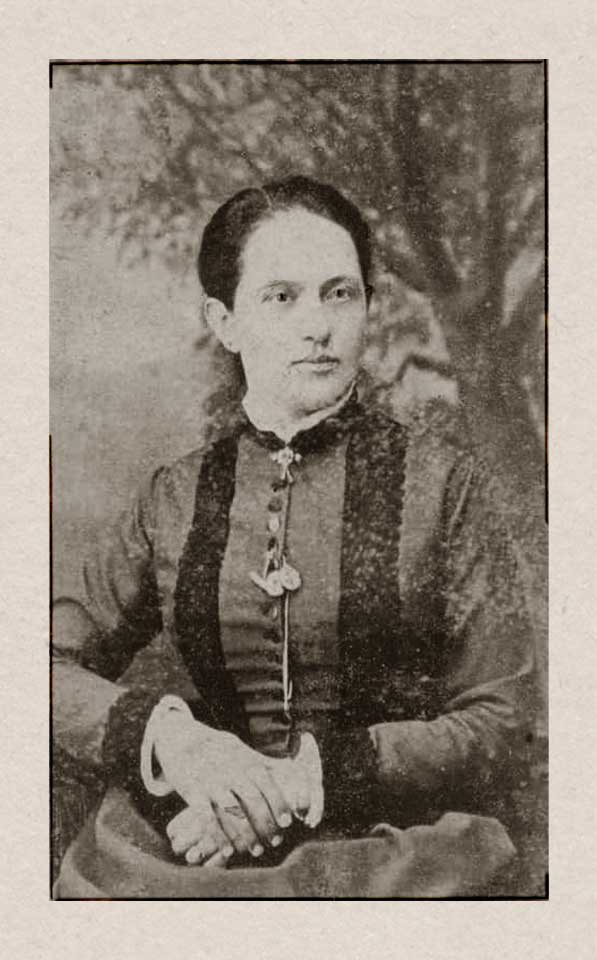
Elene Kipiani
Iakob Gogebashvili, who remained faithful to the idea of transcribing Georgian folk songs into musical notation, was at the same time quite cautious toward this then still relatively new undertaking. This is evidenced by his own words:
We used every possible measure to ensure that the publication of the songs would be flawless, but since errors could still potentially occur, we decided that the first edition should be a small one—only 300 copies. We intended to listen to the opinions of knowledgeable individuals and, if necessary, make revisions for a second edition.[9]
In the editions of Mother Tongue known to us, the folk songs transcribed by Mikheil Matchavariani into musical notation are not present. However, in the 1912 edition, published in the year of the author’s death, ten folk songs notated by Ia Kargareteli, Zakaria Chkheidze, and Dimitri Arakishvili are included.[10]
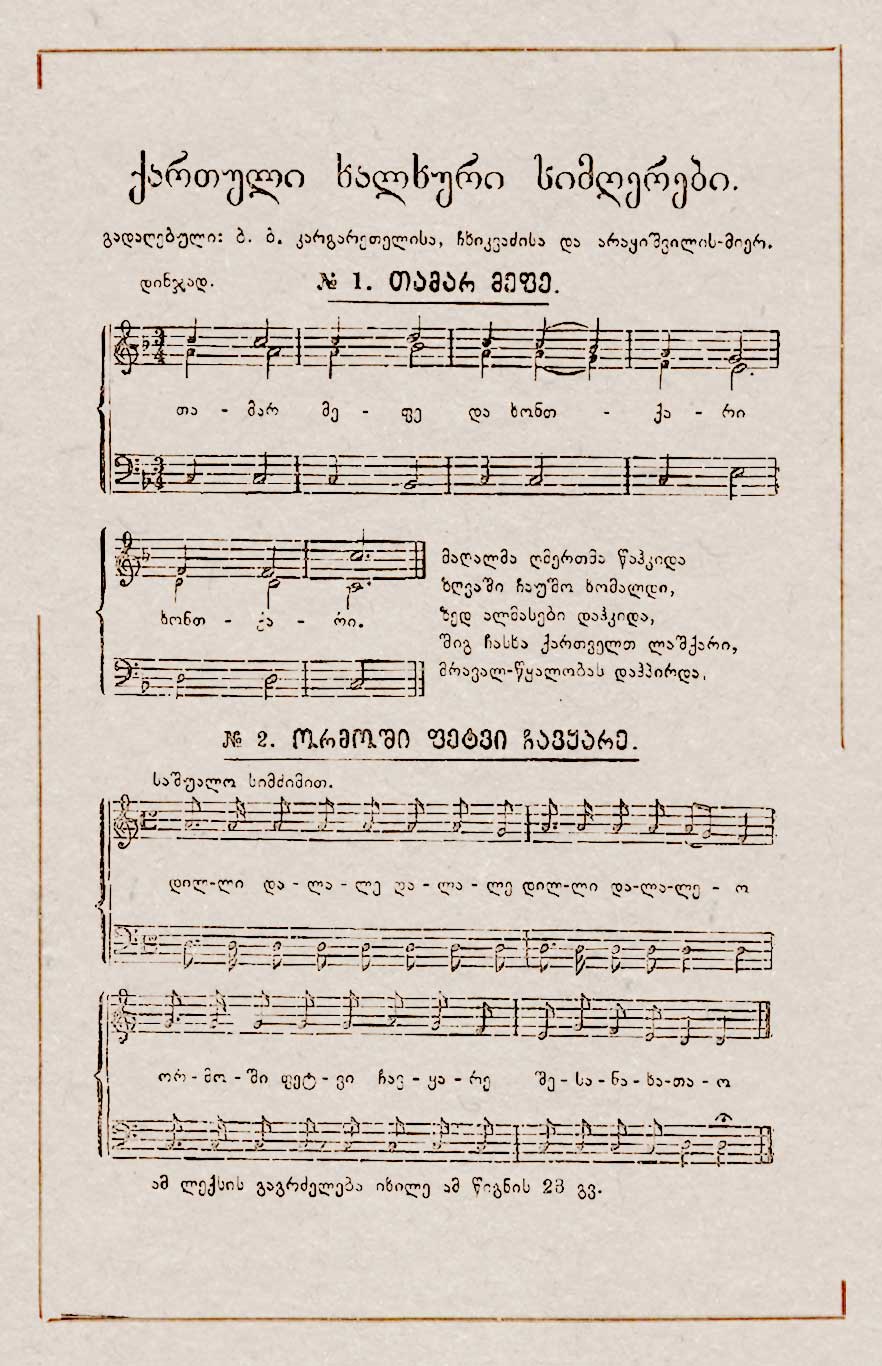
Georgian folk song notation printed in Iakob Gogebashvili’s "Deda Ena" [Mother Tongue]
Our aim is to draw attention, on the basis of early examples of folk song transcription, to the original musical features preserved in these early notated sources. These musical documents, which provide valuable evidence for both a general and a retrospective view of Georgian musical folklore and the development of individual examples, have unjustly remained outside proper scholarly attention.
Following Mikheil Matchavariani’s Samshoblo Khmebi [Voices of the Homeland], the second published collection of notated folk songs is Andria Benashvili’s Kartuli Khmebi [Georgian Voices],[11] which is, at the same time, also the first Georgian musical publication of liturgical chants.
|
Andria Benashvili |
Andria Benashvili’s collection "Kartuli Khmebi" [Georgian Voices] |
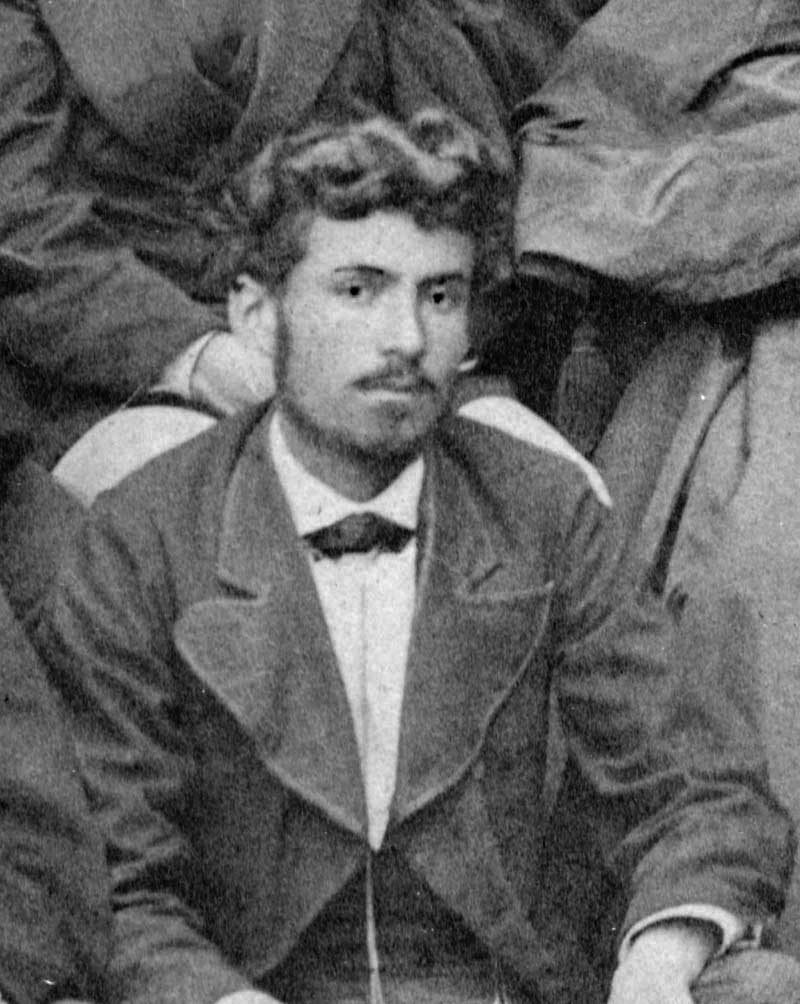
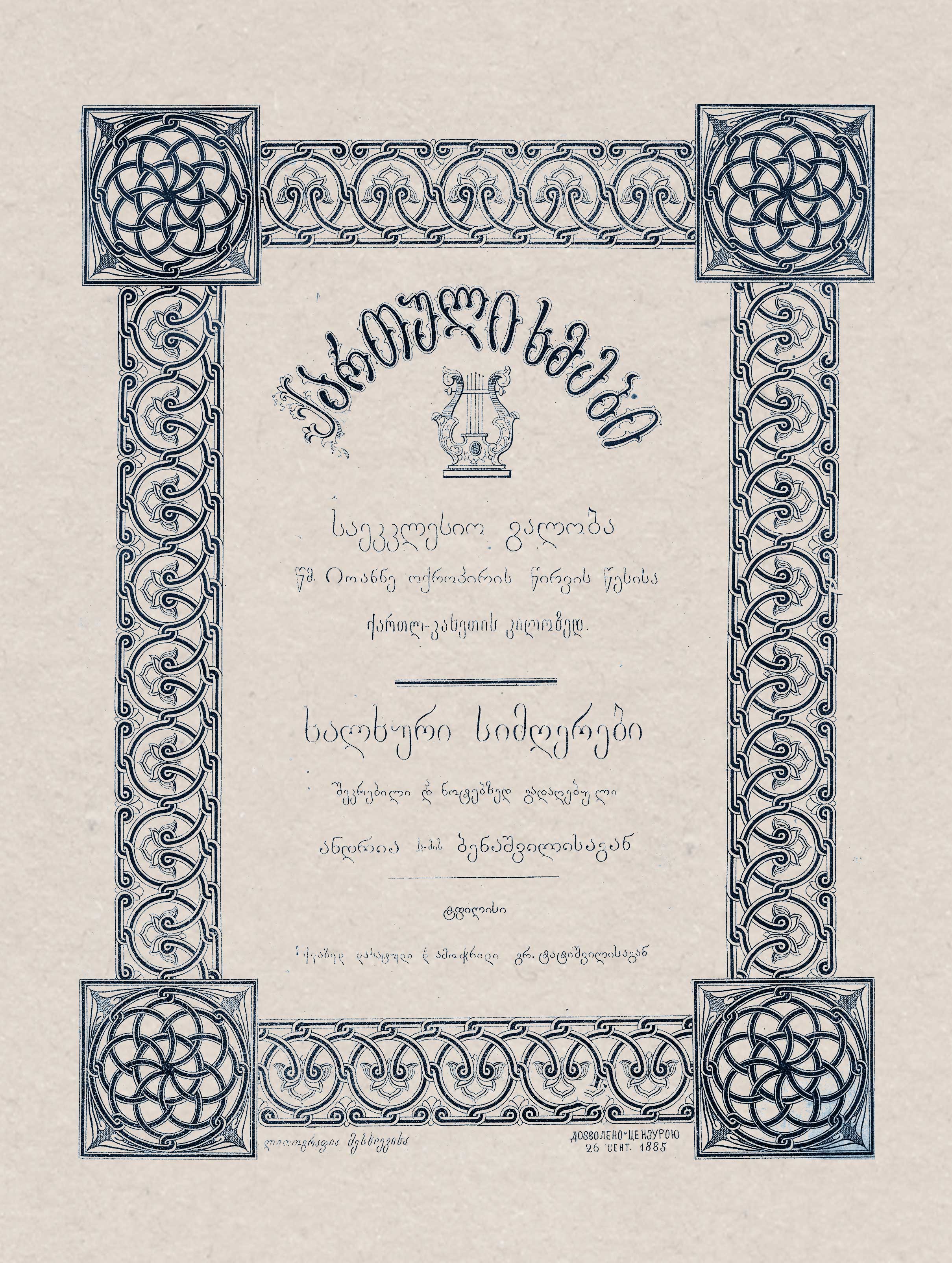
This collection, compiled and notated by Benashvili, was published in 1885 and, unlike the previous collection, is entirely oriented toward older traditional melodies. It contains 32 songs from various regions of Georgia (Kiziki, Kakheti, Imereti, Guria, Samegrelo). In the foreword to the collection, Andria Benashvili writes: “I have transcribed Georgian songs from skilled singers, and I have often had them performed by my choir in theatres so that knowledgeable individuals could listen and express their opinions.”[12]
As a sample from this collection, we present the earliest known notated version of the Gurian song “Khasanbegura.” In terms of form, it is, as usual, intended for trio and antiphonal performance, but structurally it differs from all known Gurian and Adjarian variants of the song. The upper voice of the trio is not a krimanchuli, but rather a gamqivani or so-called “ts’vrili” (thin voice), which suggests a certain proximity to the Adjarian tradition, although it still remains clearly distinct from it. This transcription is also noteworthy because it is accompanied by an extensive textual version of “Khasanbegura,” which does not appear in any other known notated or audio recording.
Not only Georgians were involved in the transcription of Georgian folk songs into musical notation. In this regard, it is noteworthy that the musical director of the first Georgian ethnographic choir, the “Georgian Choir,” founded by Lado Aghniashvili in 1885, was the Czech musician Josef Ratil, who transcribed the Kakhetian “Alilo,” published at the end of 1886.[13]
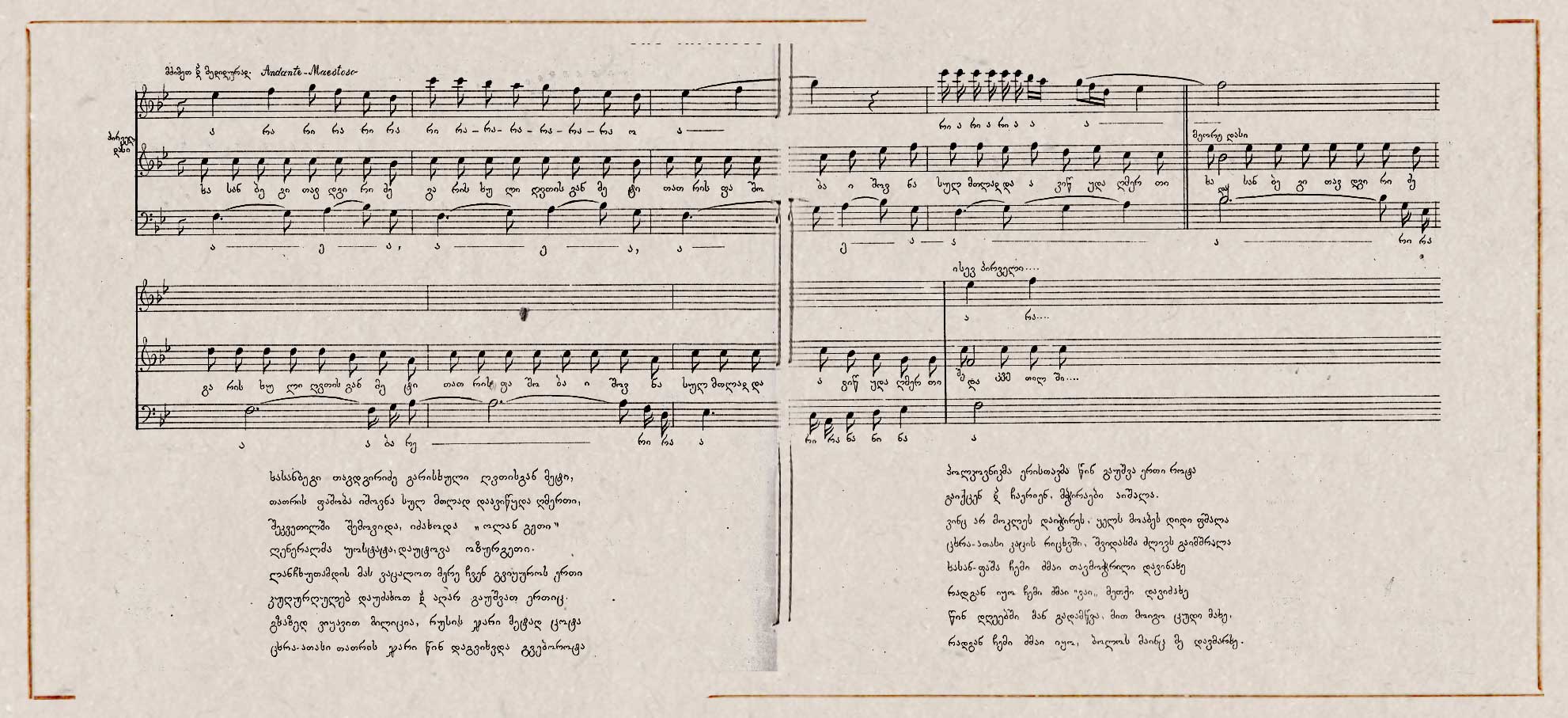
Song "Khasanbegura" from Andria Benashvili’s collection "Kartuli Khmebi" [Georgian Voices]
Given that jubilations of free metre, ornaments, and melodic embellishments in Kakhetian song—what we refer to as chakhvevebi—still present difficulties for musical notation today and inevitably involve a degree of convention, this transcription is fully performable and offers an authentic example of a Kakhetian Alilo.
In 1896, a collection of folk songs compiled by Zakaria Chkhikvadze was published under the title Salamuri [The Reed Pipe]. It contains 35 songs. It is noteworthy that the only surviving copy of this collection preserved in the National Library belonged to the priest and chanter Pilimon Karbelashvili, as indicated by his signature on the title page. A song that particularly drew my attention in this collection is “They Praise the Daughter of the Diambegi.”[14] Interestingly, it differs both musically and textually from the well-known song “From the Diambegi”:
They praise the daughter of the Diambegi; she appears on the balcony,
his daughter-in-law was more beautiful than she; she places her foot in a graceful, sidelong movement,
playfully moving her toes on the golden carpet.
One eye remained on me, the other on the Diambegi.
In the musical notation, the title is accompanied by a note indicating that the song is to be performed “in the monastic mode.” While it is difficult to argue that the verbal text itself is monastic in character, from the perspective of its musical language the song clearly resonates with the liturgical tradition of the so-called “Karbelashvili mode” [Karbelaant Kilo]. In addition to its general harmonic affinity with the Karbelashvili mode of chant, the song exhibits a type of voice-leading that is unusual in folk music but highly characteristic of Georgian liturgical chant—parallel sixth–octave sonorities (parallel second-inversion seventh chords). The ending of the song’s verse also closely resembles the sixth-mode Vespers hymn “Ghvtismshobelo Kaltulo” (“O Virgin Mother of God”) in the Karbelashvili mode, differing only in its final cadence: whereas the hymn concludes in unison, the song ends on a perfect fifth.
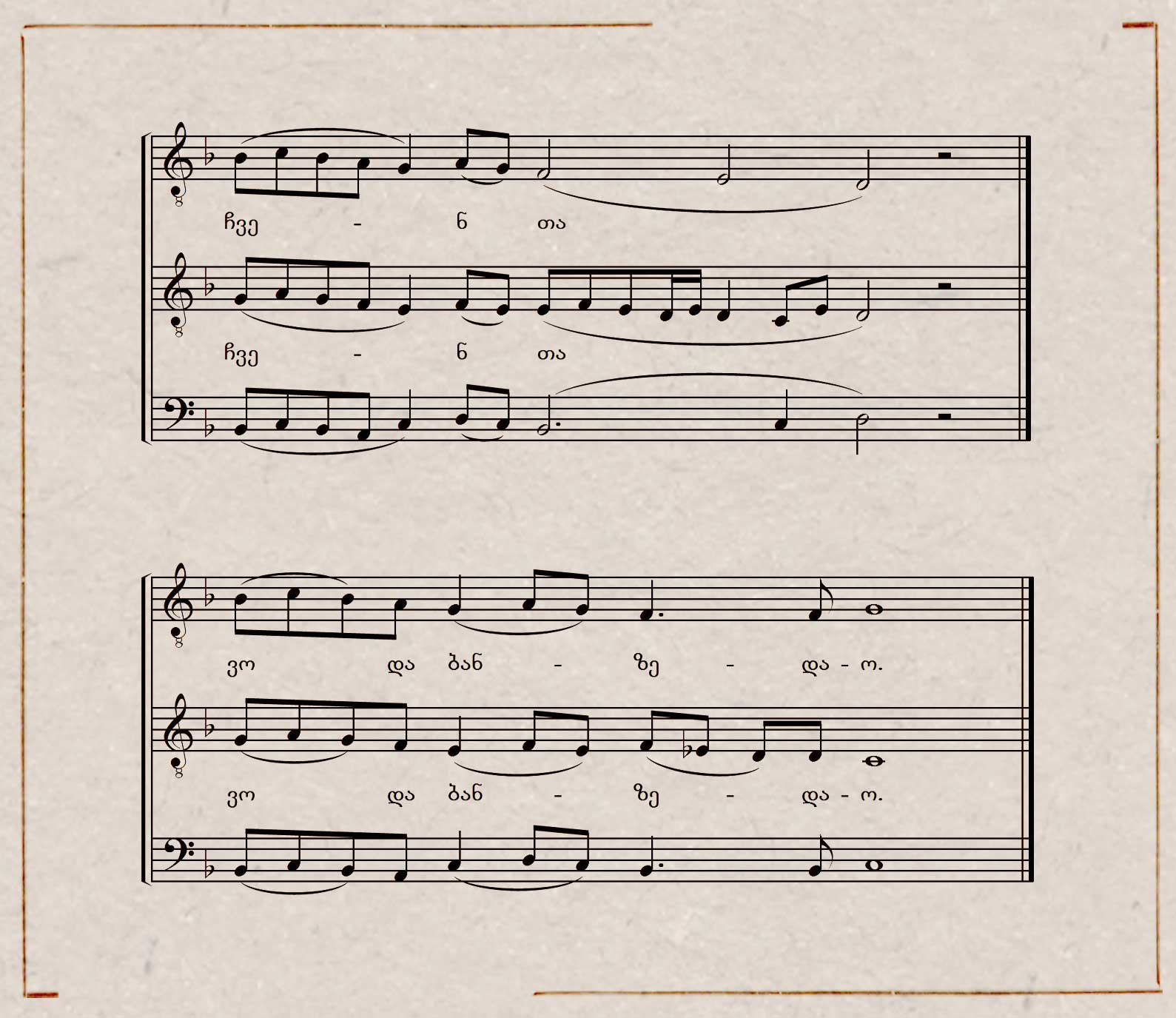
This song may be regarded as evidence that a phenomenon analogous to the so-called salkhino sagalobeli (“feasting chant”), well known in western Georgia, also existed in eastern Georgia. It thus reflects the use of liturgical melodies in a non-ecclesiastical, non-liturgical context. From this perspective, the example is undoubtedly unique.
As a maritime country, Georgia would be expected to possess a substantial repertoire of songs associated with the sea, boating, and fishing. In reality, however, songs on these themes are exceedingly rare.
One particularly noteworthy example is found in the archive of the Society for the Spreading of Literacy among Georgians, preserved in the National Library of Georgia. It appears in the Collection of Georgian National Three-Part Songs, published in Kutaisi in 1918.[15] The song in question is “Osos Varado.”
|
Nikoloz Sharabidze’s "Collection of Georgian National Three-Part Songs" |
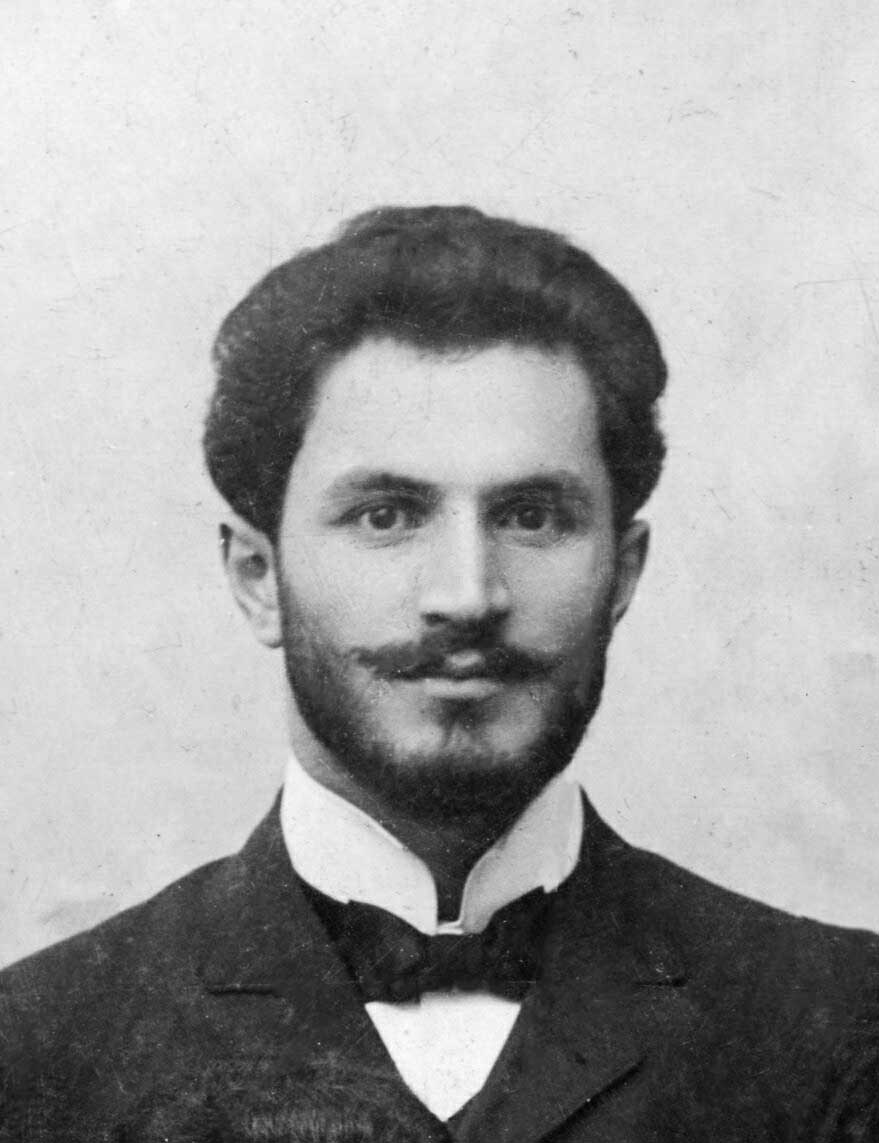
Nikoloz Sharabidze |
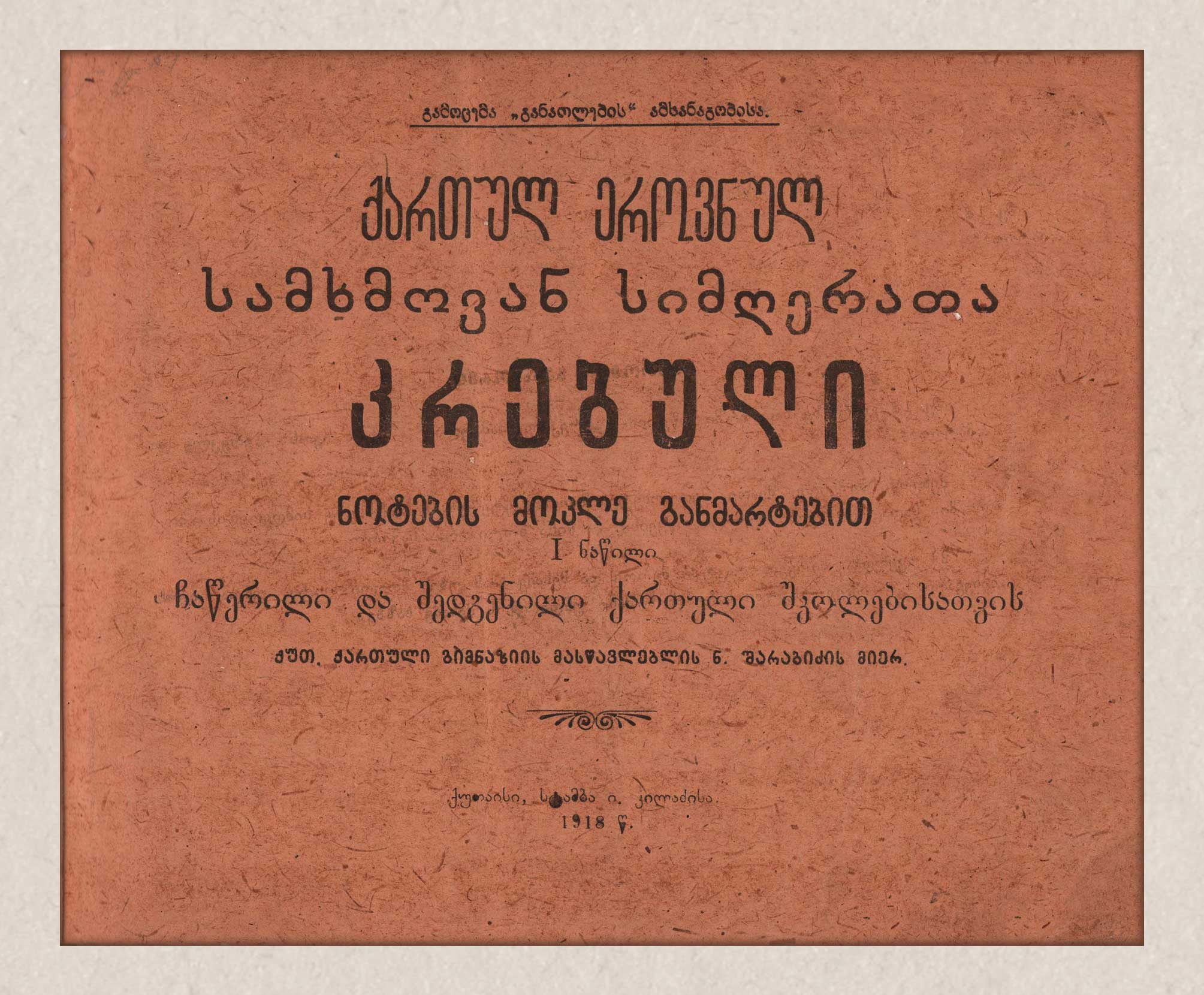
On the title page of the song, the compiler of the collection, Nikoloz Sharabidze, notes in parentheses: “(Song of the Boatmen).” Although the song is entirely based on samgherisi (textless, vocable-based singing syllables) and does not convey any specific narrative content, it nonetheless represents a rare genre phenomenon. The compiler indicates the regional affiliation of the song; however, in the introduction to the book he states that he has transcribed Imeretian, Gurian, Megrelian, and Rachian songs. Based on its samgherisis, it can be readily determined that “Osos Varado” is a Megrelian song, and it is entirely plausible that it belongs to the Samurzakano region.
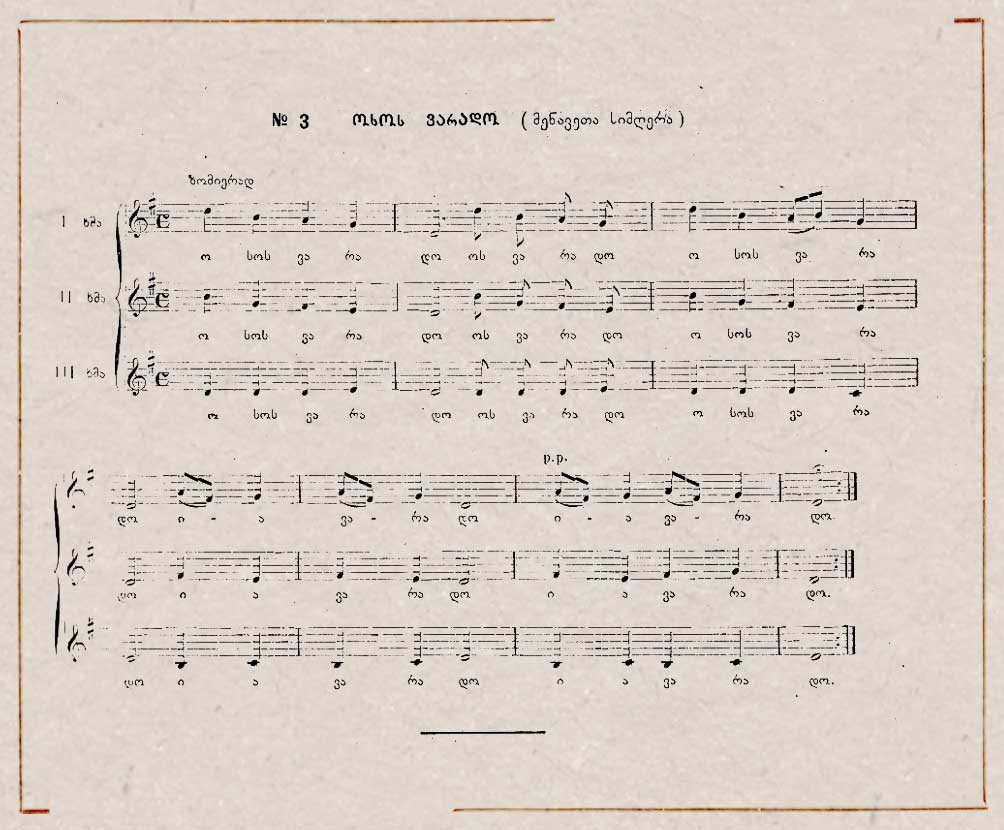
"Song of the Boatmen," from Nikoloz Sharabidze’s collection
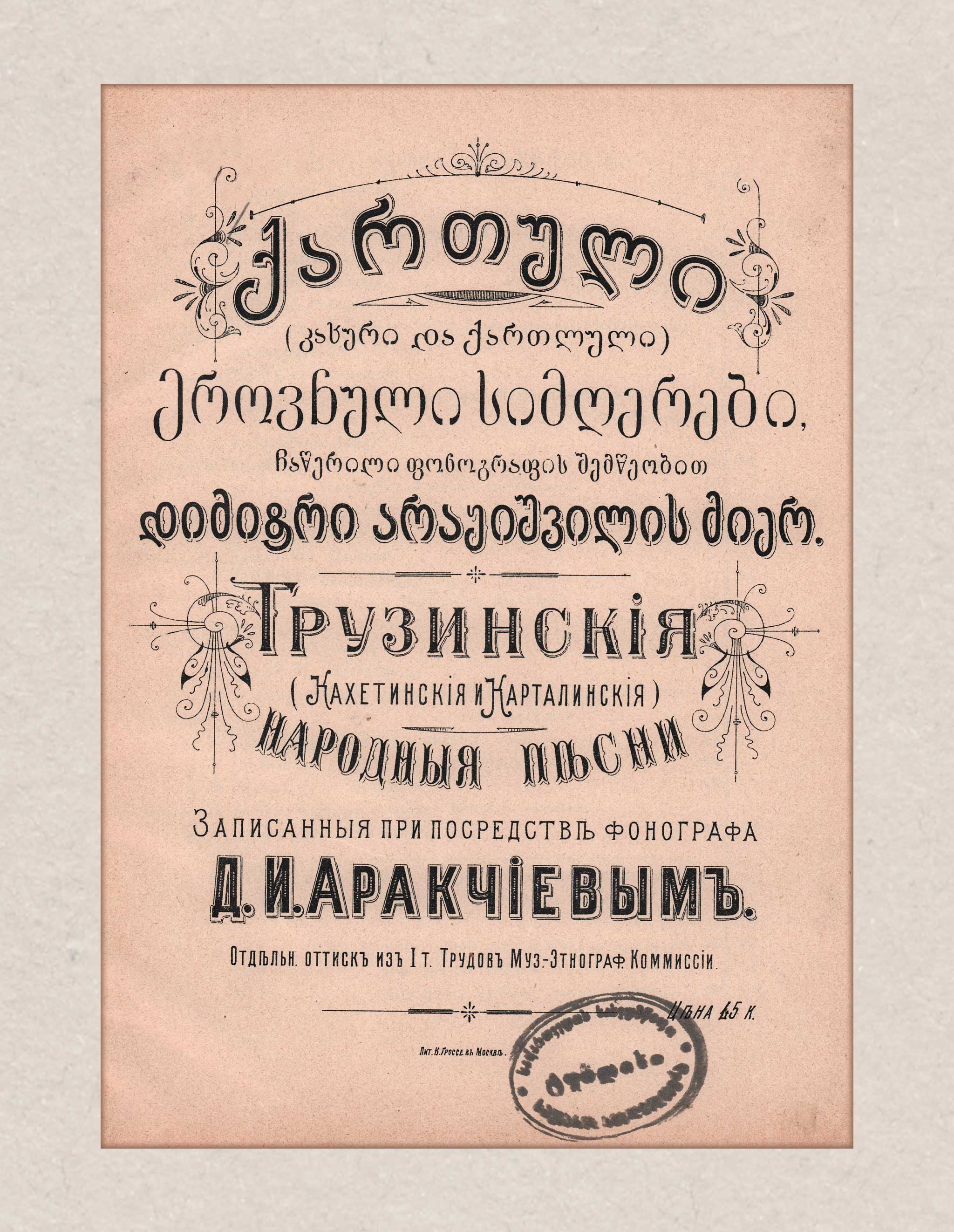
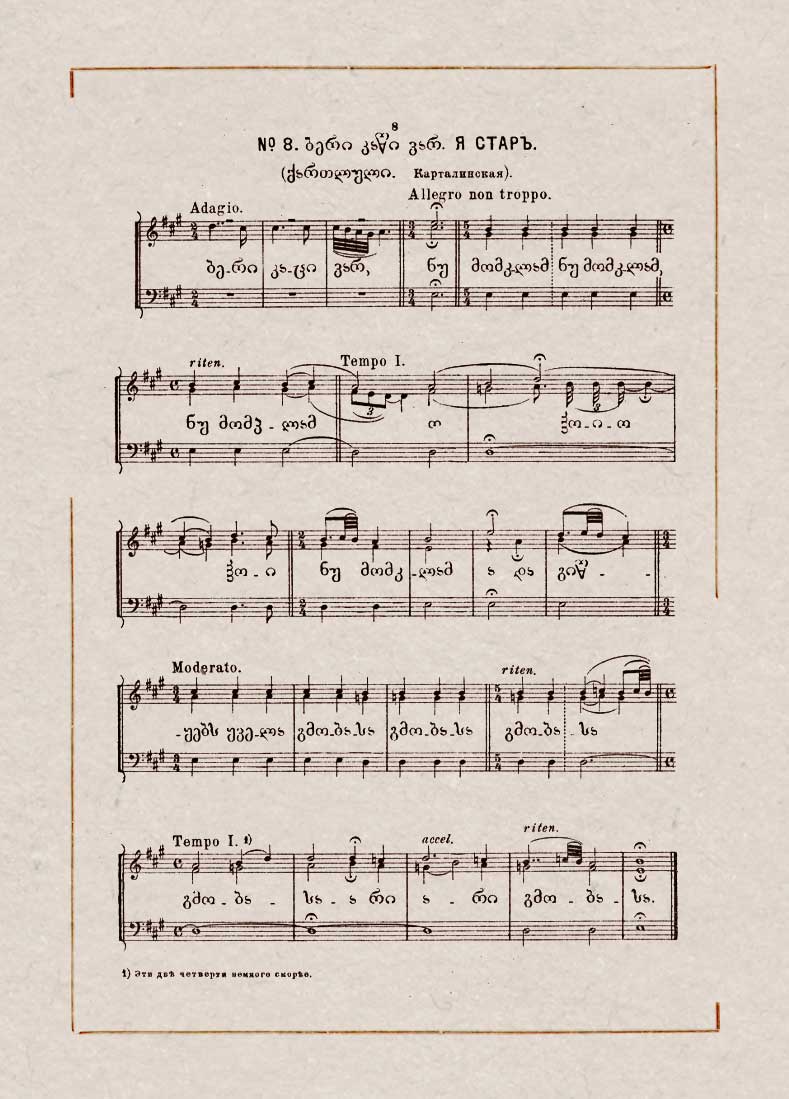
In addition to such original examples, the notated sources also include songs that are known to us from various phonographic recordings, but in these cases the notation presents a different version of the same material. As an example, we present a song transcribed by Dimitri Arakishvili from a phonograph recording, included in a collection published in 1906.[16] This is the well-known song “Beri Katsi Var” (“I Am an Old Man”). Unlike the familiar versions, here the opening voice is the middle part. Upon the entrance of the ensemble, the upper voices make an unusual leap downward by a fourth, and the threefold repetition of the words “nu momklam” (“do not kill me”) lends the song a particularly heightened dramatic character. Such elements are not found in any other known recordings of this song.
|
Dimitri Arakishvili’s collection "Georgian National Songs" |
Song "Beri Katsi Var" from Dimitri Arakishvili’s collection "Georgian National Songs" |
As mentioned above in connection with the “Karbelashvili mode,” it should be noted that the manuscript collections of the brothers Vasil and Polievktos Karbelashvili include not only liturgical chants but also notated transcriptions of folk songs. In one manuscript, Vasil Karbelashvili lists songs that were presumably part of the Karbelashvili family’s own singing repertoire. Among them are a considerable number of songs for which no corresponding notated or audio recordings are known. These include, for example: “Eso Meso, Mindors Gamagdeso,” “Dela Dela, K’urdgheli da Mela,” “Mivel da Vnakhe Samotkhis Sakhe,” “Ananur Kori Aprinda,” “Glova Mepis Irakli Meorisa,” “Agre Iare Mtskhetamde,” and many others. In total, the list contains 107 song titles.[17]
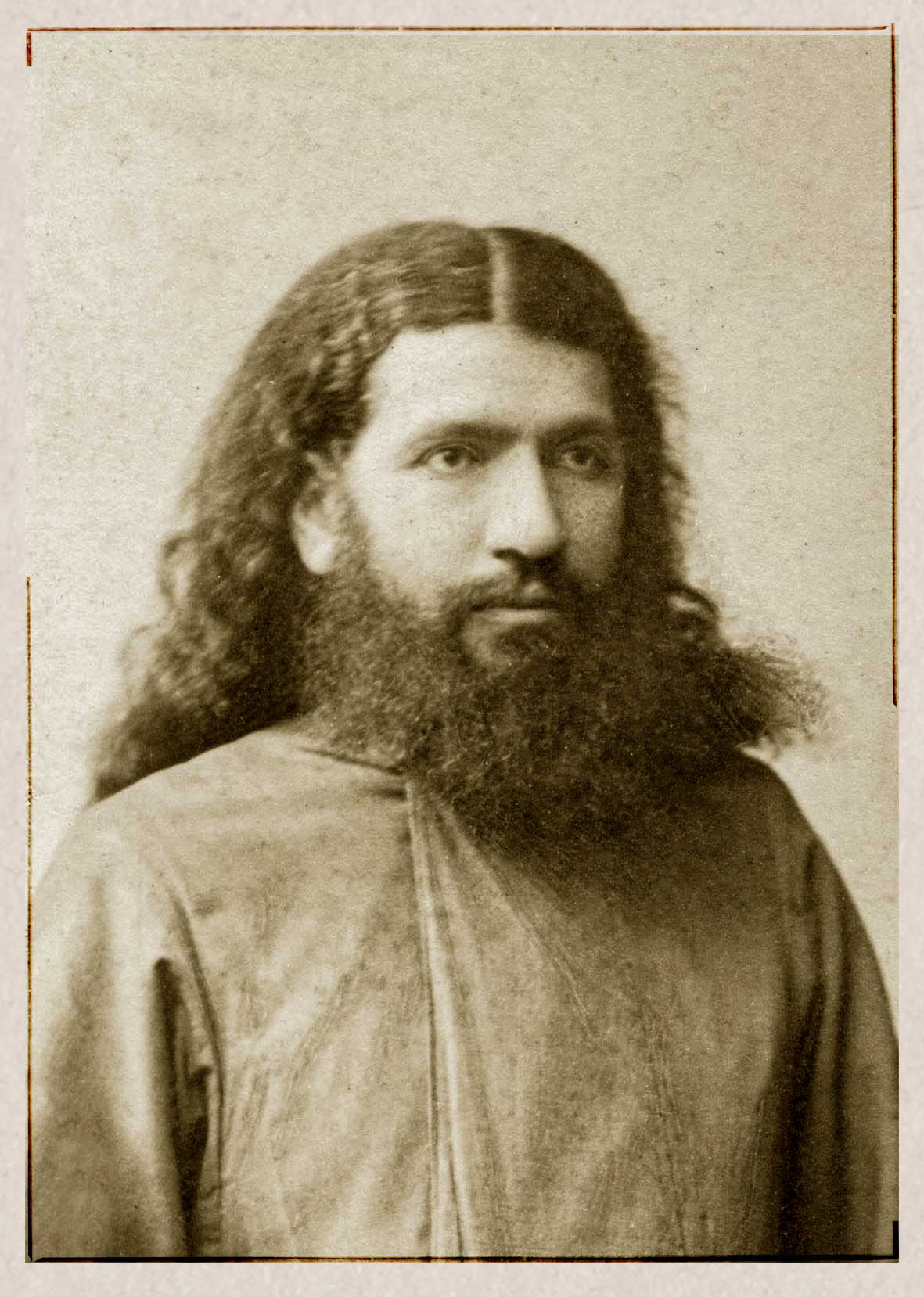
Vasil Karbelashvili
It is also noteworthy that even songs well known to us are presented in these manuscripts in variant textual forms, differing from their commonly known versions. As an example of this, one may cite the so-called healing “song of the batonebi” (“lords”), titled “Tsiav Nana, Vardo Nana, Tsiav Naninao.”[18] It is noteworthy that the text of this song contains poetic lines that do not appear in any other known examples of this repertoire.
Violet-rose is unwell, Tsiav Naninao,
the batonebi (lords) have arrived, Iav Naninao,
seven brothers have come forth, Iav Naninao,
they have pitched a tent by the seashore, Iav Naninao.
They came and spread out on this side of the land,
where they arrived, they settled in great peace,
all joyful with the chonguri, with bazma-sugar,
the batonebi were greeted with song,
they tended the sick one very gently and kindly,
no hot steam or anything hot was brought inside,
none of the batonebi were harmed in any way,
all departed joyfully, as if flying away,
may your path and journey be blessed by the High Heaven,
Tsiav Nana, Vardo Nana, Iav Naninao.[19]
From a musical perspective, variant transformations are also found in notated sources, as an example of which we present a manuscript by Vasil Karbelashvili of the song “Aprindi, Shavo Mertskhalo” (“Fly, Black Swallow”), particularly its opening phrase.[20] Differences are also evident in the textual component. As we can see, even the first word, “Aprindi” (“Fly”), differs from the more widely known variant of the song, “Gaprindi, Shavo Mertskhalo” (“Fly Away, Black Swallow”).
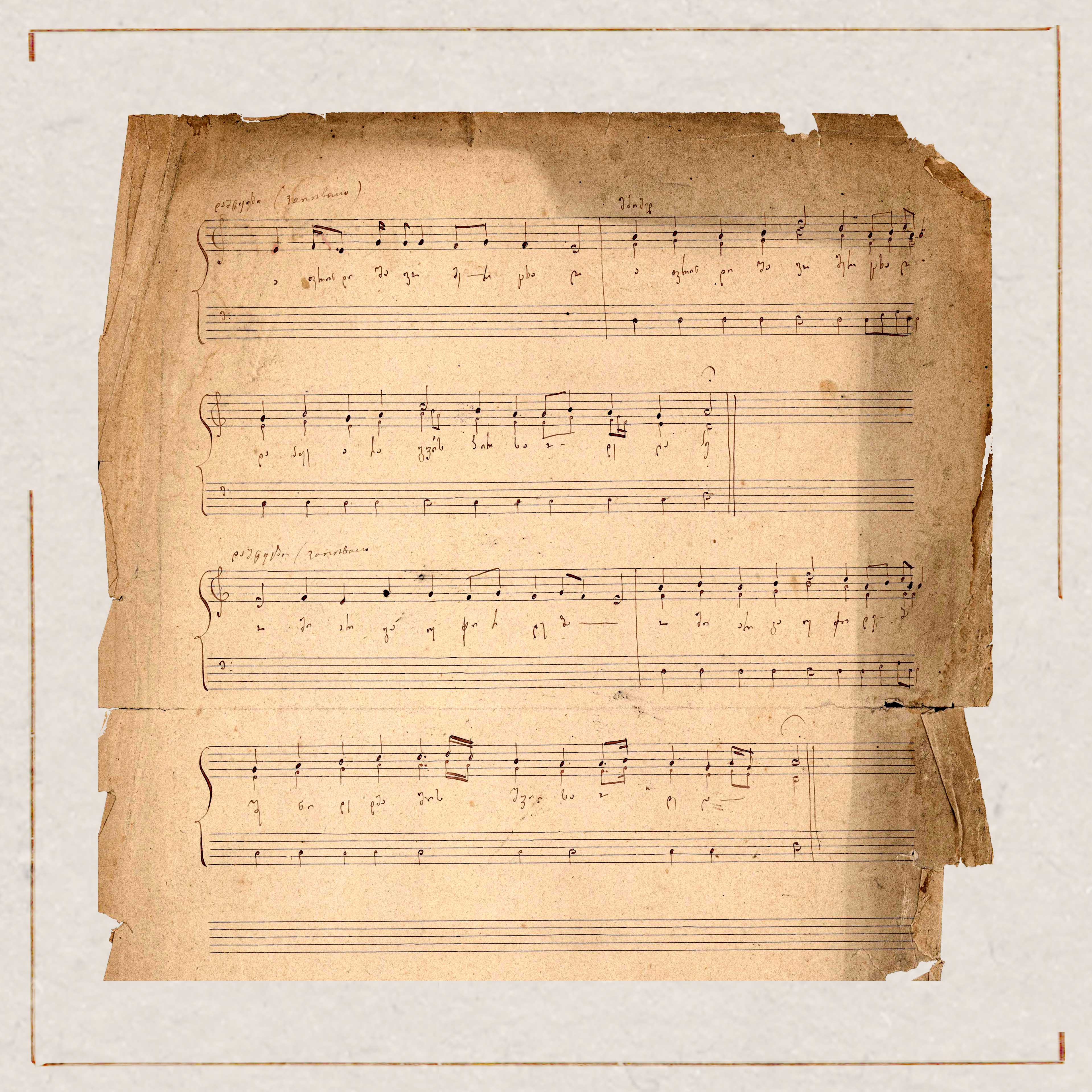
Song "Aprindi, Shavo Mertskhalo" ["Fly, Black Swallow"] – Vasil Karbelashvili’s manuscript
In the more widespread version, the river Alazani is mentioned (which is why the song is considered Kakhetian), whereas in the version recorded by the Kartlian Vasil Karbelashvili, the river Aragvi is named instead:
“Fly, black swallow, follow the banks of the Aragvi, dela he.”
The second stanza of the song is also not found in any other known version:
“War will not be difficult for the son of your parents, dela he.”
As can be seen, all the examples cited above (with the exception of the latter) are not manuscript sources, but rather materials selected from previously published notated collections. The reason for this lies in the absence—or more precisely, the yet unlocated and insufficiently documented status—of chronologically earlier manuscripts of Georgian folk songs. It is evident that a complete inventory and systematic cataloguing of early notated manuscripts of Georgian folk music has not yet been properly undertaken, not only abroad but also within the country, which may today be regarded as an urgent task for Georgian ethnomusicologists!
And yet, which notated source of Georgian musical folklore is the earliest? In this regard, I would like to share an interesting piece of information.
In my dissertation Georgian Chant Schools and the Eight-Mode System, I presented the earliest known notated example of Georgian chant, namely the manuscript of the Theotokion irmos “Aghaghe Piri Chemi” [“Open My Lips”], dated 1802.[21] It was recorded by Evgeny Bolkhovitinov, Metropolitan of Kyiv. The transmitter of the chant was the Georgian bishop (later the first exarch of Georgia), Varlaam Eristavi, who was visiting him at the time. In this manuscript, the chant is written in the so-called Kyiv notation (the original manuscript is preserved in the manuscript collection of the National Library of Ukraine in Kyiv, while its photographic copy is kept at the Georgian State Museum of Literature).[22]
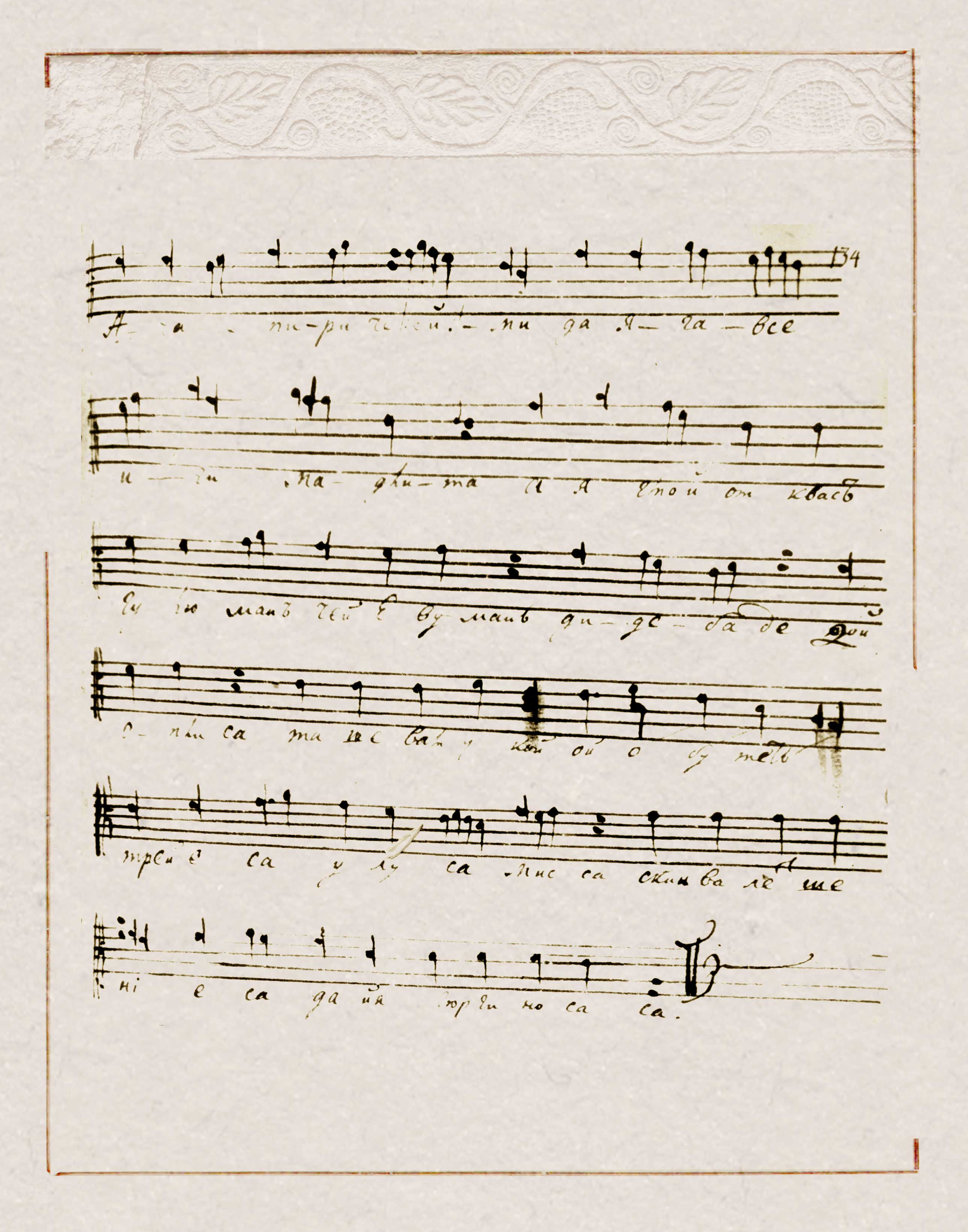
Theotokion irmos "Aghaghe Piri Chemi" ["Open My Lips"] – Evgeny Bolkhovitinov’s manuscript
It is noteworthy that even in the case of identifying the earliest folkloric notated record, one must again turn to the manuscript of Evgeny Bolkhovitinov, since, like the chant example, the earliest known notated source of Georgian secular song also belongs to him and is likewise dated to 1802.[23] Specifically, this notated manuscript (also written in Kyiv notation) presents a song based on one of the stanzas of Besiki’s poem “Sevdis Baghs Shevel” [“I Entered the Garden of Sorrow”], with the text transcribed in Russian transliteration.[24] According to the copyist’s commentary, its intonation must be of a Persian character. This is seemingly also suggested by a sketch at the end of the manuscript depicting an instrument resembling the tar. However, the melody presented in the notation gives the impression of a synthesis between European functional musical language and elements of Georgian folk tradition.
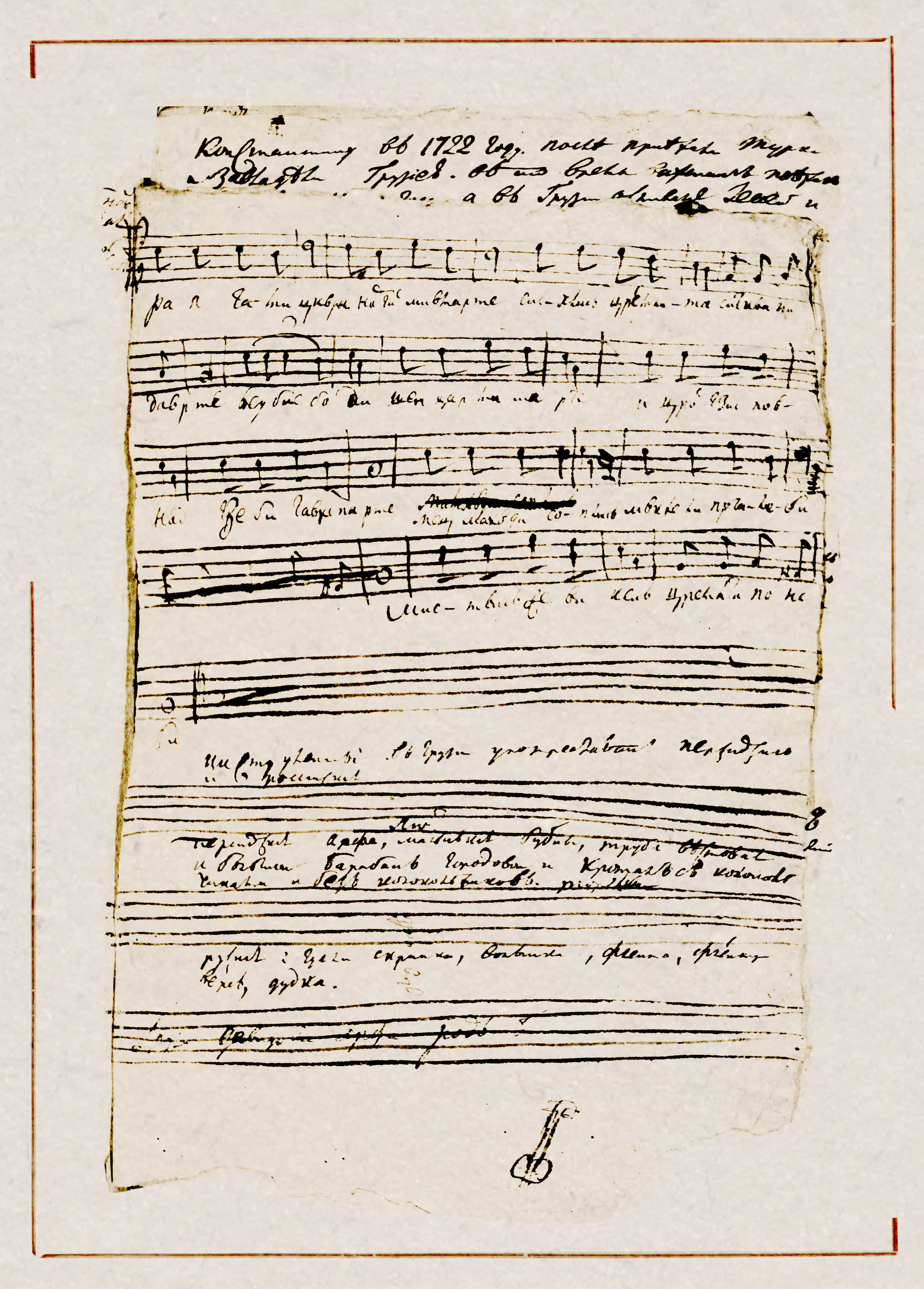
Song on Besiki’s (Besarion Gabashvili’s) poem "Sevdis Baghs Shevel" ["I Entered the Garden of Sorrow"] – Evgeny Bolkhovitinov’s manuscript
Although this song does not represent an example of traditional rural Georgian folk music, it is, one way or another, the earliest known notated example of a Georgian-language so-called urban song, and thus deserves appropriate attention and study.
After reviewing the examples presented above, I now propose a preliminary classification of documents related to Georgian folk song:
- We may distinguish, first, a group of songs of which only the verbal text or only the title has survived to the present day. At first glance, they may seem to tell us nothing about the musical aspect of the songs; however, in reality, their observation and study from different perspectives may still provide certain types of musical information.
- The second group consists of notated transcriptions that were either directly transcribed by the collector from live singers’ performances or independently written down on the basis of the collector’s own oral knowledge, without the use of audio recordings.
- The third group comprises notated transcriptions of songs made from audio recordings, although the corresponding audio materials have not survived to the present day. For this reason, I refer to them as “audio-lost” songs.
- The fourth group includes songs for which both notated and audio recordings are preserved. It should be emphasised that this group potentially also includes materials whose notated and audio versions have not yet been compared, and whose identity correspondence has not been established to date. It is likely that many such examples can still be identified. In my view, conducting such comparative research is both necessary and urgent today, since it is precisely the combination of audio and notated sources that provides the most complete basis for both the performance practice and the scholarly study of folk musical creativity.
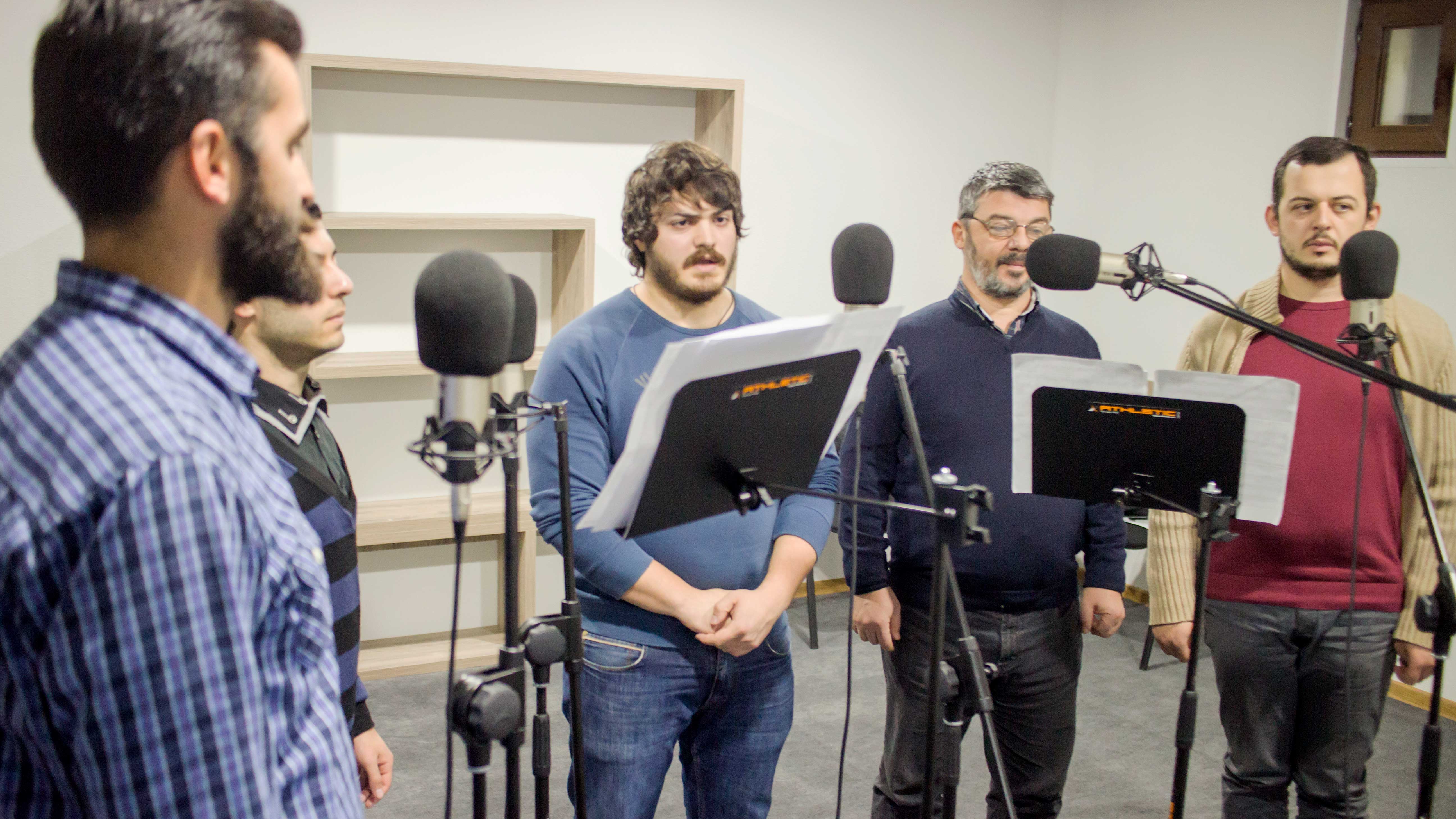
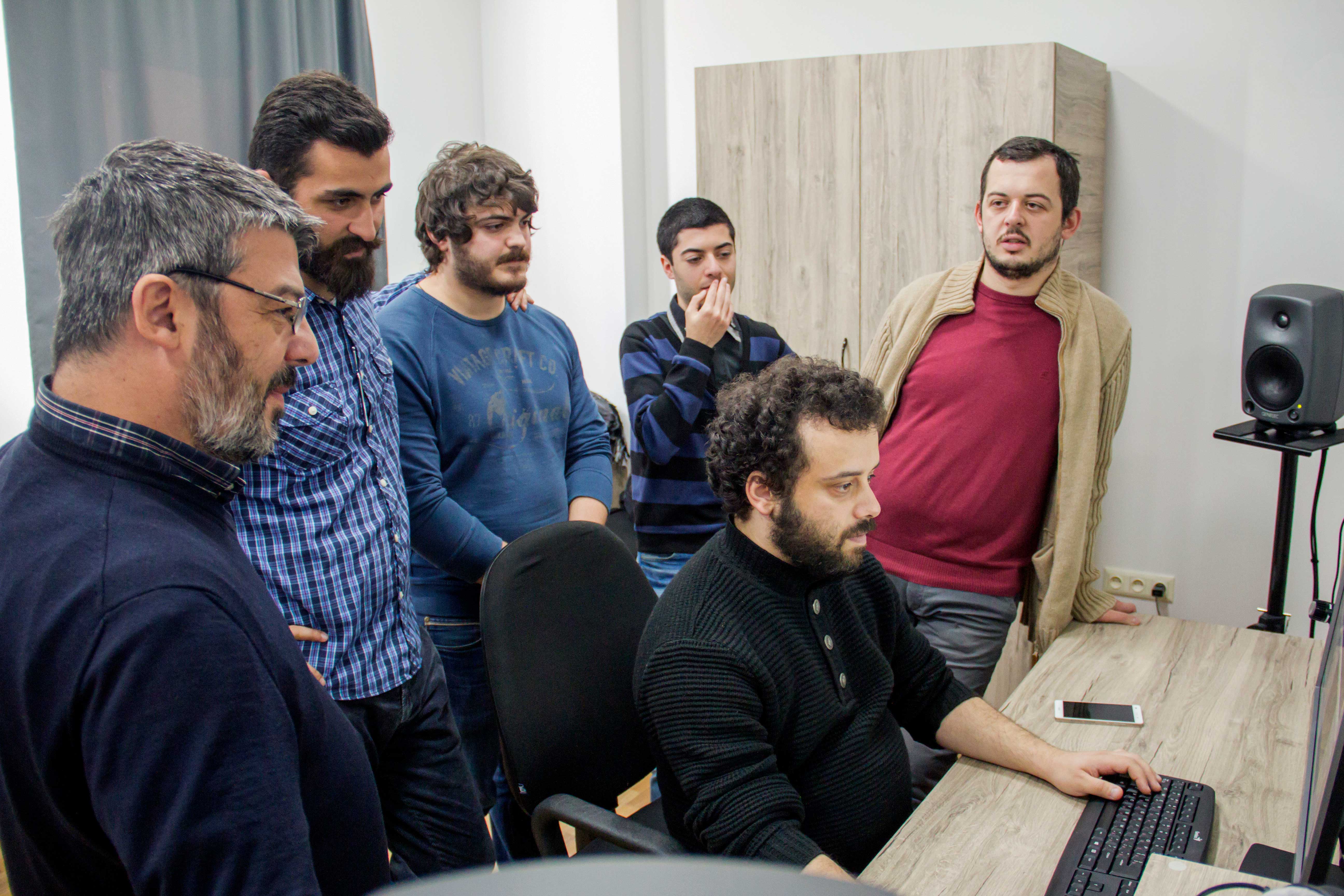
Davit Shugliashvili, Giorgi Gordeladze, Davit Tsertsvadze, Nikoloz Shanshashvili, Nodar Japaridze. At the sound desk – Ilia Jgharkava
The audio recordings of the songs were performed and recorded in 2016 at the recording studio of the Giorgi Mtatsmindeli University of Chant (this was the first recording session held in this studio). The performers were then-students of the university: Davit Tsertsvadze, Giorgi Gordeladze, Nikoloz Shanshashvili, and Nodar Japaridze, together with their teacher, Davit Shugliashvili. Sound engineer – Ilia Jgharkava.
[1] Thoms, William J. 1846. “Folk-Lore.” The Athenaeum, no. 982 (August 22): 862–63. Originally published under the pseudonym Ambrose Merton.
[2] Historically, the first musical audio recording is considered to be a fragment of the old French song “Au clair de la lune,” recorded on 9 April 1860 by Édouard-Léon Scott de Martinville using the phonautograph he invented, although the phonautograph could only record sound and not play it back. This recording was discovered and made audible only in 2008 by a team led by the American audio historian and researcher David Giovannoni. It is currently regarded as the earliest known recording of the human voice (see First Sounds. 2008. “Earliest Known Recordings of the Human Voice.” https://www.firstsounds.org/)
[3] Art Palace, Manuscript and Archival Documents Fund, Dimitri Arakishvili Archive, Manuscript No. 194.
[4] Matchavariani, Mikheil (compiler). 1878. “Samshoblo Khmebi: Folk Songs for Young People to Sing, Transcribed into Musical Notation for One, Three, and Four Voices.” Tbilisi: Published by B. Charkviani.
[5] Gogebashvili, Iakob. 1955. Who First Transcribed Georgian Folk Songs into Musical Notation for Public Schools, and How. Works, vol. 1, 93–98. Compiled and prepared by V. Kajaia and Z. Kiknadze. Introductory article by D. Lortkipanidze. Editors G. Tavzishvili and D. Lortkipanidze. Tbilisi: Scientific Research Institute of Pedagogical Sciences of the Ministry of Education of the Georgian SSR.
[6] Ibid., p. 93.
[7] Ibid., p. 95.
[8] Ibid., pp. 95–96.
[9] Ibid., p. 96.
[10] Gogebashvili, Iakob. 1912. Deda Ena: A Reading Book for Use in Schools after the Alphabet. Part II. Tbilisi: Publication of the Society for the Spreading of Literacy, S. Losaberidze’s Printing House, 249–256.
[11] Benashvili, A. 1885. Kartuli Khmebi: Liturgical Chant of the Divine Liturgy of St. John Chrysostom in the Kartli-Kakheti Mode; Folk Songs Collected and Transcribed into Musical Notation by Andria S. Benashvili. Tiflis: Meskhiev Lithography.
[12] Ibid., Foreword.
[13] Ratil, Josef (transcriber). 1886. Alilo (Interior Kakhetian Mode). Tbilisi: “Georgian Choir” Publication.
[14] Chkhikvadze, Zakaria. 1896. Salamuri: Folk Songs, Transcribed into Musical Notation by Z. I. Chkhikvadze and Meliton Balanchivadze. Tiflis: Publication No. 28 of the Society for the Spreading of Literacy among Georgians (Printing House of M. Sharadze and Co.), p. 23.
[15] Sharabidze, Nikoloz (transcriber and compiler). 1918. Collection of Georgian National Three-Part Songs, with Brief Explanation of the Notation. Kutaisi: I. Kiladze Printing House.
[16] Arakishvili, Dimitri. 1906. Georgian (Kakhetian and Kartlian) National Songs, Recorded by Means of the Phonograph by D. Arakishvili. Moscow: (V. Grosse Lithography, Moscow).
[17] National Centre of Manuscripts. Vasil Karbelashvili Archive. Manuscript No. 306, p. 5.
[18] Ibid.
[19] Ibid.
[20] National Centre of Manuscripts. Vasil Karbelashvili Archive. Manuscript No. 264.
[21] Shugliashvili, Davit. 2010. The Eight-Mode System in Georgian Church Chant. Doctoral dissertation, V. Sarajishvili Tbilisi State Conservatoire.
[22] Manuscript Fund of the Georgian State Museum of Literature. Evgeny Bolkhovitinov Manuscript No. 1106.
[23] Shugliashvili, Davit. 2014. Georgian Chant Schools and the Eight-Mode System (Based on Notated Records of Chants). Tbilisi: Chanting Centre of the Patriarchate of Georgia, pp. 2–3, 219.
[24] Ibid.