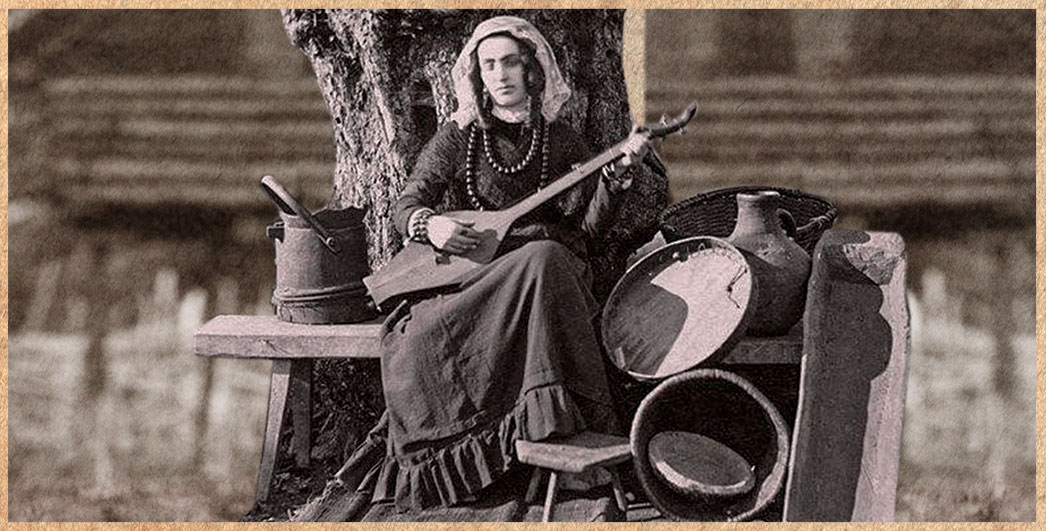
The Kutateladze Chanters - Representatives of the Khoni School of Chanting
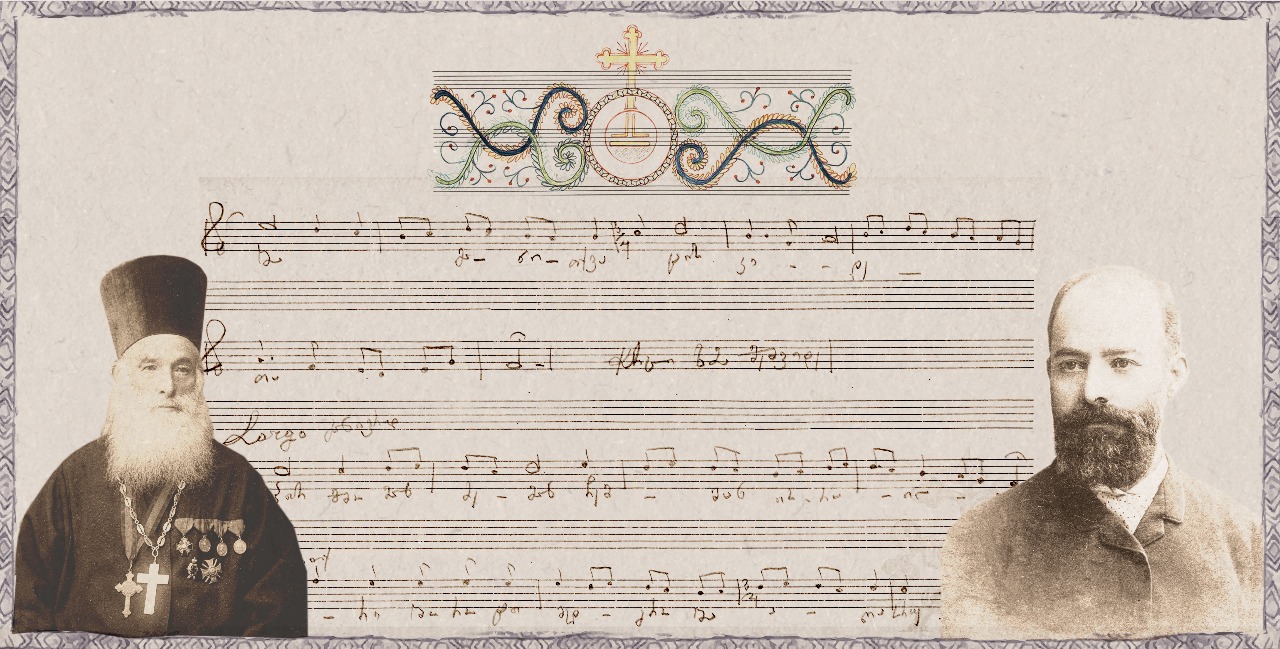

In issue 4 of Georgian Folklore magazine, we discussed the Khoni School of St. George, its director Simona Kuti, the strong chanting traditions there, and the chanters trained at the school.
In this issue, we would like to introduce you to the Kutateladze family of Khoni, of whom, as far as we know, four generations were renowned chanters and, in most cases, clergymen as well, both in Khoni and throughout Imereti.
In former times, knowledge of liturgical singing was not uncommon among the clergy. On the contrary, archival sources often mention clergymen whose names were accompanied by the note: “master of chant” (იცის გალობა).
Let us begin with a figure from the 18th century, Hegumen Basily (Vasily) Kutateladze, a colleague of the last Archbishop of Khoni, Anton (Chijavadze). Hegumen Basily was actively involved in the cultural and educational life of Khoni. His name, along with that of Archbishop Anton, is associated with the founding of the diocesan asylum at the Khoni Parish School and the revival of the school at St. George’s Church in Khoni.[1]
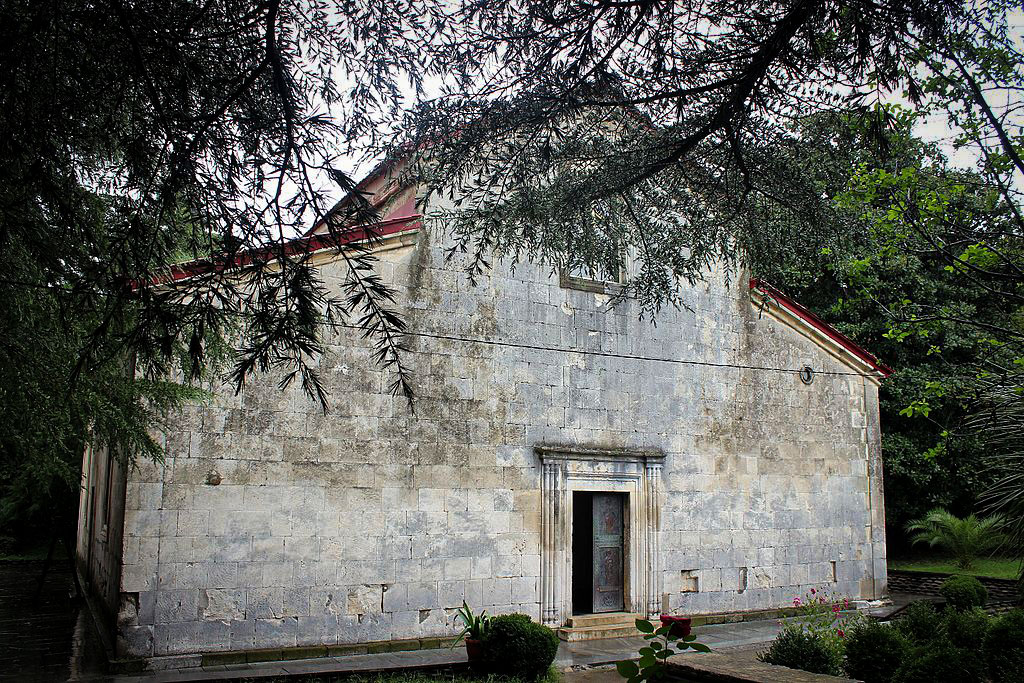 St. George's Church in Khoni
Archival materials relating to Archbishop Anton provide only scant but noteworthy information about Basily, from which it is clear that the hegumen came from a family of clergymen; however, the name of his respected father remains unknown:
Hegumen Basily replied:
“My father was an excellent Protoiereus, respected by all kings and queens, Catholicoi, and bishops.”
The Archbishop replied:
“Your father was a good man, but you are a scoundrel.”
The Hegumen said:
“I am not a bad man either. I am not saying this with arrogance. I am a good scribe. I am a good chanter. I am a good secretary. I am well-behaved. I know the liturgy and the Typicon well.”[2]
As we can see, at their first meeting, the bishop Anton somehow perceives Basily as a “bad person,” and Basil is compelled to introduce himself and demonstrate his honesty, upbringing, and education. Although the reasons and details behind this are unknown to us, since the bishop will later perform charitable deeds together with the hegumen, it can be assumed that Basil’s self-portrait corresponds to reality.
The Hegumen’s son, Anton, born in 1799, was also a church figure. Razhden Khundadze describes Anton as an exceptional chanter and counts him as a “full-fledged chanter” or “knower of all hymns.”[3]
It is also interesting that not only Anton, but also his wife (née Chalaganidze; personal name unknown) was a full-fledged chanter. Notably, this is the first mention of a woman recognised as a full-fledged chanter preserved in the Georgian press or private archives.[4]
A representative of the third generation of the Kutateladze chanting family, Anton’s son, Archpriest Vasily, was born in 1820. Archival materials about him state: “He studied Georgian scripture, writing, and chanting at Khoni Cathedral under his father. He is proficient in reading (scripture and liturgical prayers) and chanting, and he also knows the secrets and duties of catechism.”[5]
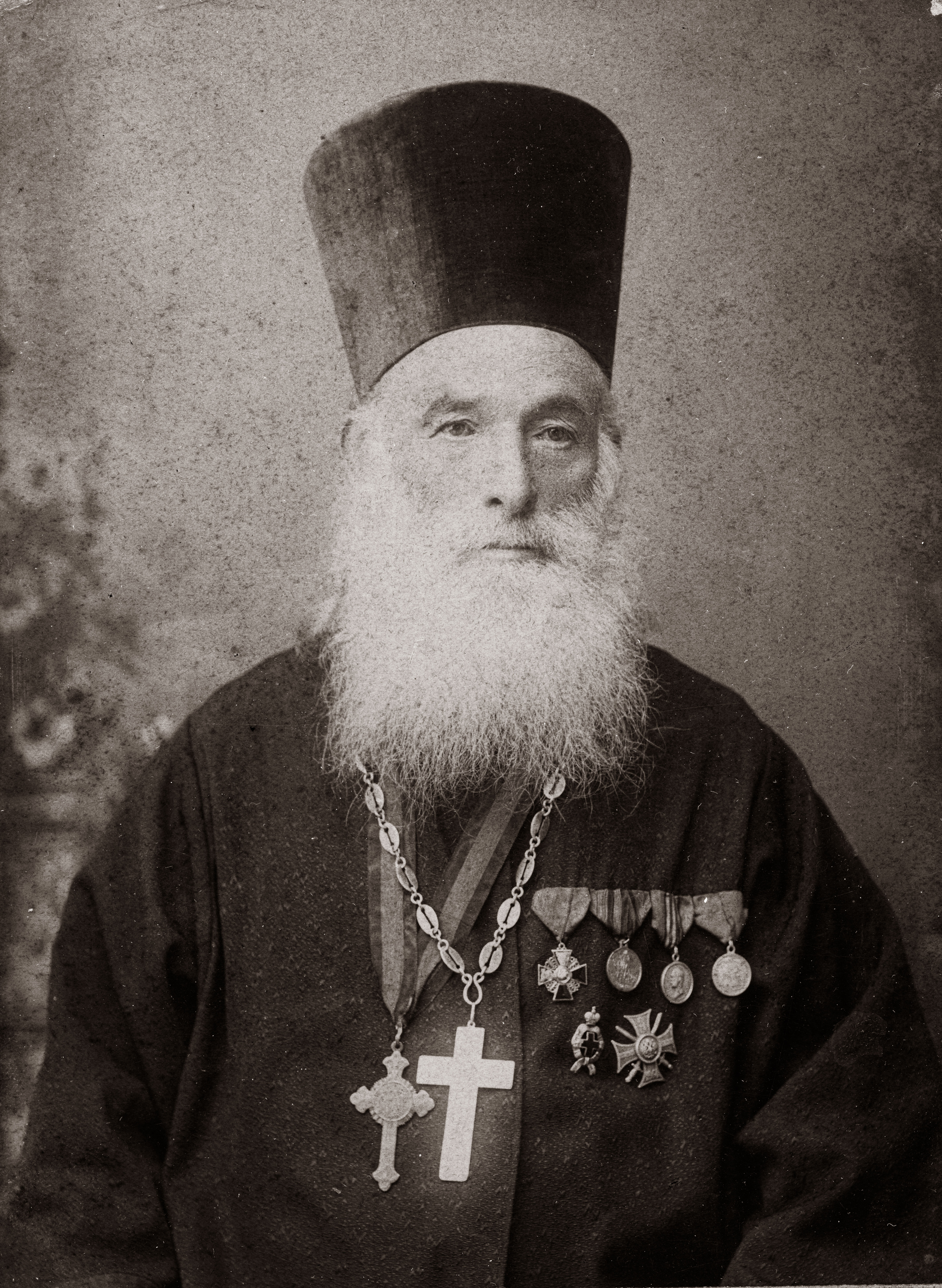
Archpriest Vasil Kutateladze (Aristo’s father)
According to some sources, he studied chanting at Khoni Cathedral under the renowned Simona Kuti. In his letter about Pilimon Koridze, Mikheil Koreli notes that Archpriest Vasily was “more knowledgeable than others” in ancient Georgian chants and, when necessary, even corrected the chants recorded by Pilimon.[6]
This information is confirmed in a report published in the newspaper Iveria:
We, the undersigned, were invited to familiarise ourselves with the chants transcribed in the notes. We listened to and examined each voice of the chants separately: the starting voice (the top), the high bass, and the bass. The result of this examination was another pleasant circumstance that enhanced our admiration. From this comparison, we were convinced that the mode of our old chants has been well preserved, with no excesses or alterations evident.[7]
Vasily’s son, Aristo (Aristovle) Kutateladze (1846–1912), was a renowned educator and publicist, the author of several textbooks, and a full member of the Society for the Promotion of Literacy among Georgians from 1879 to 1899.
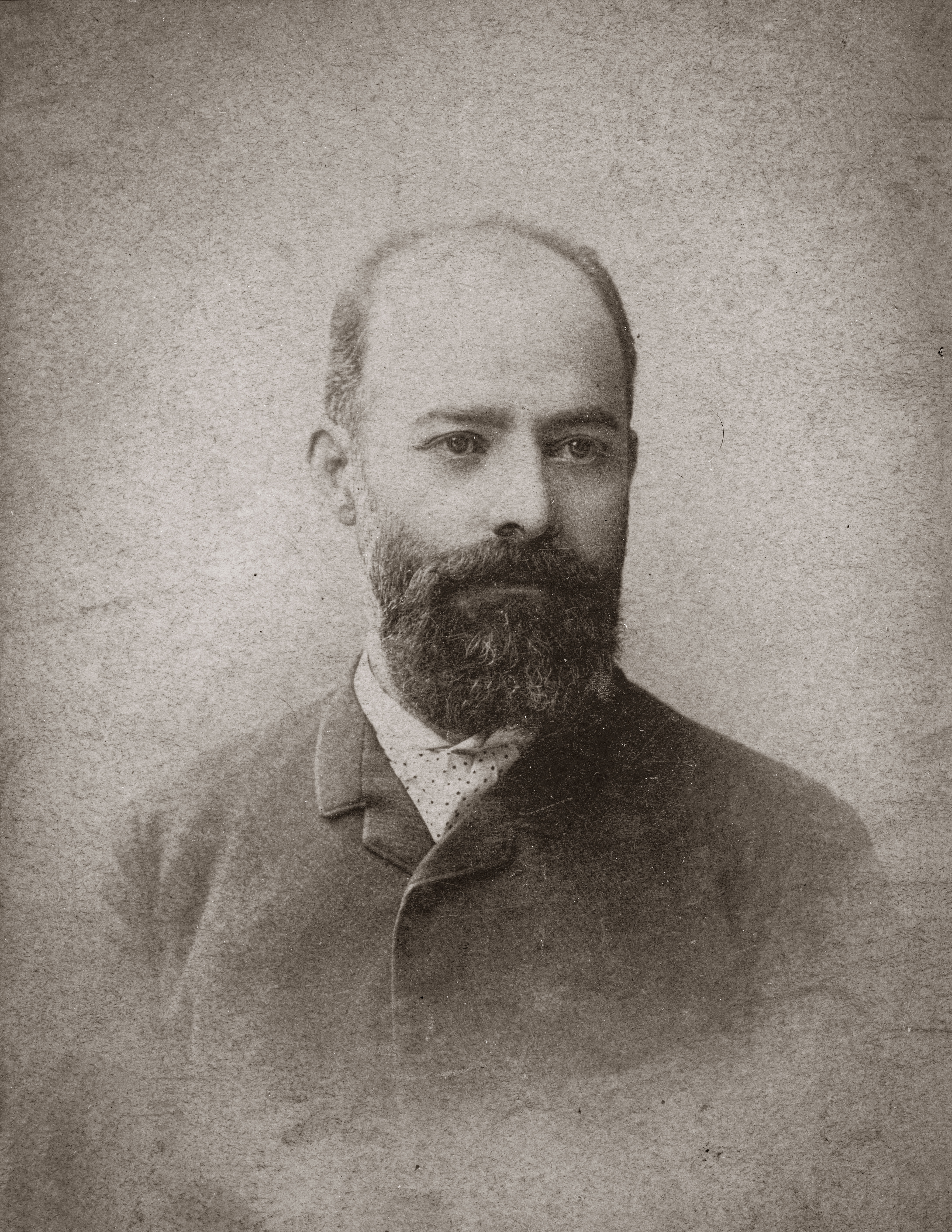
Aristo Kutateladze (photo courtesy of the National Library of Georgia).
A newspaper article by Pilimon Koridze attests to the fact that he was deeply impressed by Aristo’s profound knowledge of ancient hymns, as during the latter’s time in Tbilisi, Koridze recorded hundreds of them from him:
Our enlightener, Aristo Kutateladze, has a deep knowledge of ancient oral hymns. He studied with the famous singer Simon Kuti in Khoni and had me transcribe 551 hymns full of melodic sweetness, especially “chrelebi”[8] and “ts’ardgomebi”[9] composed by great and skilled ancient singers.[10]
Photo: Seated in the middle row: Ekvtime Kereselidze, Maksime Sharadze, and Aristo Kutateladze (photo courtesy of the National Library of Georgia).
The hymns transmitted by Aristo are diverse in genre.[11] Unfortunately, all the hymns he transmitted are written in a single voice, so we do not know what vocal structure the Khoni chanters employed.[12] However, since part of this hymn corpus was later arranged in three voices by the eminent connoisseur and master chanter Razhden Khundadze, it can be assumed that he was familiar with the peculiarities of the Khoni chanting school and likely took them into account.[13]
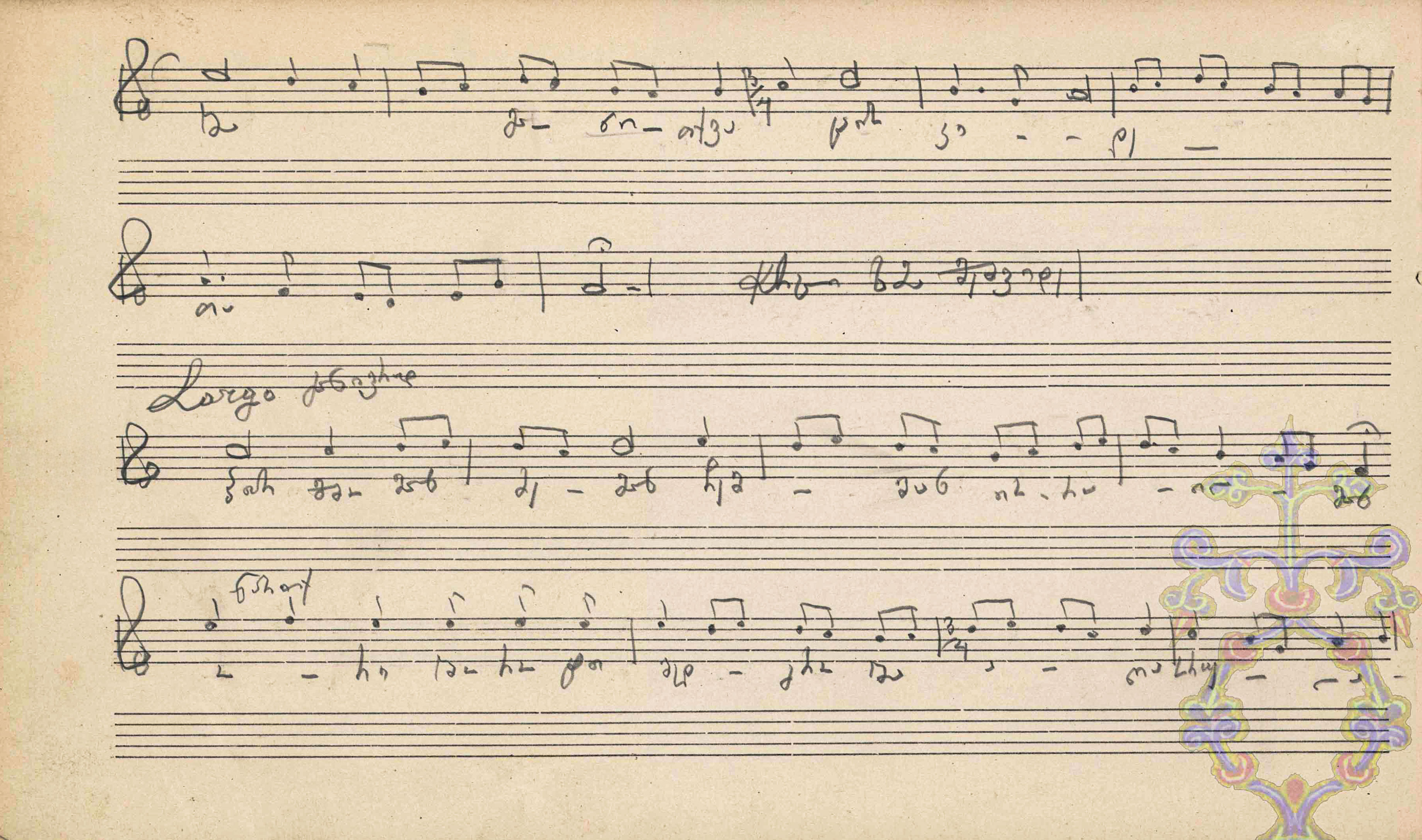
a single (leading) voice transmitted by Aristovle. National Centre of Manuscripts of Georgia named after K. Kekelidze, Manuscript: H 154 VIII.
As a teacher, Aristo was a true professional and, at the same time, an extraordinary personality, complemented by his knowledge of church hymns and his dedication to them. Maksime Sharadze particularly noted his achievements in the newspaper Iveria:
Although a doer of good deeds does not require praise or gratitude from us, for such recognition is inherent in the deed itself, we are nevertheless obliged to express our appreciation and to convey the good deed in words or writing. This will inspire the doer of good deeds and encourage him to act even more sincerely and with greater dedication. Therefore, it must not be hidden or left unspoken that Mr. Aristo Kutateladze has devoted considerable effort and knowledge to the work of transcribing the chants into musical notation.[14]
Ekvtime Kereselidze, in describing the chanters invited by Bishop Gabriel to the Kutaisi Cathedral to perform hymns transcribed into notation by Pilimon Koridze, characterises Vasil and Aristo Kutateladze among them as “great chanters”: “Great chanters came from Khoni and Martvili: Dimitri Chalaganidze with his choir, and Vasil and Aristo Kutateladze.”[15]
Years later, on the day of A. Kutateladze’s funeral (he died in 1912), Bishop Kalistrate Tsintsadze, bidding him farewell at the Kashueti Cathedral, described Aristo’s contribution in his funeral speech, “A Word on the Death of A. V. Kutateladze,” as follows:
…On Sundays, he would gather his students and take them to a church or monastery. First, he would lead them in the liturgy, often chanting and reading from church books himself, and then he would begin to describe and study the ancient monuments. Eloquent and gentle-spoken, he so captivated his listeners with stories of their ancestors’ deeds and the fate of their homeland — describing one monument after another — that they completely forgot about food, drink, and fatigue…[16]
Later, some of the chants transmitted by Aristovle in a single voice were arranged in the second and third voices by Archpriest Razhden Khundadze.[17] Nearly a century later, these same chants were re-arranged in the second and third voices by Levan Veshapidze, an ethnomusicologist and specialist in chants.[18]
Audio example: Hymn of the Great Friday (Red Friday) Matins – “Pirmshoman Dzeman Chemman,” dasdebeli, ch’reli; mode VII,[19] performed by the choir Tao.
The first voice of the hymn was transmitted by Aristo Kutateladze; the second and third voices were arranged by Levan Veshapidze.
[1] At the turn of the 18th–19th centuries, near the Khoni Monastery, there was a fairly large parish school and a 100-bed asylum for children with physical disabilities, where the children were raised at the expense of the diocese.
[2] Unknown author. [Date unknown.] “The Life of the Archbishop Anton (Chijavadze) of Khoni.” Fund H, File No. 2784. National Archives of Manuscripts, Tbilisi.
[3] The Georgian term translated as “knower of all hymns” or “full-fledged chanter,” სრული მგალობელი, means that the person knows the entire liturgical repertoire for the year.
[4] Khundadze, Razhden. 1911. Qartuli Galoba. Liturgia Ioane Okropiris, Vasili Didis da Grigori Gvtismetvelis: Gurul-Imerul sada kiloze, notebze gadaghebuli mghvdlis Razhden T. Khundadzis mier. (Georgian Chant. The Liturgy of John Chrysostom, Basil the Great, and Gregory the Theologian: Transcribed in Gurian-Imeretian simple kilo notation by Priest Razhden T. Khundadze). Tbilisi: A. Kereselidze publishing, IV.
https://dspace.nplg.gov.ge/bitstream/1234/115782/1/Qartuli_Galoba_Liturgia.pdf
[5] Kutaisi Central State Archive (KCSA). [Date unknown]. Fund 21, File 3890.
[6] Koreli, Mikheil. 1949. Pilimon Koridze [Pilimon Koridze]. Tbilisi: Khelovneba, 87. https://dspace.nplg.gov.ge/bitstream/1234/411365/1/Filimon_Qoridze_1949.pdf
[7] Kutateladze, Vasil, Medzmariashvili, Niko, and Kandelaki, Nikoloz. 1887. “Qartul Galobis Shesakheb” [On Georgian Chant]. Iveria, no. 95: 3–4. https://dspace.nplg.gov.ge/bitstream/1234/47183/1/Iveria_1887_N95.pdf
[8] The term chreli refers to a category of Georgian ecclesiastical chants distinguished by complex polyphonic texture and developed melodic structure. The term has multiple meanings: it may denote a specific melodic mode (modus), a chant with elaborate polyphony, or, more broadly, a verbal method of recording melodies — describing the tune through words based on the so-called chrelebi (“modes”). Source: Jangulashvili, Svimon (Jiki), comp. 2018. Shua Saukuneebis Qartuli Galoba: Rcheuli Sagaloblebi [Medieval Georgian Chant: Selected Hymns]. Tbilisi, pp. 9–10. http://folk.gov.ge/wp-content/uploads/2020/07/Shua-saukuneebis-kartuli-galoba-Rcheuli-sagaloblebi-E-book.pdf
[9] The term tsardgoma (from Greek prokeimenon – Προκείμενον) refers to a verse — usually from the Psalms of David — that reflects the content of a feast or liturgical day. Additional verses may accompany it to expand on the meaning of the first. In Georgian ecclesiastical tradition, tsardgoma may also denote a chant performed during moments in the service when the congregation is permitted to sit (e.g., after the first or second stichology).
Source: “Tsardgoma,” Ecclesiastical Terminology, martlmadidebloba.ge, accessed October 15, 2025, https://martlmadidebloba.ge/terminebi26.html
[10] Khoridze, Pilimon. 1905. “Kartuli Musika” [Georgian Music]. Mogzauri, no. 37 (October 9): 587.
[11] They include a dasdebeli – a chant added at the end of individual long prayers (mukhlis) for Akebditsa and Stichology, as well as a dzlispiri (Greek: irmos), a kondaki (Greek: κοντάκιον), chreli chants, etc.
[12] They were transmitted in a single voice in order to save time and to record a greater number of hymns.
[13] This hypothesis can be tested through a comparative study of the hymns arranged in three voices by Khundadze, which remains a task for the future.
[14] Sharadze, Maksime. 1894. “Chvens saek’lesio sagalobelta notebzed gadeghebisa da bech’dvis gamo” [On the Transcribing and Printing of Our Church Hymns]. Iveria, no. 276, pp. 2–3. https://dspace.nplg.gov.ge/bitstream/1234/53351/1/Iveria_1894_N276.pdf
[15] Kereselidze, Ekvtime. [Date unknown]. “Istoria karthul saek’lesio sagaloblebis notebze gadeghisa” [The History of Transcribing Georgian Church Hymns into Notation]. Khets, Fund Q-840, p. 14.
[16] Mtsignobroba Kartuli: A Multivolume Series. 2010. Vol. 10, Book 2, Kalistrate Tsintsadze. Tbilisi: Tsitsinatelа, p. 189.
[17] State Folklore Centre of Georgia. [Date unknown]. Manuscript No. 2127. Tbilisi: State Folklore Centre of Georgia.
[18] K’arthuli Galoba – Antologia [Georgian chant: an anthology]. 2022. Vol. XXIV, p. 361. https://online.fliphtml5.com/pwcfl/gcgq/#p=1
[19] In Georgian chant, khma (ხმა) refers to a traditional system of melodic types — sometimes compared to “modes” in Western theory, though the term here implies not only a scale type, but also characteristic melodic patterns and structural formulas within the chant tradition, more similar to the concept of makam or raga. The khmas are designated with Georgian letters (a, b, g, etc.), corresponding roughly to Modes I, II, III, etc.




.jpg)