Marine Mizandari: ‘Protecting Cultural Heritage Is Part of Human Rights’
%20%E1%83%A1%E1%83%90%E1%83%9C%E1%83%93%E1%83%A0%E1%83%9D%20%E1%83%9C%E1%83%90%E1%83%97%E1%83%90%E1%83%AB%E1%83%94%20-%20%E1%83%9E%E1%83%A0%E1%83%9D%E1%83%94%E1%83%A5%E1%83%A2%E1%83%98%E1%83%A1%20%E1%83%AE%E1%83%94%E1%83%9A%E1%83%9B%E1%83%AB%E1%83%A6%E1%83%95%E1%83%90%E1%83%9C%E1%83%94%E1%83%9A%E1%83%98%2C%20%E1%83%A1%E1%83%90%E1%83%A0%E1%83%94%E1%83%93%E1%83%90%E1%83%A5%E1%83%AA%E1%83%98%E1%83%9D%20%E1%83%A1%E1%83%90%E1%83%91%E1%83%AD%E1%83%9D%E1%83%A1%20%E1%83%AC%E1%83%94%E1%83%95%E1%83%A0%E1%83%98-min.jpg)
Marine Mizandari: “Protecting Cultural Heritage Is Part of Human Rights”
For many years, Marine Mizandari has been researching Georgian cultural heritage and working towards its preservation. She has worked both abroad and in Georgia — in state institutions as well as in civil society organisations.
Several years ago, together with like-minded colleagues, she founded the Georgian National Trust, whose mission is not only the preservation of cultural heritage, but also raising public awareness and disseminating knowledge about its significance.
Marine Mizandari was interviewed by Sandro Natadze, editor of our magazine.
Marine, I am pleased to have the opportunity to speak with you about the issues you have been working on for many years. Before turning to your current activities, could you clarify what is meant by cultural heritage?
Cultural heritage is a very broad concept. It encompasses the vast tangible and intangible legacy left to us by previous generations — by people who lived on our land as well as beyond the borders of our country. Crucially, it is an all-encompassing field. It is not limited to architectural monuments, historic cities or streets; it also includes everyday life — agricultural traditions, polyphonic singing, cuisine and, more generally, ways of living.
Does the Georgian National Trust primarily work with tangible cultural heritage, or are you also engaged with intangible heritage?
We do not work exclusively with tangible heritage, as we believe this would be inappropriate. While our activities are more often connected with physical monuments, our aim is to deepen young people’s knowledge of intangible cultural heritage as well — introducing them to different fields, traditions and musical practices.
You may be aware that a branch of the Lower Alvani Folklore House operates within our space. The researcher and performer of Tushetian music Mari Khachidze taught Tushetian songs to adults here, and this year she has also begun working with children. Overall, our work focuses on three main areas:
- physical care, rehabilitation and research of monuments
- education and awareness-raising
- advocacy for the protection of cultural heritage
Before discussing the foundation in more detail, could you tell us a little about yourself?
That has always been the most difficult thing to do. I come from a family of artists: my father, Givi Mizandari, and my grandfather, Valerian Mizandari, were sculptors. My grandfather was also a teacher of Rezo Gabriadze. Entire phrases from The Extraordinary Exhibition — for example, “Does it resemble it or not?” — were taken directly from scenes in my grandfather’s studio. I therefore grew up in an artistic environment from a very early age.
A decisive influence on my life came when my father almost forced me to join a tourism and mountaineering group led by Deniza Sumbadze. I was 11 or 12 at the time and not particularly enthusiastic about spending my summers with strangers. One summer we travelled to Svaneti, to the Ailama camp, under rather spartan conditions. The group was led by Sergo Barliani, who took us from Lower Svaneti up to Ushguli. It was an unforgettable journey, and I believe those summer expeditions shaped my future professional path.
By training, I am an art historian. I began my career at the Giorgi Chubinashvili Institute of Georgian Art History, where I researched the newly discovered mosaic of Dzalisi. Later, due to personal circumstances, I moved to Brussels, where I lived for quite some time. Even there, I remained actively engaged in academic life, delivering lectures on Georgian cultural heritage in Paris, Freiburg and other European cities.
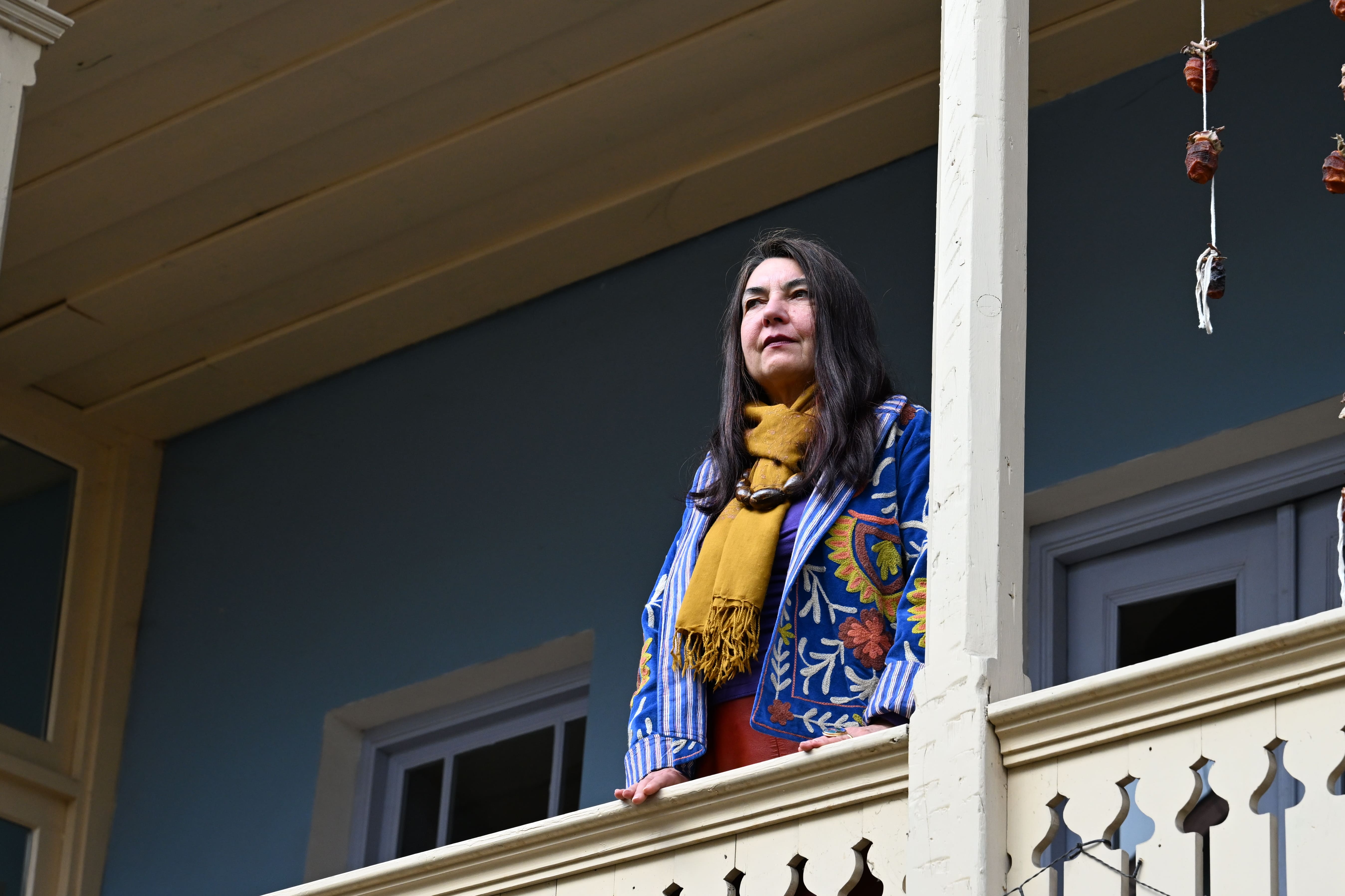
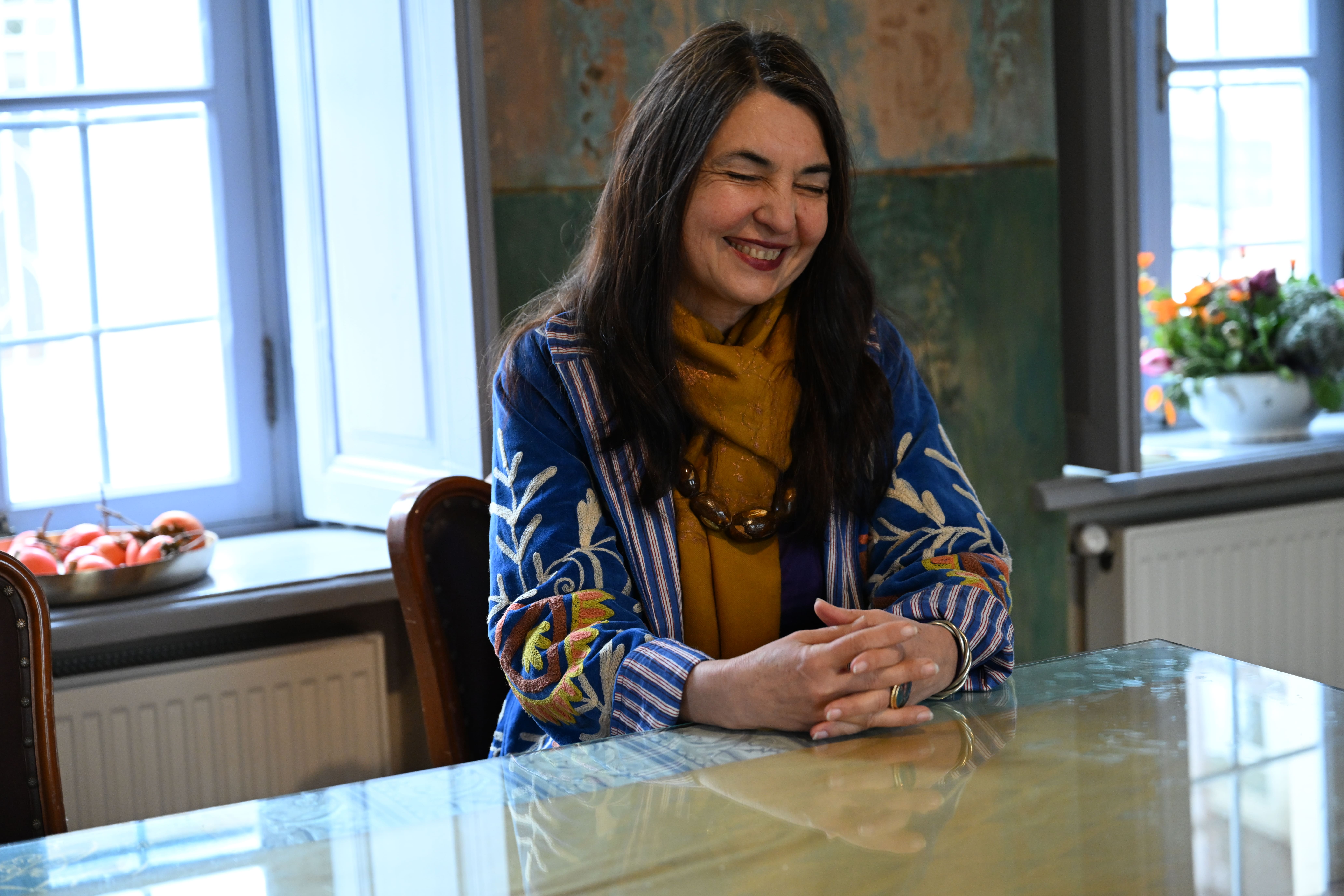
Marine Mizandari. Photo by Giorgi Mekvabishvili
Another important experience during my time in Brussels was working at the European Commission. Initially, I served as coordinator for Lebanon and Palestine within the Directorate-General for Neighbourhood Policy, which also covered Georgia. This was an unforgettable experience both professionally and personally. I managed the Institutional Twinning Instrument programme in Armenia, Georgia and Moldova.
While living in Brussels, I wanted to maintain a strong informal connection with Georgia, so I organised exhibitions of Georgian artists on the ground floor of my home — six or seven exhibitions in total. I also curated a large exhibition of Georgian artists at the European Commission, which significantly increased interest in Georgia — people became curious about Georgian cinema, cuisine, literature and more. I even organised tours to Georgia for two large groups, which was deeply moving.
In 2010, I returned to Georgia and began working as Programme Director at Europe House. We implemented many interesting projects there, including in the field of cultural heritage. However, in 2012 I left the organisation, having felt certain limitations that were unacceptable to me, although the experience itself was valuable.
At the end of 2012, in November, I was invited to work at the Ministry of Culture as Deputy Minister. I hesitated at first, but eventually accepted. I worked there for a year and a half, and this period demonstrated how vital it is for public institutions to be staffed by professionals who are committed to their work. It showed how a shared vision and a constructive attitude can create a strong team, even in environments where one might otherwise be perceived as an adversary. I will never forget the professionalism and solidarity of my colleagues, which enabled us to achieve tangible results. I take this opportunity to express my gratitude to them.
From February 2014, after leaving the ministry, I resumed independent work on various projects and on monitoring international programmes. I have worked in many countries with organisations active in UNESCO’s culture and heritage sectors — including Jordan, Iraq and Lebanon.
Cultural heritage is a delicate field, and relatively few organisations work in this area. This was one of the reasons why, at the end of 2016, a small group of us founded the Georgian National Trust. We took inspiration from the British National Trust, which of course we cannot compare ourselves to, given its long history and traditions. At the end of the 19th century, artists fought to save a workers’ district on the outskirts of London and succeeded. Later, people sharing a common vision began systematic work to protect cultural heritage across Britain, which eventually grew into one of the country’s largest organisations.
When I first visited the foundation, this remarkable house immediately caught my attention. I have been to many organisations, but rarely have I seen such harmony between space and content. The rehabilitation of the house is particularly impressive. Could you briefly tell us about it?
The house belongs to Tamar Teneishvili, who purchased the building in extremely poor condition — only the basic structure had survived. We met Tamar through ICOMOS Georgia and agreed that we would take responsibility for its rehabilitation, ensuring that all work would be carried out to the highest standards.
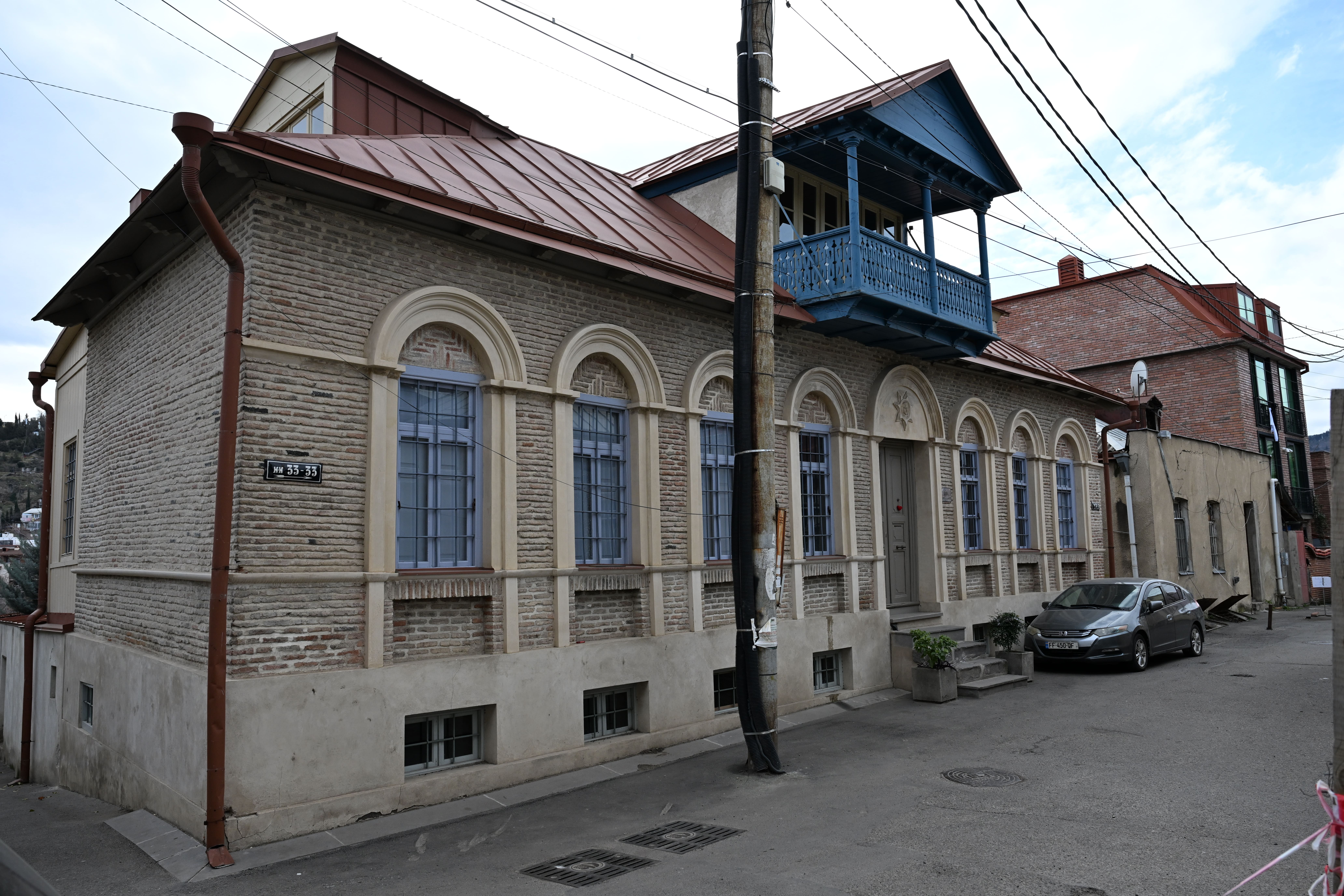
Office of the National trust of Georgia. Photo by Giorgi Mekvabishvili
We were fortunate that ICOMOS already had a restoration plan for an old Tbilisi house in Kala, although their budget did not allow for its implementation. (I should also note that the project was funded by the Norwegian Ministry of Foreign Affairs, whose support also enabled the restoration of the Bethlehem district.) In short, circumstances aligned in such a way that this particular house was selected.
The rehabilitation process was carried out gradually and systematically, drawing on best international practices. Any new additions to the building are reversible — meaning that, should there ever be a wish to return the house to its original state, this could be done with relative ease. The rehabilitation lasted four years and involved intensive collaboration, debate and, at times, polemics, all aimed at restoring the house to a high standard using traditional methods.
The building has a fascinating history. We can trace it from the mid-19th century, although its lower section is significantly older and contains layers dating back to the 18th century, when it was originally a flat-roofed structure. From the mid-19th century onwards, the house was inhabited by an Armenian family from Tbilisi, who added one floor and later another. There is also an even older structure on the site, dated by heritage researcher Maia Mania to the 16th–17th centuries. After the Armenian family — who were patrons of a nearby Armenian church that has since been destroyed — the house was occupied by their descendants, physicians who were well known in the neighbourhood for their charity and generosity. Finally, until the early 21st century, the house was home to the artist Robert Kondakhsazov. In this way, one can trace the long and layered history of a single family through the building.
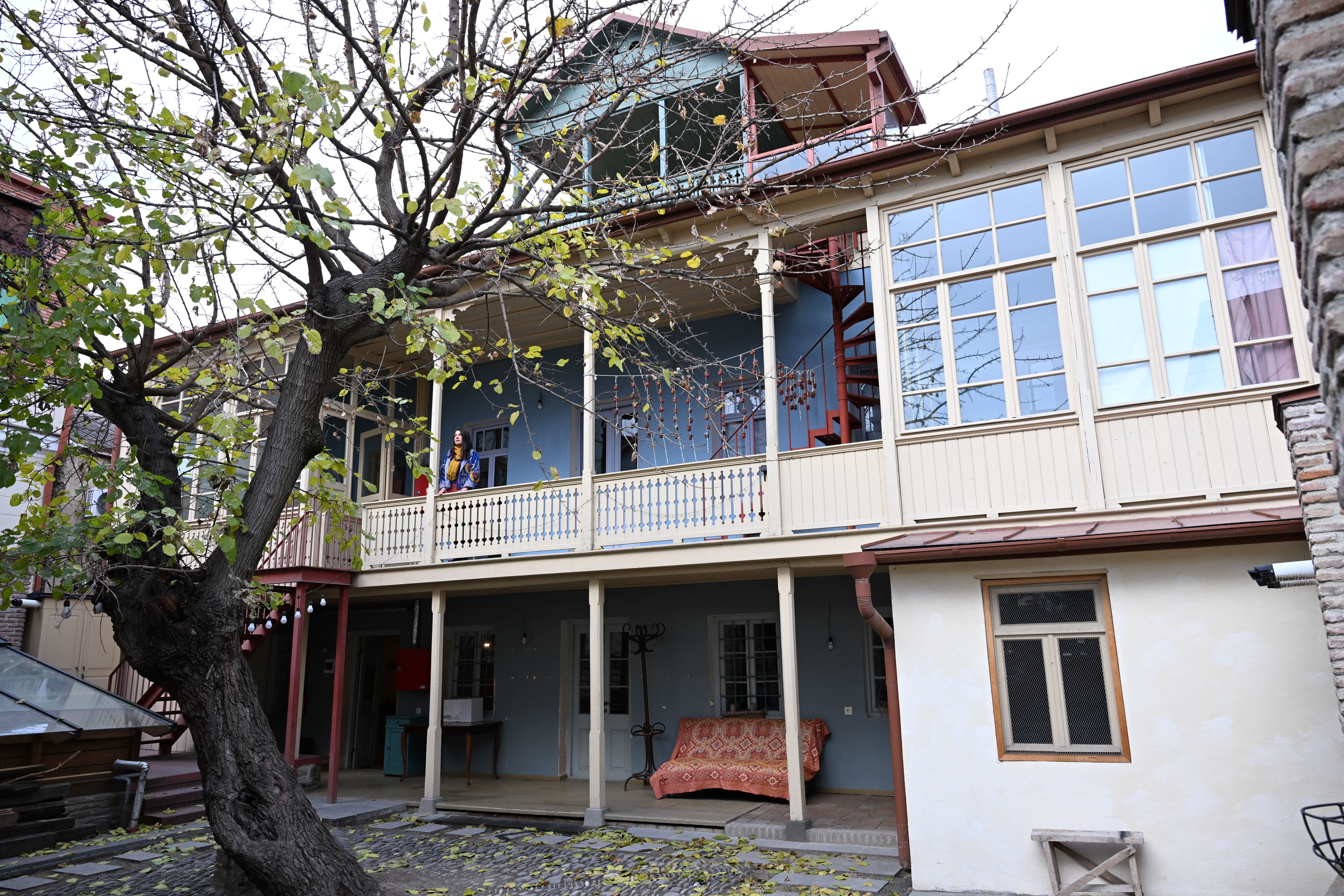
Office of the National trust of Georgia. Photo by Giorgi Mekvabishvili
While we are still speaking about the house, I would like to express our gratitude for hosting our ensemble “Adilei” here. Turning now to the organisation’s projects: how did you begin, and which achievements are you most proud of?
Our work began with a Cultural Heritage Competition, which aimed to draw attention to individuals who, often without formal training, preserve, care for and transmit knowledge about cultural heritage. We wanted to acknowledge and support these people.
After that, we worked in Tusheti, where we implemented an educational project. During the summer, we held meetings with local residents, and the level of interest was remarkable. We organised meetings in Dartlo and Omalo, and the local community itself later requested that we extend the project to Alvani as well. We discussed how villages could develop in terms of infrastructure, tourism and other areas.
Unfortunately, there is a significant lack of knowledge in this field. People may genuinely wish to improve their surroundings, but without proper understanding they can permanently damage cultural heritage monuments. Through this project, we were able to provide some guidance and support to local communities. The project was funded by the World Monuments Fund.
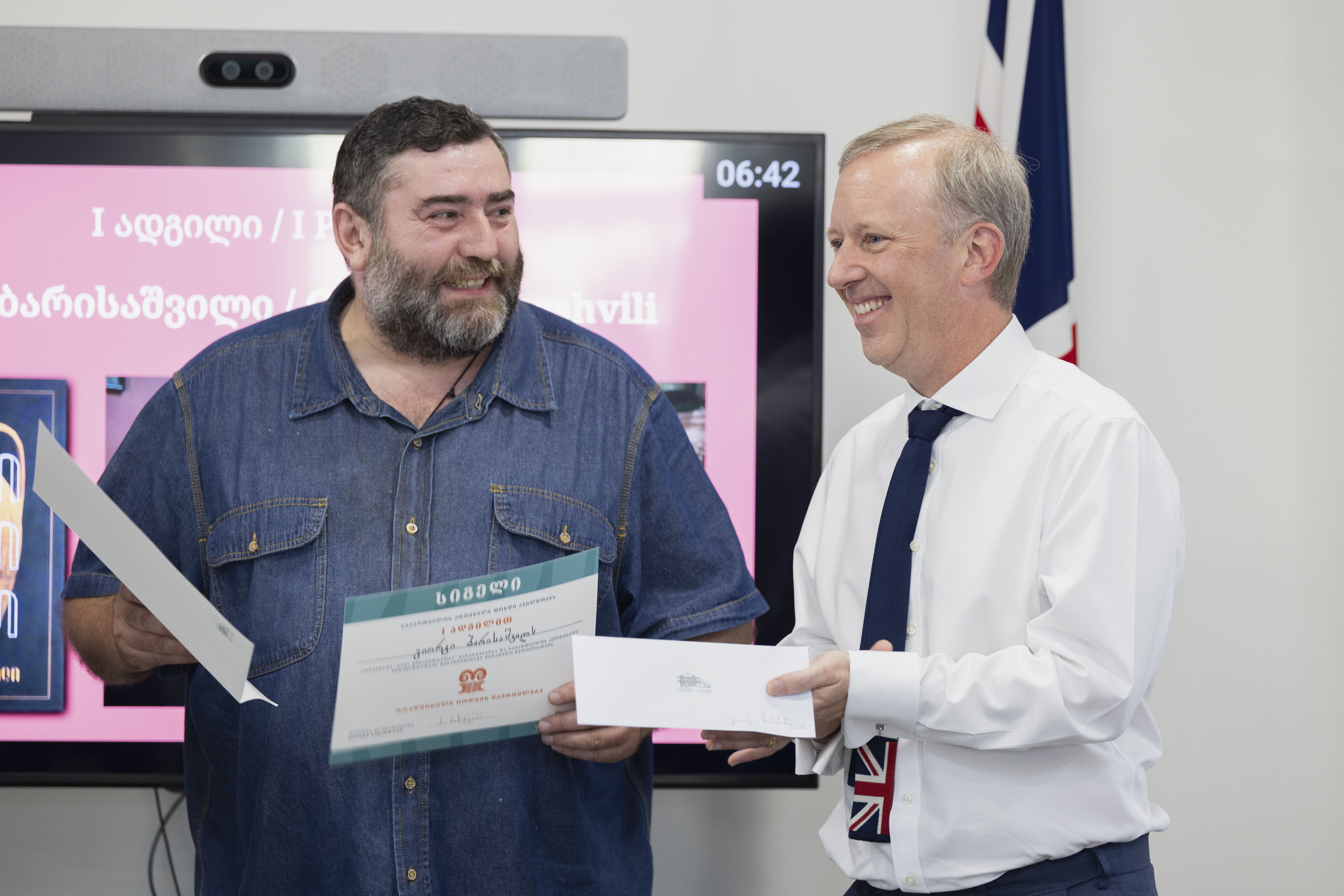 Cultural Heritage Competition. The winner is awarded by the British Ambassador. Photo by the British Embassy
One project that stands out as particularly meaningful for both me personally and for our team was the restoration of the Tsiskarauli Tower in Pirikita (Northern) Khevsureti, in the Arkhoti Valley village of Akhieli. Border regions are especially vulnerable, and any initiative that brings renewed life to these areas is extremely important. Even symbolic or temporary activity can provide vital moral support to local communities.
The Tsiskarauli Tower was damaged during the Russian–Chechen war in 2001, when shelling destroyed two of its walls and caused severe structural cracks. We began its rehabilitation together with French and British partners, later joined by Polish colleagues, and eventually the project developed into a truly international collaboration funded by ALIPH, an organisation based in Switzerland and Geneva that works in the field of cultural heritage protection.
A large number of volunteers took part in the project — initially 48, later joined by another 12 — from Georgia, France, Poland, the United Kingdom and Ukraine. In my view, the voluntary engagement was the project’s most distinctive feature.
The restoration project was developed by Georgian architects led by Nino Kordzakhia. An indispensable role was played by master stonemason Vasiko Nakeuri, whose contribution was immeasurable. Without him, the project would not have been possible. Although he is also a carpenter, he has no equal in dry-stone masonry; during the work we jokingly called him a magician. We often asked him to wear gloves, but he would refuse, saying that he needed to feel the stone with his hands. We suggested that someone else could pass stones to him from below, but he insisted that he had to pick up each stone himself. Working with him was an extraordinary experience.
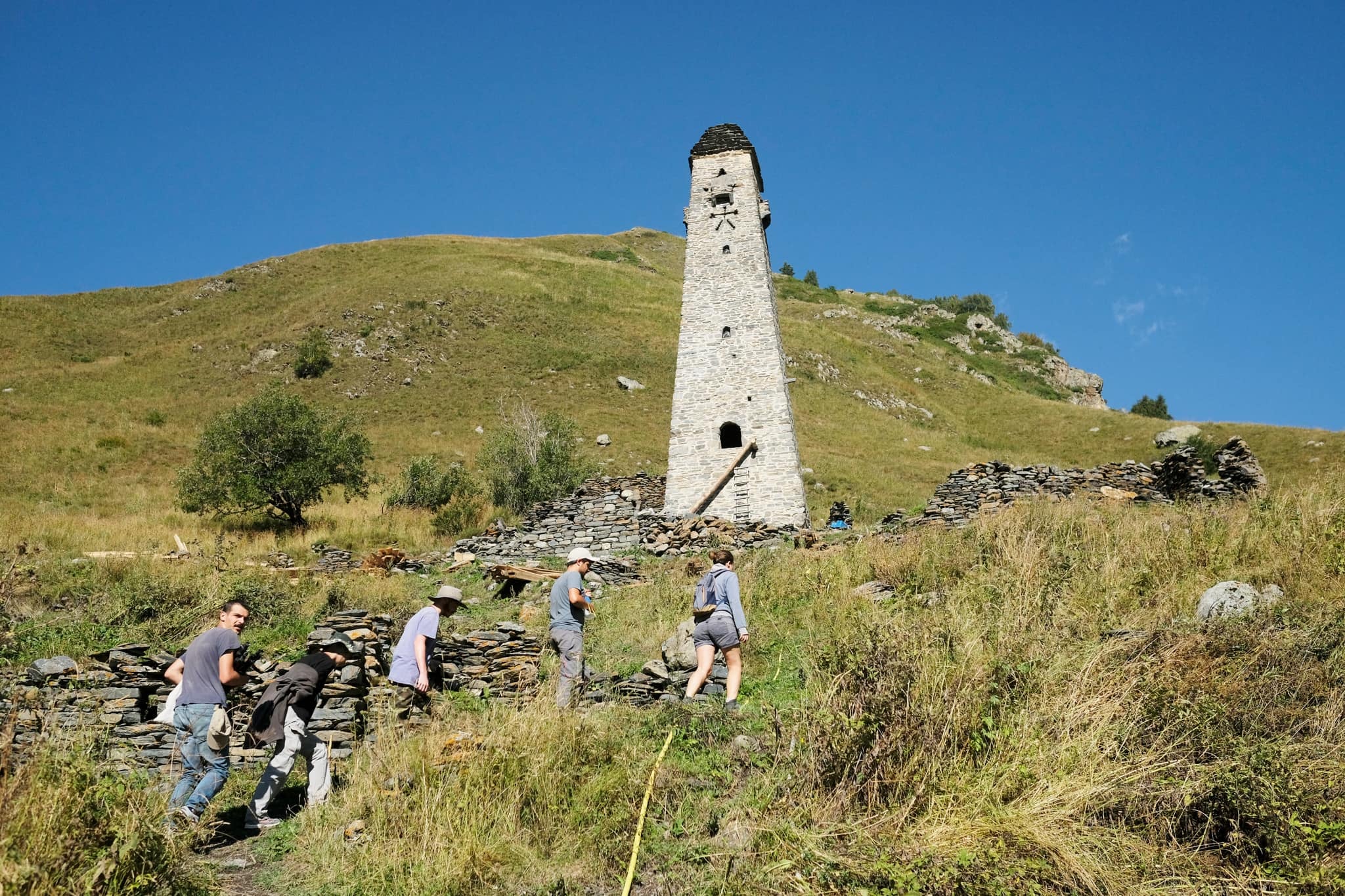
Tsiskarauli Tower
The project also had important consequences for the local community. During our time there, friends, relatives and other interested visitors began coming to the area, and a sense of renewed life emerged. One family even opened a guesthouse, gradually adding more rooms as demand increased. Prior to this, the Arkhoti Valley had been largely overlooked.
Another significant outcome was that many volunteers later joined our organisation and began working with us — among them Giorgi Burjanadze (now co-chair of the foundation), Mzia Guledani, Salome Tabatadze and others. In many ways, this project shaped the core team of our foundation.
Following the completion of the project, we received a major international recognition when Europa Nostra awarded us a prize, followed by the Grand Prix in the category of “Citizen Engagement and Awareness Raising.” Unfortunately, this coincided with a difficult period in the local context. This award is comparable, in its field, to receiving the Palme d’Or at the Cannes Film Festival — it is the most prestigious recognition of its kind in Europe. Subsequently, President Salome Zurabishvili awarded Orders of Honour to Vasiko Nakeuri, the project team and several volunteers.
Listening to this remarkable project, a broader question comes to mind. Human nature often inclines us to shift responsibility onto others. When a monument is damaged, we tend to ask why a particular institution or organisation failed — which is fair — but what can ordinary citizens do to support the care and preservation of cultural heritage?
When travelling, whether in a village or a city, simply telling a local resident, “What a beautiful and valuable old house,” or “What a remarkable wall — look how it is made,” can make a real difference. In traditional wooden houses in western Georgia — in Racha and sometimes in Imereti — there are many innovative architectural features.
Each of us can also take simple, practical steps. If we live in an old apartment, we can avoid replacing wooden window frames with plastic ones. If we have a garden, we can avoid chemical treatments and instead use traditional methods. People need encouragement and recognition.
I recall an example from Omalo, where several ancient and remarkable houses had been preserved. We kept repeating that this was precisely what needed to be protected, because once it is destroyed, no one will stay — Omalo would become merely a transit point. Encouragement worked: people began to see these buildings differently and started caring for them.
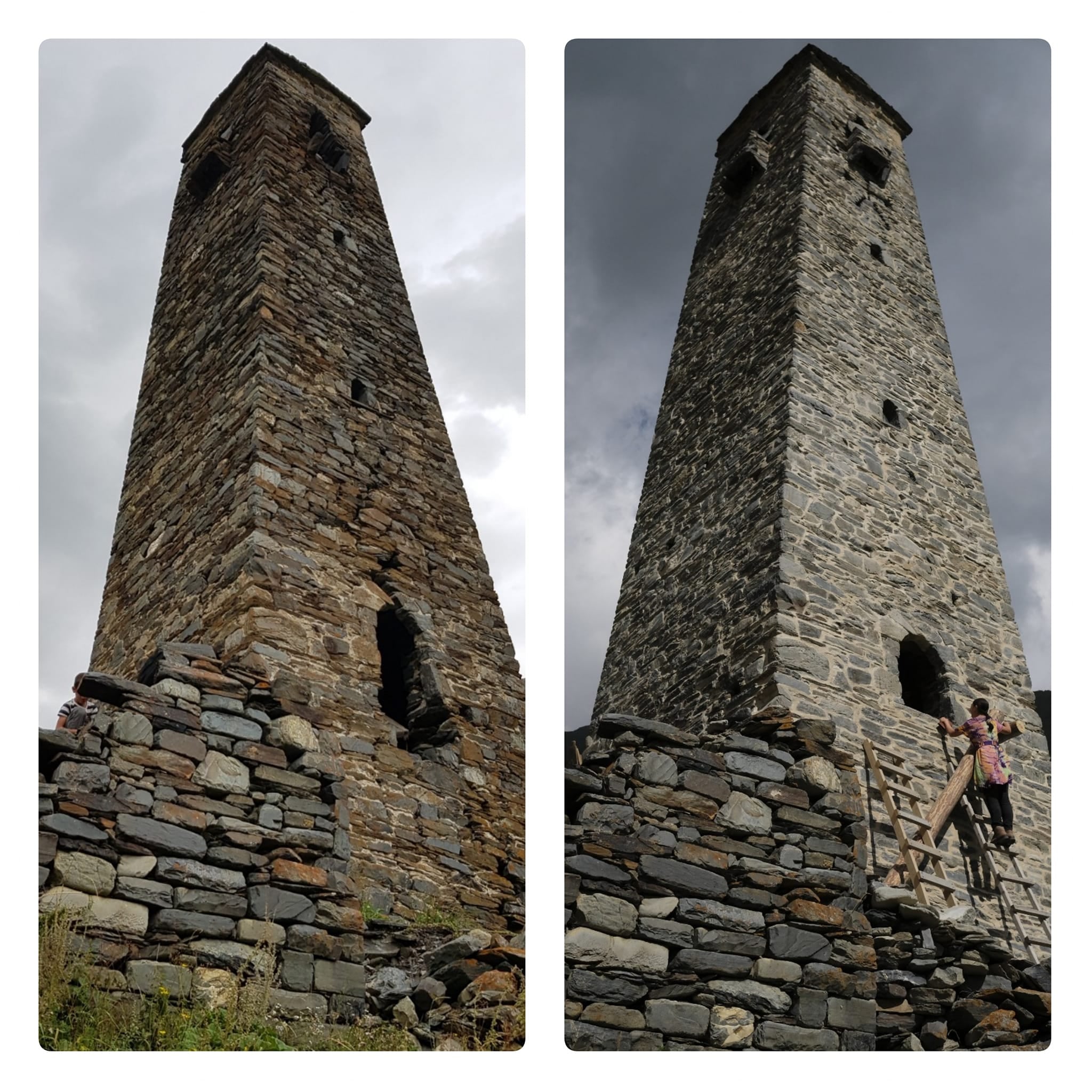 Tsiskarauli Tower before and after rehabilitation
This is why our Heritage Competition is so important. We invite individuals who contribute to the preservation and transmission of cultural heritage, give them a platform to speak about their experiences, and allow them to feel valued. They return home proud, and this sense of recognition motivates them to continue their work.
At the same time, if we witness unacceptable interventions in cultural heritage, local communities need to be more proactive. As a society, we often lack a demanding attitude, even though this is both our right and our responsibility — towards heritage as well as towards nature. I believe that every citizen, if mindful and informed, can make a meaningful contribution to the preservation and care of cultural heritage.
Finally, is there anything else you would like to add — something we did not ask but you feel is important to say?
I would like to see greater responsibility and engagement within society regarding both tangible and intangible heritage. Protecting cultural heritage is part of human rights — it is a fundamental right, just like the right to clean air, healthcare and other essential conditions of life. Unfortunately, cultural heritage is rarely considered alongside these other rights.
Cultural heritage is essential for a country’s socio-economic development and for individual well-being. If this foundation is undermined, nothing can be built upon it. Even the most contemporary forms of art draw — directly or indirectly — on older knowledge. What matters most is that we all recognise cultural heritage as a public good and as a source of collective well-being. No matter how comfortable life may appear, if this environment is lost, something fundamental is missing, because one of the key determinants of well-being is precisely the environment in which we live.