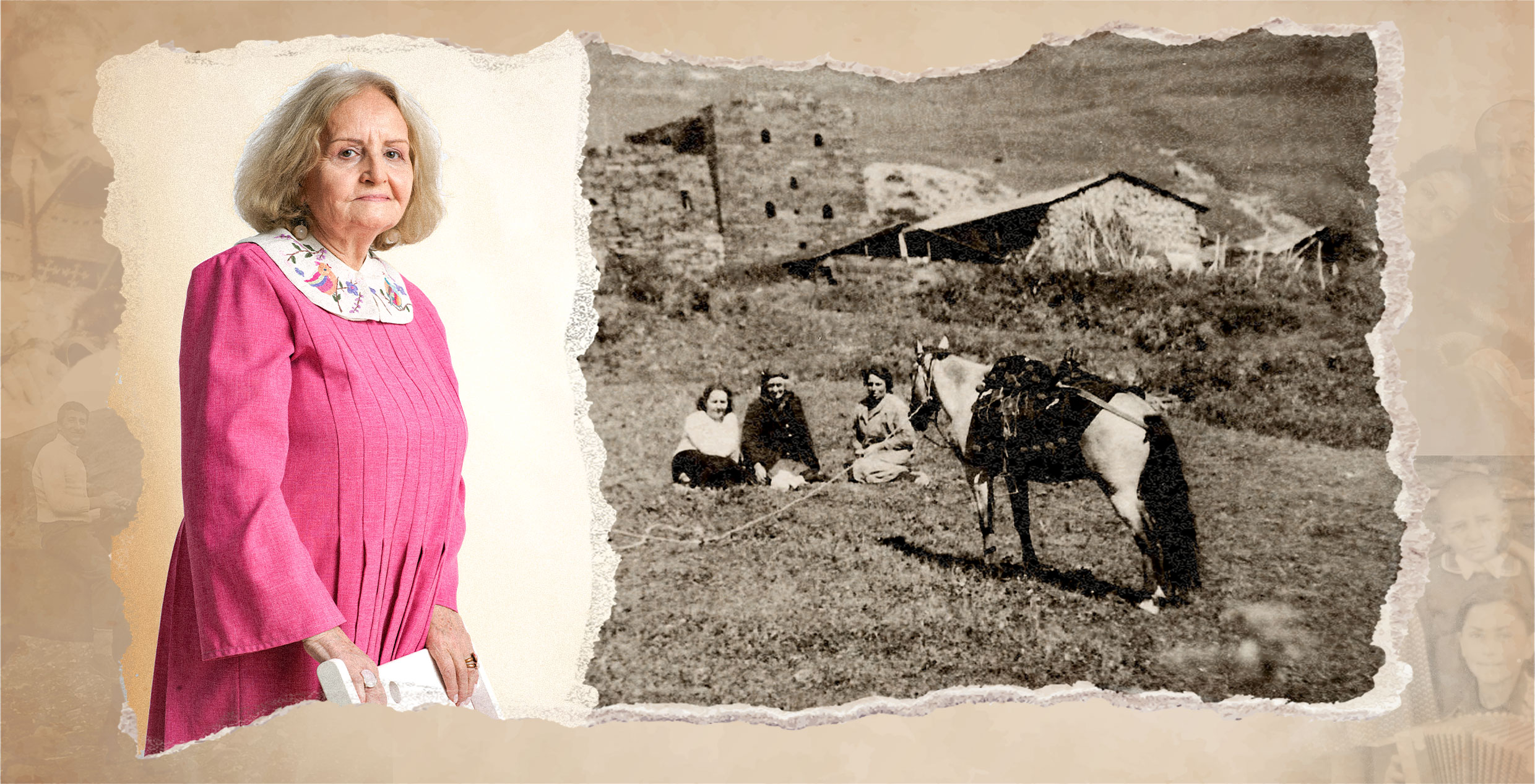
Interview with Eter Tataraidze
Author :

Everyone who knows you calls you by your first name — Etero. Why “Etero”? Where does this form come from?
This form comes from Tusheti. In Tusheti, nobody would call you Eter. If your name was Eteri, everyone would call you Etero. In general, many names are given an added -o ending there. So I grew up hearing it at home, and I’m deeply accustomed to it. That is why I find it to be such a great expression of affection to me that even today people do not address me formally, but rather use this diminutive form — warmly and lovingly. It has spread across the whole of Georgia that I am Etero. What I have done to deserve such affection from everyone, I truly do not know.
How would you describe your life at this moment, today?
Life is challenging me now, and I am fighting back. At this moment, I am in a great struggle, because the years know how to drain strength from the soul, and I do not want to surrender to that. Many years do something to you. I am no longer thirty years old, moving lightly through the world, I am seventy. That is a great many years. Now I live with urgency, while I still have energy, the soul’s energy…
Writing a book is not easy. When a person falls in love with words, and especially with Georgian words, they are already deeply possessed by it. I can truly say that I live through words. If I come across a forgotten word, my mind begins flying like a little child. Why am I suddenly so happy inside? Why do I feel so light? That word brings me to life. I am happy that I remembered it and did not lose it. This is my life.
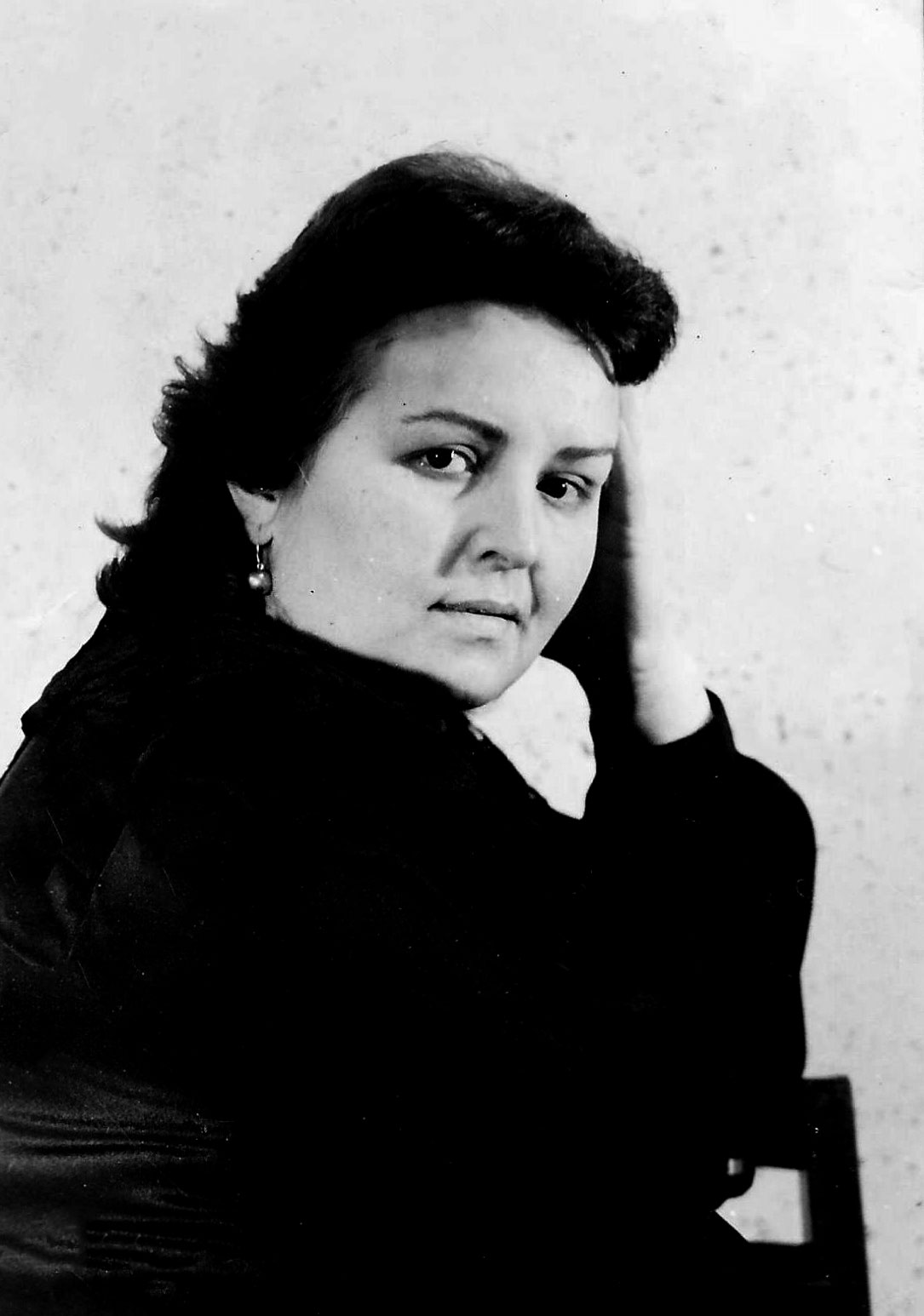
Photo by Amiran Arabuli
How difficult is it for a creative person to write poetry in an urban environment, far from Tusheti? What is your source of inspiration?
I have never written poetry in Tusheti; I say this sincerely. Tusheti, for me, is the whole Earth. In that environment, I cannot write anything, because I experience it so deeply and belong entirely to that world. It becomes purified later, when I go far away. There, my heart and my eyes remember everything, much like painters preparing sketches for themselves. At first, you cannot understand what it is, but later the painting emerges. That is how it happens, without your even intending it, when poetry is part of your life. There have been times when I wrote no poems for three months, even six months, and then one day I might write twenty. Yet out of those twenty, not a single feeling repeats itself. Each one is entirely independent.
What conditions or atmosphere do you need when you are doing this?
I have never put my hand to my temple for others to see and tried to demonstrate, “Look at me, I am a poet.” I am deeply dependent on the weather. Good weather brings me something uplifting and inspiring; in bad weather, sadness consumes me. I can watch the snow falling for hours. In those thoughts, I travel, I circle the Earth. Every season, every change in nature affects my moods.
Can you recall a story or a fleeting moment that affected you deeply and has stayed with you ever since?
For example, my mother used to tell me about the deaths of her brothers — she had lost five brothers, all five unmarried and without children. It was a great tragedy for our family, a very painful story. I remember the honey-coloured dress my mother wore, with little brown circles on it — a simple cotton dress. My father was a shepherd, and once a year he would bring back rolls of fabric from Shirvan. My mother sewed beautifully and clothed all four of us children herself. I remember one day upstairs — we had a small chestnut-coloured cupboard. The sun was shining, the door stood open… fresh air moved through the house. My mother was dusting that cupboard and singing:
“Hey, Kists, young men, who are you to fight over a woman?
If I surrender that woman to you, why should I wear my hat upon my head?
Against seven Kists stood one Tushetian alone upon the battlefield,
He cut off seven heads and laid the dead upon the dead.”
My mother was very graceful and beautiful, and she dressed with exceptional taste. No Tushetian woman could dress the way Kesane did. Back then, when I looked at her, I thought there could not possibly be a more beautiful woman on Earth than my mother. I always want to bring that image back to life. It was so emotional, so unique. I still have not dared to write a poem worthy of it. By the way, my mother sang beautifully. When she married, people in the whole village were saddened: “Who will sing for us now?” they said.
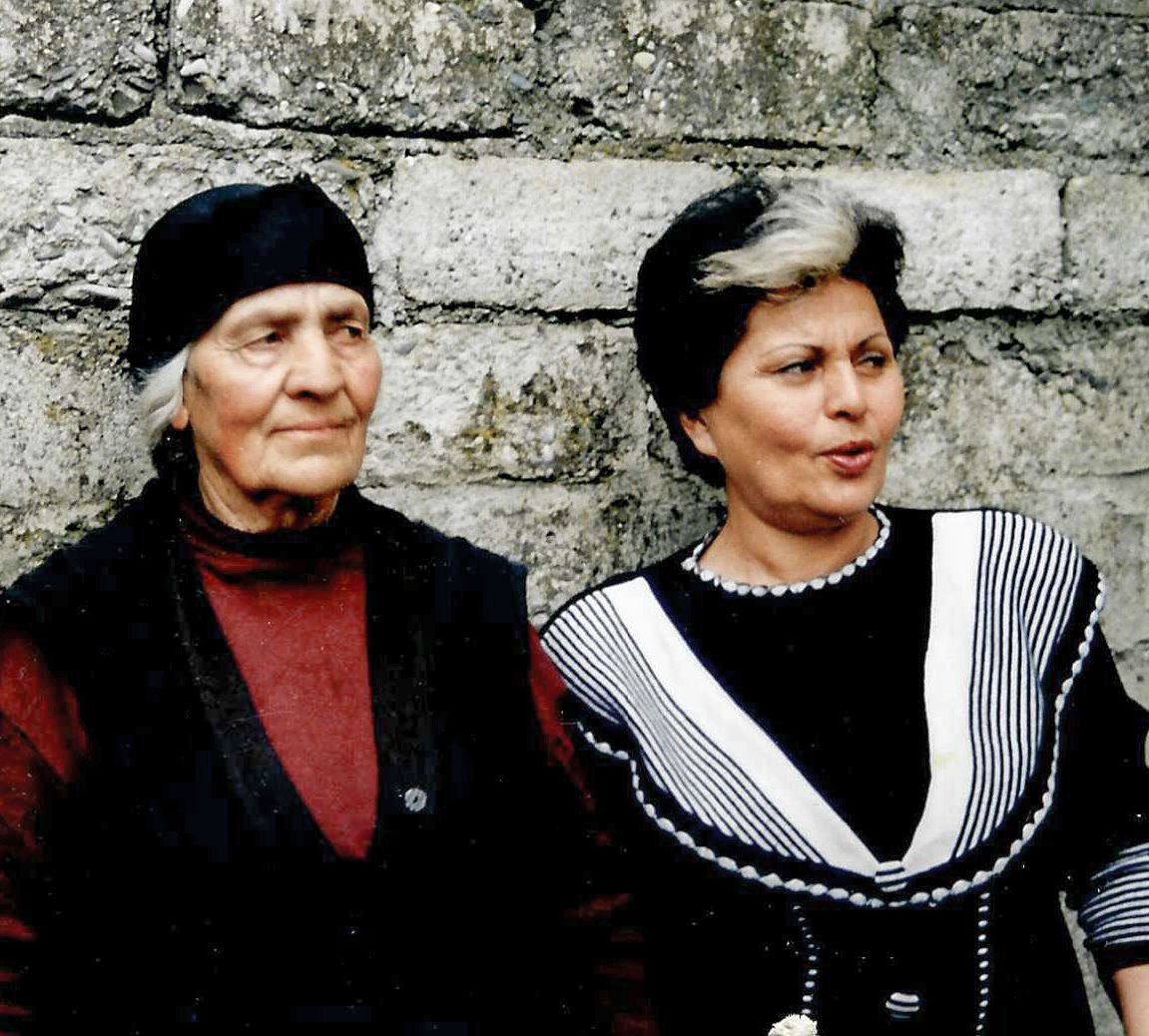
Lela Tatarаidze with her mother, Kesane Gulukhaidze.
My mother used to tell us: “You must not live in mourning forever. You must not wear black endlessly. If black clothing could achieve anything, all five of my brothers would still be walking boldly among us, for we wore black for so long.” What she meant was that you create suffering for yourself, and you burden and sadden those around you as well. That is why, when our father died, she told us: “I do not want to see you wearing black.” She said, “He was already seventy-three.” In three years, I myself will be seventy-three. Back then, I truly believed my father had been old. Now I cannot feel that. The heart does not grow old.
My mother and my aunts were renowned lamenters. My mother always said: “The dead themselves taught me lamentation.” I have one poem:
Lamenting Through Voice and Tears
There is much in my poetry that comes from the knowledge I gained while living there. Traditions, customs, beliefs, and ways of understanding the world became eternal for me — something that never leaves the depths of my being.
A poem that has not yet been published
What was the first poem that made a strong impression on you and awakened your interest in poetry?
I studied in Tusheti, in Shenako, the village of my grandmother — my mother’s mother.
It happened that I was not accepted into the school in Alvani. I was six years old, and they told us, “We will admit her when she turns seven.” Around that time my mother became ill, and we were sent to Tusheti — there was a small four-grade school in Shenako, housed in the church building. I went to study there and was accepted immediately. They needed one more child in order to open the class, and I had only one classmate — Shotiko.
Across from us lived Grandpa Ose (Ioseb) Kelekhidze, who often sat reading in the courtyard. The whole house was surrounded by a stone wall, and we children would climb up onto it and listen to Grandpa Ose, leaning over or resting against the wall. What book turned out to have captivated us once we grew old enough to understand?! — Vakhtang Kotetishvili’s Folk Poetry. I still have that book, and I can show you what Grandpa Ose wrote when he gave it to me: “There is no one besides you who will read this.” I could have turned days into nights over those books.
Grandpa Ose had lost his son, Vano, in the war, and our mother especially warned us: “If they ever need anything, they are elderly, help them without hesitation.”
Ose’s wife, Grandma Maka, knitted socks. In springtime she would begin hanging them one by one on a long clothesline to air them out, pinning them by the toes with pegs, and little by little the long line would fill with socks. These were Vano’s socks. She was waiting for Vano, her son who had disappeared in the war. When I saw those socks fluttering, I would cry. “She sun-airs socks for her son,” my mother would say.
What were the colours and surroundings of your childhood like?
As my family tells it, even before I was born we had a wooden house in Alvani and a guesthouse in Tusheti. We call copper water vessels vashraps. Every day we had to bring flowers to place in the vashraps that Mother kept especially for flowers. She loved flowers, adored them. Our house in Dano had a veranda, and we had to plant flowers in three or four places around it. “Don’t pick them greedily,” Mother would warn us. “Flowers belong more beautifully to the meadow,” she would say.
That house had once been a guesthouse. If anyone in the village had visitors, our house was so large that guests would stay there — there were enormous wooden benches stretching from wall to wall, which those who remained there later used as firewood. And through it all there was always Lela’s garmoni [accordion]. The sound of the garmoni constantly flowed from our house.
Mother was very modern, and never forbade us from doing anything — never a “don’t do this” or “don’t do that.” She was extraordinarily neat; you could never tell that she had spent the day working or out hoeing in the fields. There was always cosiness and order in our home, and that is how she raised us as well. People used to call my mother: “She washes water with water.” She would become upset with us if she found anything left untidy.
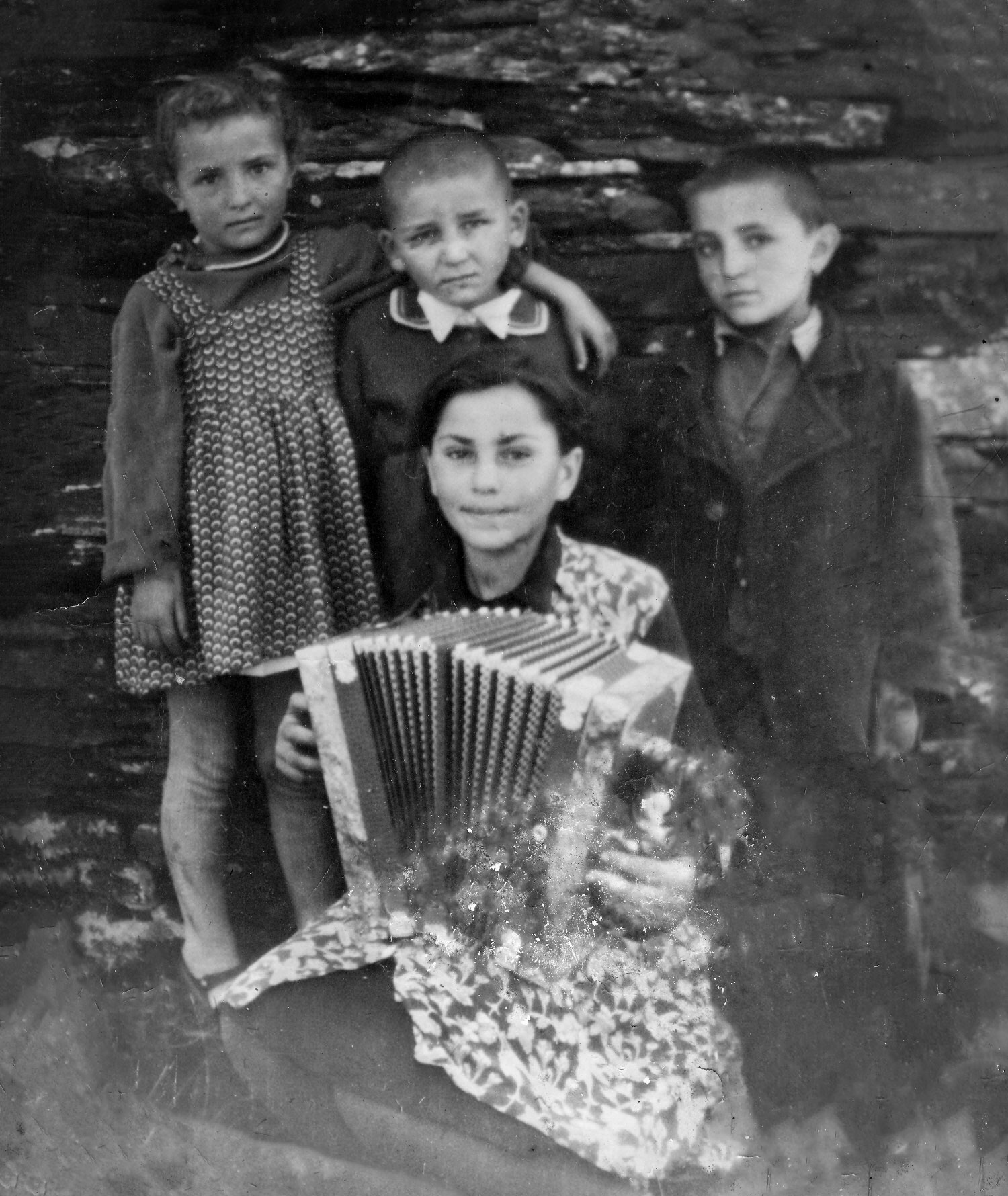
Etero’s childhood — from left, Etero herself, Aziko Azikuri, Kirile Tatarаidze (her younger brother), and Lela Tatarаidze with the garmoni. Location: Tusheti, Kakania. Photo by Shalva Alkhanaidze.
Since you mentioned school, what was school like back then, and how important was it for a family that a woman receive an education?
In our household, both my mother and father had completed four years of schooling. They could both read and write well. My mother grew old reading books. My father had no time for reading because he was occupied with tending sheep, but he could tell stories, he could sing, he could play music. Back then among Tushetians, it was considered shameful for men to play musical instruments, so he would play quietly, in private — the daira [frame drum] and the chianuri [traditional bowed string instrument]. Education was extremely important to my mother. She used to say: “A book is a great light, it will help you find your way into every dark corner.” My mother died at ninety. She had a book in her hands and was reading. After finishing a book, she would often say: “Oh, what great pleasure this gave me.”
How does the educational process of your time differ from today? (Etero worked as a schoolteacher for several years.)
During the fiercest communist years, they flew me to Tusheti because important guests had arrived and I was supposed to speak to them about Tusheti. When we were flying back from Omalo, the helicopter landed unexpectedly. Out came Soliko Khabeishvili, and said: “Etero, your teacher is coming, the one who taught you in first year, the one you called Bato Uncle.”
I adored him — that is a story in itself; one could write an entire book about what he was like, what kind of person he was, how precise and extraordinary. He taught all four classes himself, every subject — exceptionally educated, exceptionally intelligent. He would always tell me: “Etero, you are not like the others. Well done!”
One day I missed school. I was tired. He would question me in every subject, since Shotiko was lazy, so I had to answer for every subject. The next day, when I came: “Etero, where were you?” I lied — I looked down like this (at my shoes) and said: “My shoes had torn.” He looked at me immediately — there was no shop there, nothing there. He looked again and said: “All right, all right, I understand.” He said nothing in front of the other children, but later, when we were alone, he told me: “I have never heard you make things prettier than they are. What was that?” I answered directly: “Forgive me.”
It was a fantastic school. Not a single child would be overlooked or treated unfairly.
If you were to divide your life into stages, what would they be? What turning points come to mind?
Tusheti — the most natural dwelling place for my soul. That school, with nine children… black desks, a black chalkboard. The spirit that man created there, what that teacher did for me.
The second stage was Alvani, Alvani school, life there, and my relationship with the mothers of two Samaneli men (Samani — an underground patriotic organisation in Soviet Georgia during the Second World War), which left a deeply painful impression on me.
Then, in 1972, as soon as I finished school, I came to sit university entrance examinations — I applied to Caucasian Languages, where only five students would be admitted to the Faculty of Philology.
“Nature in Vazha” [the examination essay topic] — I received a failing mark, a two, in my essay. What happened? I remember waiting and thinking: surely I have at least a four. My name was not even on the results list — that meant a failing mark. I submitted an appeal, and they showed me my paper. Back then, we were expected to know passages by heart from poets and writers and use them appropriately.
Not a single phrase in my essay had been corrected; so why the failing mark?! I had quoted Vazha: “Longing for you, Aragvi, when I saw you, I rejoiced…”. The word datsukhebuli [longing for you] had been underlined in red, and above it, someone had written “damtsukhrebuli.” But in Pshavian dialect, datsukhebuli does not mean sad — it expresses longing. I had written it exactly as Vazha had.
So I wrote a letter of appeal — it was not I who received a failing mark, they gave Vazha one.
Only in deep old age did I learn who had marked my paper — it was a very painful moment. For a long time I wondered whether I should study at such a university.
Later, I was granted admission without having to retake the entrance examinations, and graduated with honours.

The Pirikiti Valley, the village of Girevi — expedition. Photo by Amiran Arabuli.
Who are the people who influenced you, both as a person and as a folklorist?
My life changed on 14 April 1979, and I moved onto a firm track — an extraordinary thing was happening around my poetry: the hall of the Philharmonic was full. At that time I was living on Makharadze Street (now Kikodze Street). To reach my room, you had to walk through a long, enclosed veranda, and that entire path was strewn with flowers. For me, it was an unimaginable fairy tale.
One day I came home and found a small red television set there. As students, we had no money to buy a television. Later I discovered that Chubchika (Tengiz Mirzashvili) and a group of artists had bought it for us, saying: so you can see what is happening, see what is being said about you.
How was society’s attitude towards female poets?
Very positive. At that time the public already had Ana Kalandadze, and many other women poets. People were interested in me, in how I wrote in an ancient dialect and what I wrote about. In the Tushetian dialect, lamentations had only been expressed in sung form and then preserved in memory.
What would your life have been like without “Poem, You Will Not Get Lost”?
Nothing at all, without Lela and Tsiuri Azikuri. They sang together; they had been brought for that evening performance. Lela came to me with a garmoni and a panduri [a traditional Georgian plucked string instrument]. Vakhtang Kotetishvili and Alexi Chincharauli were hosting the evening.
I had told my friend, before Lela arrived (I didn’t even know she was taking part): “I wish we at least knew someone who was going there, so we could watch the evening from backstage.”
Lela said: “Tomorrow we are taking part in an evening of folk poetry. I am going in the morning, and you must come with me.”
“Me? What should I sing or play?” I asked. She replied: “You are going to read your poems.”
As it turned out, Tsiuri had gone to Vakhtang and told him that Lela had a sister who wrote in the old Tushetian dialect, and they became interested.
Describe the people who had a strong influence on you and whom you believe the reader should know about.
I always remember being with my aunts. These sisters, who had no brothers and had gone through many tragedies, loved each other deeply. We cousins had nothing divided between us; we slept together in the same room.
My mother would always go to the mountains and take her nieces with her. For me, this was very important — the way they loved each other silently. I often thought: my mother must be so tired, how will she manage to wash all our clothes alone? And yet she would do everything as if it were nothing.
That kind of love existed between siblings — generosity. My mother was extremely giving. In the village we had a lonely old man, and we would always bring him the hot meal and the best of everything first. This generosity and sense of giving was something my mother taught us.
It is this kind of people and this kind of environment that shape a person. Widowed women — their endurance, orphaned children. Our house was always a place of shelter. My mother would say: “If those children go to fetch firewood, go with them; even a single stick of wood means a great deal to them.” These things make you think. This is how things were within my family.
My mother and father were also an example in their relationship. They grew old together without my father ever saying, “Move a little to the side, you are in my way.” They would even tell each other their dreams. The rule in our home was to sow as much warmth as possible.
Later, at school, I had an exceptional teacher — Magda Baikhoidze, who taught biology. I was going to become either a biologist or a philologist. My teacher used to say: “Etero follows the bloodstream,” meaning I had a natural inclination for biology. Even today I can watch biology programmes for hours. If it were not for Magda, I would not have loved it so much — she was a true model. My Russian teacher, Tina Turkoshvili, was a divine woman.
Then came university. Iura (Giorgi) Japaridze, who taught both Amiran and me — if any thread of thought took shape in us, it was through his example. We believed that nothing in oral tradition was more significant than his materials and research, not to mention Zurab Kiknadze, a name that speaks for itself.
Many I will leave out, because in my time there was still an extraordinary generation of professors.
Which author or oral performer do you feel is not known widely enough, and whose work you would introduce to the whole country?
Ioseb Baiashvili, a Pshavian poet; Ivane Tsiklauri (a Khevsur); and Mikha Khelashvili — all absolute geniuses. I could not list more; there are so many brilliant oral poets.
Are there such oral performers in contemporary folk culture?
Of course there are, and very strong ones. I will not even speak about kapia [improvised folk verse] — that is a separate matter. If we pay attention to them and offer proper guidance, we must be honest with them about where they currently stand.
What develops a poet — what makes them grow?
Practice, reflection, and the belief that one can develop. You must stand by them if they ask for help. I do not like it when people are misled. I have upset many people by telling them that what they write is not yet a poem — not even close to being one. I have said this even to older people.
What do contemporary and older oral poets have in common, and what distinguishes them?
A poem is time — it depends on the society you live in, the political situation you live in. Every era has its own story. Today, no one could write “The Ballad of the Tiger and the Young Man.” Why do some names remain shining in the sky? Ivane Tsiklauri has poems from which you cannot remove even a single sound, let alone a word. And what is education in that case? That requires not education, but a sense of time and truth, and of course talent.
There is a passage in Ivane Tsiklauri’s work: “On the cliff’s edge, white flower, candle of the cliffs.” Whose line is this? It belongs to Mikha Khelashvili. When Mikha was banned and his name had to be hidden, there is a letter in which Ivane explains: “This is from a certain poet [as if he did not remember the name], and I liked it so much that I included it in my own poem so it would not be lost.” This does not diminish Ivane. He consciously preserved it. In folk tradition, it is perfectly acceptable to take a good line from someone else — to use it as an opening or to build upon its rhythm, or to place it somewhere in the middle.
I was glad to hear you say that there are still very strong oral masters and folk poets today. You have now begun introducing oral tradition into salotbaro schools. What do you expect from this project? There is a sense that young people are not interested in it, yet you seem to argue the opposite.
At this stage, it is still too early to tell — we are only beginning to become familiar with the salotbaro schools. Right now, we are giving children assignments in oral tradition: to collect two examples — “The Tiger and the Knight” and the Svan “Tambi” (an example of Svan folk poetry), which resemble each other in certain ways. For now, we are simply observing who manages to gather the most valuable versions of either one, and this is not limited only to poetic variants.
Do you expect that you will discover new oral poets?
I believe that as long as there are Georgians, oral tradition will not disappear; neither will song nor dance. But it depends on how we preserve it.
How should it be preserved?
One must collect it, observe it, and analyse what existed a century ago. In oral tradition and folklore, time cannot be precisely fixed — it can only sometimes be located.
I once conducted such an experiment when I was going to a school in Gori. I asked Amiran what kind of task I should give them in order to test something.
He said: “‘Eo, meo, divlidalalaeo’ — and tell them to continue it.”
When I arrived at the salotbaro school in Gori, a boy came forward and said: “I know what you are going to ask”:
“Eo, meo, divlidalalaeo.
My dear mother,
I offer myself to you.”
For a moment, our hearts were warmed. A tiny boy, who had genuinely understood and expressed it.
At this stage, they must first collect and become familiar with the material — we cannot require them to compose poems yet. It was a playful exercise.
My aim is to open the door — to say: go in, look around, and I will tell them and give them the most valuable material, and assign them the most valuable task. Gradually, they will come to love this practice. I have also been to Lapankuri, and I am confident they will contribute valuable material.
Family — what role does family play for you? The path you have gone through since starting a family…
We lived in Nutsubidze in the 1990s, on the thirteenth floor. We used to carry water up from the first floor in buckets. There was no electricity. I used to bathe my three children using water heated on a kerosene stove. Like everyone else, we have lived through such years.

Etero Tatarаidze, Amiran Arabuli, and Mindia Arabuli. 1982. Photo by Zura Gomurashvili.
Did the burden of family life ever interfere?
It did, many times. I would raise my hands to the sky in frustration, but of course it did. I could have done much more. There came a stage in our lives when Amiran and I began living together, and since then we have done nothing separately.
As for Amiran — when there is such an overlap in professional life, is it easy or difficult?
For both of us, work turned out to be more important than personal matters. That is why we were able to come together easily and begin thinking about larger research and analysis. It happened almost without us realising it.
Before I even became involved, Amiran had already recorded Gulkani during an expedition. When I read these dialogues collected in Amiran’s red notebook, I realised I needed to meet Gulkani — I had not been interested in her before that.
When she came to our house, I immediately said to him: “Will you take me and the children to Chargali?” — “But there’s nobody in Chargali,” he said. — “Gulkani is there,” I replied. And he agreed.
He took me there the next day. I would not have been able to record Gulkani if Amiran had not supported me.
I do not know how such human encounters happen! And Amiran is not even the type who talks a lot. Now we have tenants, and this couple talks nonstop from morning till night, and one day I said: “Amirano, we have been together for 45 years. They talk so much every day that in just one day they have already said more than we have in all those 45 years” (laughs).
Someone once asked me:
— “Does Amiran tell you that he loves you?”
— “He has not said it for 45 years, so I do not know,” I replied.
What is the difference between you?
I have a poem — I am someone driven by decisive, fleeting moments, while he is silent. I will try to find this poem. I am like this; he is like that.
I came to understand that Amiran is, in some way, a traditional man — you cannot make him step in another direction. He grew up in a deeply spiritual family, in the hands of extraordinary parents. That means a great deal.
Once we were in Juta. In the morning, his father came out and said to the children: “You will go to this hayfield; you will go there; you will go there; I will go there.” I would think: surely at least one of them will say, “I cannot go today” or “I will go a bit later.” But they did it silently. I do not know what kind of culture that was in the home. Not a single word would be returned to a Khevsur father. It seems that where a person grows up is already a kind of destiny.
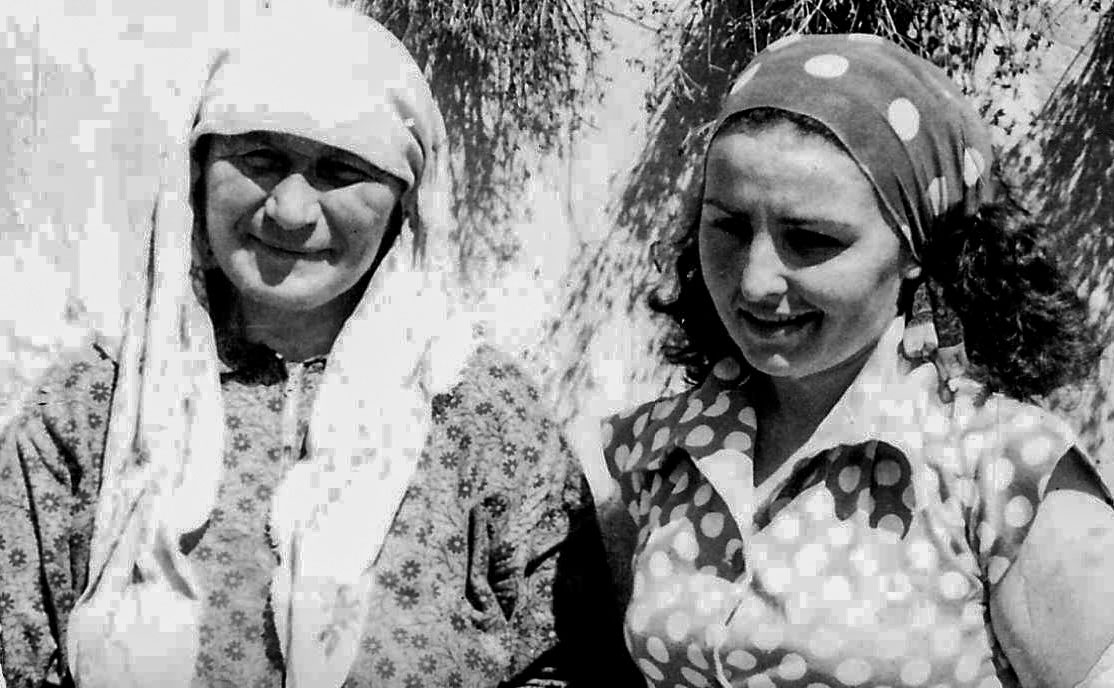
Etero Tatarаidze and Mariam (Dzila) Pitskhelauri (Amiran’s mother). Photo by Amiran Arabuli.
How did you meet?
When I first appeared there, Amiran and his father were there. A group used to come to our house and leave flowers; he never came alone. Babua Aludauri, Tariel Kharkhelauri, and Amiran Arabuli came together. We read poems. They stayed for a long time, and I realised they were deeply interested in poetry. The following week they came again. After that, Amiran would always come with someone — with his classmates. Then he started coming to the university as well. Once they came to one of Natela Kutelia’s lectures. Tariel was already a well-known poet.
They went in and hid somewhere. The lecturer came in, and after a while noticed them and said:
— “All right, come out from there! Come out and tell me — which one of you is in love with Etero? Why did you come bursting in here? Who invited you?”
I was terribly embarrassed — I thought, what do I have to do with this?
They came out, all three of them blushing. I have never forgotten that moment. She then made them sit down and said:
— “I can clearly see that one of you here is in love with Etero.”
Later, when he was ill, I realised I could not go on living if he were no longer there. Because the world would become very empty for me. Despite this quiet man, I know everything — what he needs and when. And he knows me as well. It is hard, you get used to each other. We stopped talking about love a long time ago.
If we have ever argued, it has been about professional matters; there have also been disagreements about everyday life, but I have never felt that I was insignificant to him. Now, perhaps, we will slowly start getting things wrong (laughs).
Who needs the word most today?
Every thoughtful Georgian — so that they may go deeper, think more deeply about their homeland. Without it, we will have neither strong families nor happy children. Your homeland and your culture are what matter most — you must know that. To understand the culture of the spoken and written word means to love your country profoundly.


.jpg)