Interview with Amiran Arabuli
Author :

How are you? How is your life today?
This is a very difficult period, an extremely trying time, and, whether we like it or not, we fall into step with what shapes and determines each of our lives. I cannot say that everything is going well for me, but when a person is satisfied with their work and feels a sense of purpose in their profession, they are able to face any adversity or misfortune with resilience. Such is human life. No one can truly be well when their homeland is not, and I also hope that through my presence and existence I can make a contribution, even if only within my own sphere.
Where do your memories begin? What setting do you associate with your earliest impressions and feelings?
I have often thought about this — those fleeting moments and fragments of time when my memory begins. I remember events from my earliest and most distant childhood. Seventy years have passed since then. My first memories are linked to my family — to the time when my grandparents, as well as my parents and brothers, were still alive. Their presence filled my everyday life and gave it meaning.
I remember very harsh winters, when we had knee-deep snow every year. For some reason, there were particularly heavy snowfalls during my childhood. I remember how my grandfather would wrap me up in a sheepskin coat.[1]
It seemed that in that winter, amidst the snow, one could almost hear the sounds of animals; so mysterious and hushed was that place — mysterious and hushed, yet at the same time full of sound. At that time, there were quite a lot of people in the village and in the mountains, and interacting with them enriched and enlivened everything.
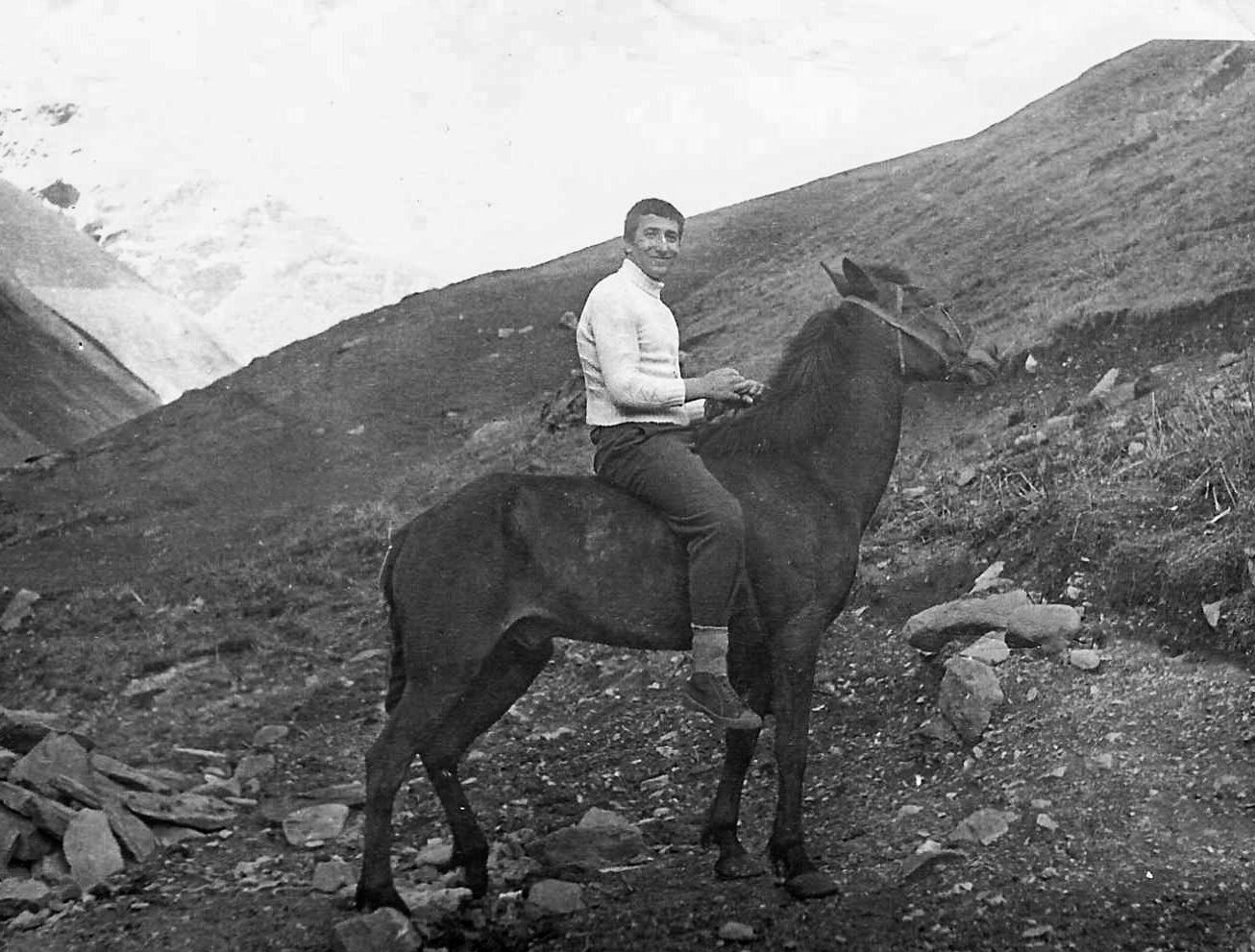
Amirani in Juta
Tell us more about your childhood and your daily life.
First of all, I must begin by recalling my family. When our parents had us all at home in the evening, it was time to prepare for bed. We did not have television and, of course, no internet — unlike today — but there were many other things. First and foremost, there was oral tradition, which preserved countless stories about the mountains and the lowlands.
I remember we had a very old radio, and when the huge, heavy batteries ran out, my father and other villagers, my brothers and cousins, would go down into the ravine to fetch new ones, and they would last us until spring. On that radio, we listened to what was happening in the world and in the Soviet Union. At that time, during the Soviet era, everything depended on the great Soviet system.
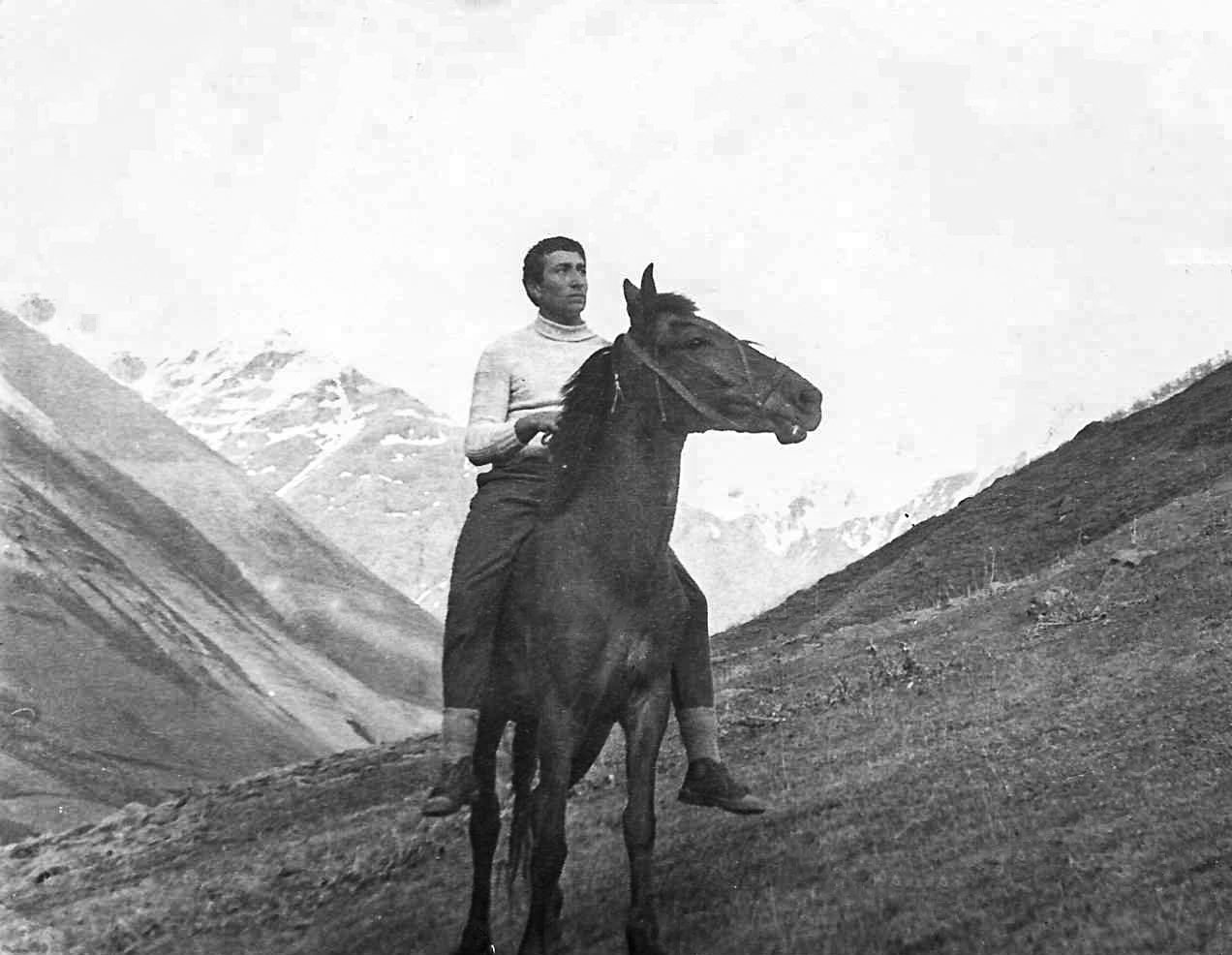
Amirani in Juta
What did your parents do?
In my native village, Juta, all four seasons were very distinct and very interesting. In spring, both nature and people would awaken — it was an incredibly beautiful and, in a sense, romantic time. My parents would go out into the fields to plough the land. They sowed barley and wheat, and this was essential for every household.
Barley was used to make vodka and beer, and there had to be plenty of each in every household, as they were essential for entertaining guests.
Did you, children, take part in all this?
Of course. In spring, we would light candles on the horns of the oxen and set off. The whole area — the fallow lands — was divided among the villagers. We, the children, also worked in the fields and meadows. We helped our parents as best we could.
Then summer came. After ploughing and sowing, all the rituals were to be carried out. The haymaking season began in summer, after Atengenoba. I remember I was in the fourth form when I first picked up a scythe and started mowing hay with my father. School started in autumn — going to school was a great joy.
How important were education and schooling to your parents?
There was both study and work. Very little free time was left for play and entertainment. We were involved in all the same kinds of work as the adults. We knew how to do everything: mowing, stacking hay, harvesting barley. When the barley was loaded onto sledges, we would take it home. After the fourth year, we would go to Khevi, in the Kazbegi district, and then to the boarding school.
What was the school like back then — the atmosphere, the teachers, the attitudes?
At school, all subjects were taught by one teacher — Vano Chabaidze, a Khevsur, a very colourful character. Our education was in his hands, and most importantly, we were taught to do good deeds. We studied, and from a child’s perspective, the process was quite diverse.
To what extent did the Soviet Union reach into you?
We took the Soviet era as something normal — with all the harshness it entailed. Everything was so concealed or glossed over that we were unaware of and did not understand its cruelty. We were skilfully deceived so that children would not feel the harshness of Soviet life.
Now we know what it was really like. The main thing was the ideology and the spirit in which schoolchildren were supposed to be brought up. Everything was subject to the Soviet order, and we could neither escape it nor avoid it. For example, participation in state holidays was compulsory.
How did you first come into contact with oral folklore — how did your life become intertwined with it?
It happened quite naturally. By this I mean that from my earliest childhood, we listened to our grandparents telling stories and tales of adventure, in which the oral tradition is so rich.
I spent my entire childhood at the house of my grandfather’s brother. My grandfather’s brother, Gigi, was a very colourful character. His wife was Tarua Baliauri, the sister of the writer Lado Baliauri. I would sit for hours on the balcony in the village and ask questions. Sometimes I didn’t even need to ask — he would see me, sit me down and start telling me countless stories.
What I do today has its roots in my distant childhood and those fairy tales, characters and heroes.
My mother used to tell me fairy tales — very long and beautifully told. The stories she told have remained in my memory forever. If I have any ability today and my own approach to my work, it is thanks to my ancestors.
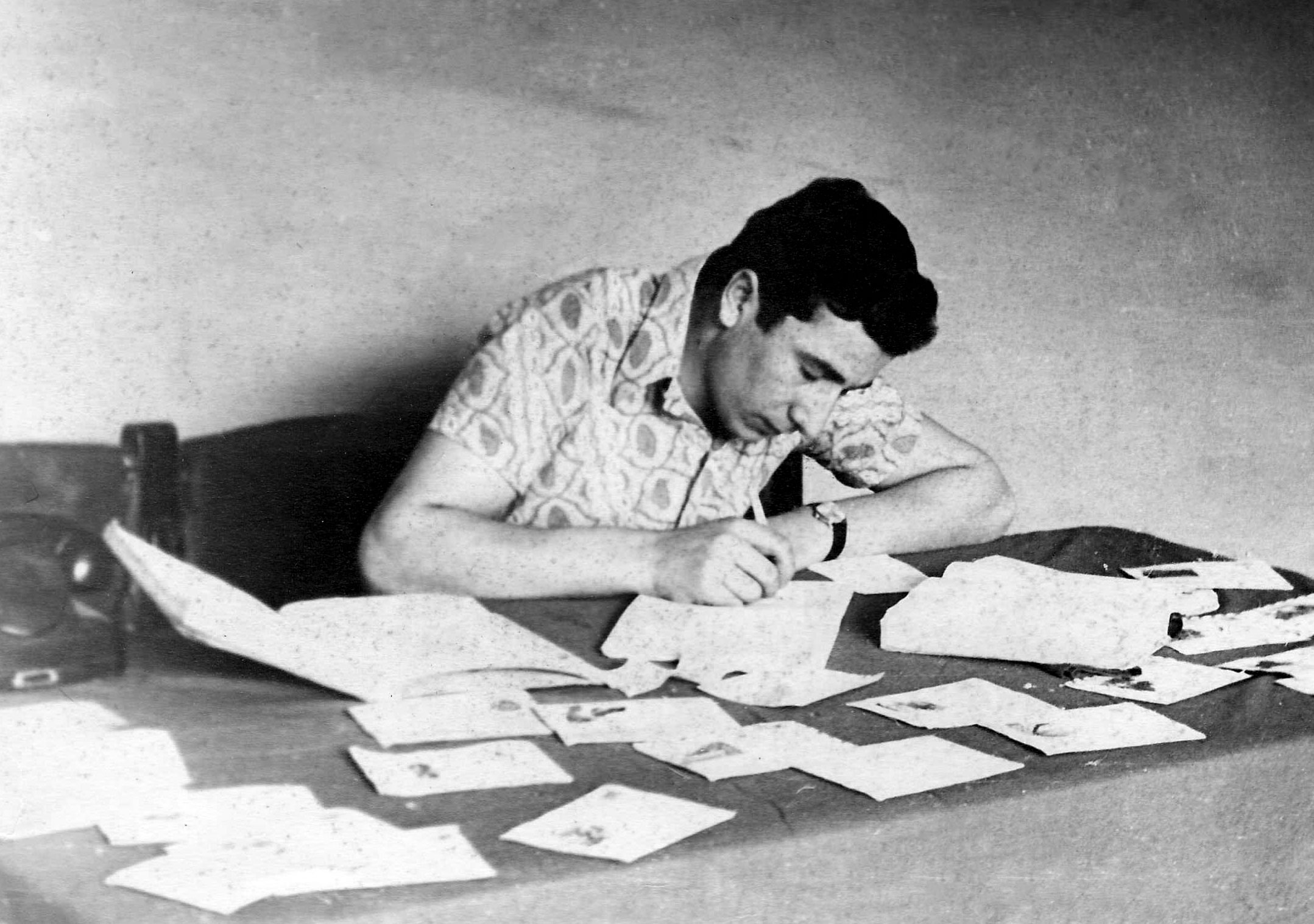
Working on folklore material — postgraduate studies
What happened after you left the boarding school?
Nothing much changed. The years passed one after another; the only thing that changed was my surroundings — the place where I and my peers, the boys and girls from Juta, lived.
After completing four years of primary school, I studied in Sno, then attended a boarding school, and later went on to study at Ivane Javakhishvili Tbilisi State University. A whole new life began: lectures, seminars, exams and assessments.
Did city life live up to your expectations?
Of course, moving to the city was a completely different experience — it meant starting university. I even felt a sense of pride at having passed my exams and been accepted into university. It had its own rules and way of life.
I spent eight years in the so-called “Student Town” (Studkalaki) in Tbilisi, where the whole of Georgia was gathered: Svans, Ingiloys, Kakhetians, Megrelians… everyone. We formed deep friendships and were very close.
Close friends with whom you spent that time…
People from the North Caucasus… Sergei Paziv was a friend of mine — an extraordinary man. We spent several years together. Otar Putkaradze, a journalist, and many others were among my close circle.
When you finish university, you can’t help feeling a pang of sadness about many things, and you have to follow the path life has set for you, whether you want to or not.
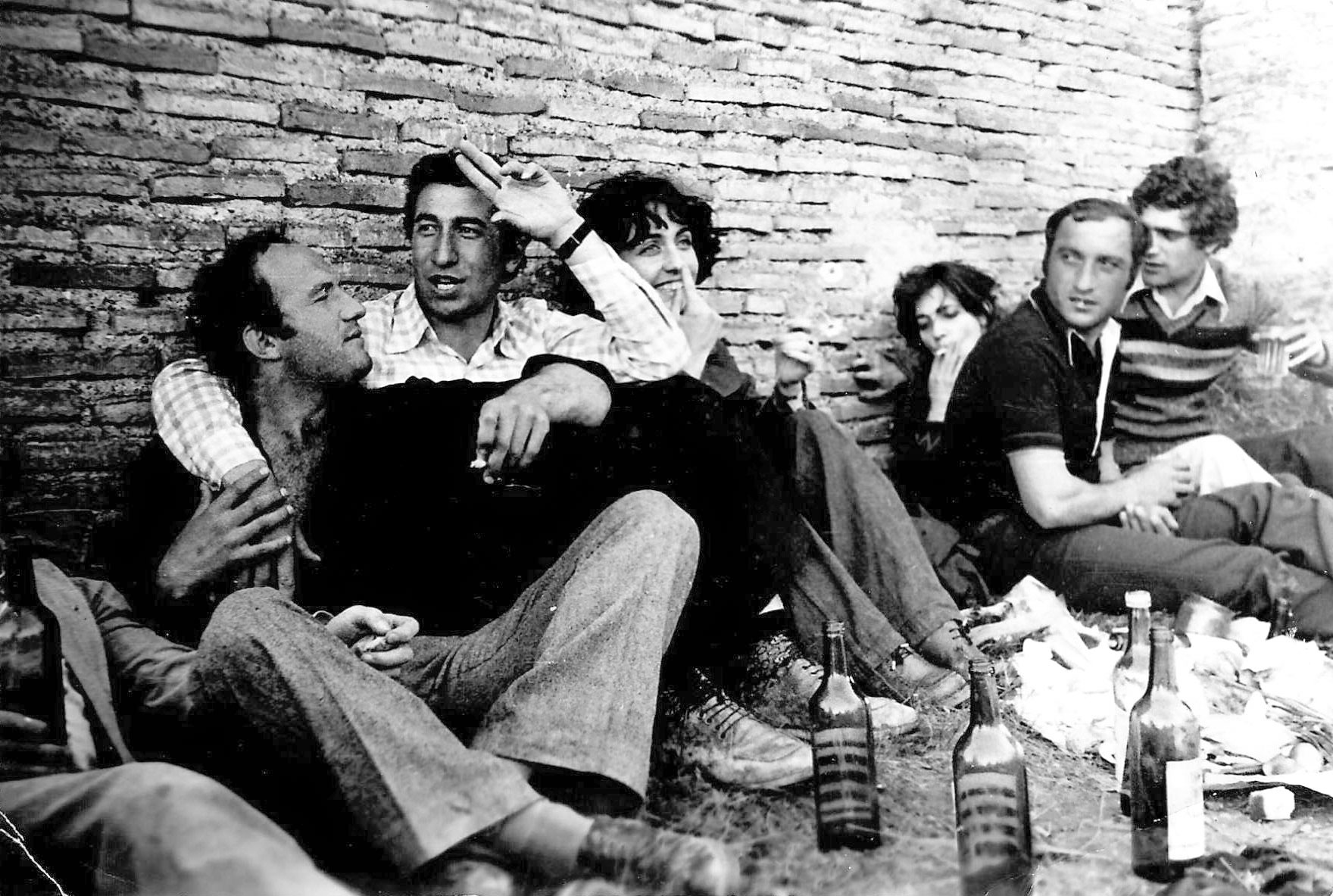
Student years (expedition)
What were the university expeditions like?
The expeditions were organised by the Department of Folklore. I must mention my friend Yura Japaridze — he was a born folklorist, a man with whom one could never be bored and from whom you could learn a great deal. He was the embodiment of boundless kindness and folk wisdom. And, of course, Griver Parulava, our expedition leader.
I still keep those thin notebooks we brought back from the expeditions — faded, but preserved in my archive. I remember where I wrote down each poem, each phrase, each word — they are a treasure of that time.
How did you decide who to record? Did intuition play an important role alongside your professional knowledge?
All it takes is for me to hear a single word or catch a phrase — something distinctive or unusual — and I already feel it is worth spending time with that person. From there, a deeper relationship develops, as you realise they are bearers of a great deal, and you try to ensure that it is not lost. What we recorded then has been preserved to this day.
Etero revealed that she decided to record Gulkani (the daughter of Vazha-Pshavela, Gulkan Razikashvili) after seeing a short passage in Amiran’s notebook. How did you meet Gulkan?
It was during my postgraduate studies. In the summer, folklorists came to my village and I got to know them there. When I returned to Tbilisi in the autumn, I was invited to go to Chargali. There I met Gulkan Razikashvili and realised that it was worth building a closer relationship with her, but that initial encounter would not have been enough — we were only passing through.
She asked everyone where they were from. Then she asked me:
- “Amirano, are you a Khevsur?”
— “Yes, Aunt Gulkan, I am from Juta.”
— “Then you won’t be surprised by my snuff-stained nose; I’ll tidy it up straight away.”
I jotted that down in my notebook right away.
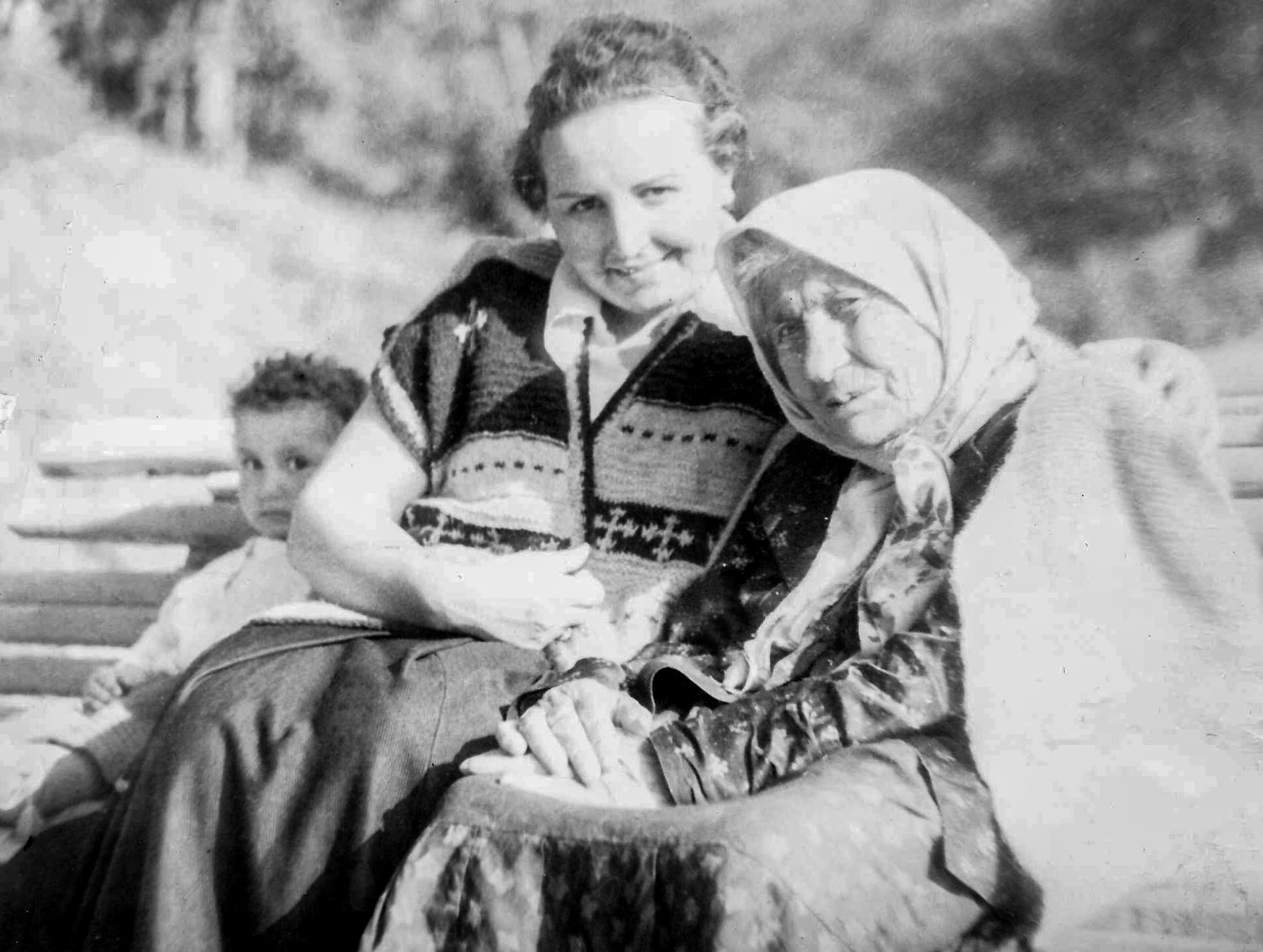
Etero Tatarаidze and Gulkan Razikashvili (child: Anano Arabuli), Chargali, photo by Amiran Arabuli.
As I understand it, you were the first to record Ivane Tsiklauri’s masterpiece “What Made Me Grow Old.” Please tell us about that.
In 1978, we set off on an expedition to Dedoplistskaro, to the village of Arkhiloskalo. Once again, our leader was Yura Japaridze. We spent two weeks there. Before leaving, we dropped in on Ivane Tsiklauri. Uncle Ivane served his own wine. At the table, when we asked him to read something, he took out a large lined notebook and began to read from it. We immediately realised that we were in the presence of a masterpiece. He later gave me the manuscript.
As for Vakhushti Kotetishvili and Alexi Chincharauli, a few months later, when it was decided to hold an evening of folk poetry in Tbilisi, they went to visit Uncle Alexi. It was then that Ivane brought out this notebook of poems, and the poem was later published in the almanac “Georgian Poetry,” with a short foreword written by me. Naturally, we felt a sense of awe, but until Vakhushti had his say on it, we could not fully understand what we were dealing with.
Georgian oral tradition and poetry reflect the archetype of the Georgian man. How would you describe his character, disposition and way of life as reflected in the oral tradition?
I have often reflected on this and even thought of writing a paper on it, but I never quite made up my mind to do so — otherwise it would already have been published.
Our oral tradition encapsulates an entire worldview. What happens in the universe is also reflected in human society. The worldview that has taken shape in Georgian folk tradition is vividly expressed through oral tradition. I now realise that I find it difficult to articulate this fully, but it reflects the talent and distinctiveness of the people who created it.
Every fairy tale, fable, poem, or tongue-twister is an expression of deep knowledge — an illumination of great knowledge.
Through folklore, guided by what it tells us, we can construct this model, rebuild it, and bring to life something that actually exists in reality. For example, if mythology features devis and kajis (mythical beings), the question of whether they are real or merely figments of the imagination will naturally arise in due course.
Contemporary researchers suggest that the term “devi” refers to North Caucasian tribes and their representatives — the devis — with whom the highlanders and mountain people were in continuous conflict and struggle; the myths of Iakhsari and Kopala and others originate from this. I also believe that this hostile relationship between different ethnic groups and peoples, as reflected in folklore, is itself a reflection of historical reality.
Is the folk spirit and knowledge you speak of visible in contemporary poetry?
Today the so-called folk poets no longer use pen and paper — everything has moved to the computer. Naturally, a great deal is changing in the mind and consciousness of today’s person under this influence. Another century has arrived, and very quickly at that. No one could have imagined that humanity’s way of life and its very essence would change so radically, and so soon.
For me, technology and computers are tools drained of life. Perhaps that is not really the case — I simply perceive it that way, because I grew up and was formed in a different kind of world. The relationship with paper carries an entirely different intimacy, entirely different, mysterious voices come from it. It is unimaginable, to say nothing of Rustaveli, to think of Galaktion’s relationship with technical devices — it would make us smile.
Much is changing under the influence of technology. We must try to salvage whatever we may be losing to this excessive absorption in the system.
What role did the poetry evening “Poetry, You Will Not Be Lost” play in your life?
This is a fragment of a poem by Omar Tsiklauri: “Poetry, you will not be lost, so said Omar” — a poem by a Khevsur man. His name appeared at those poetry evenings too. A very fitting title was found straight away — the poem conveys an optimistic, hopeful mood. Without this, my existence would be unimaginable. If poetry were lost, then the existence of people of our kind would probably be worth only half as much. This phrase carries very distinctive and important weight for me. All of this has value.
Have you ever tried writing poetry?
I wrote in childhood, as a schoolboy, and later in Tbilisi as a student, but I sensed that I did not have what it takes to be a poet, so I gave it up. It’s just as well I realised it in time.
How did photography enter your life?
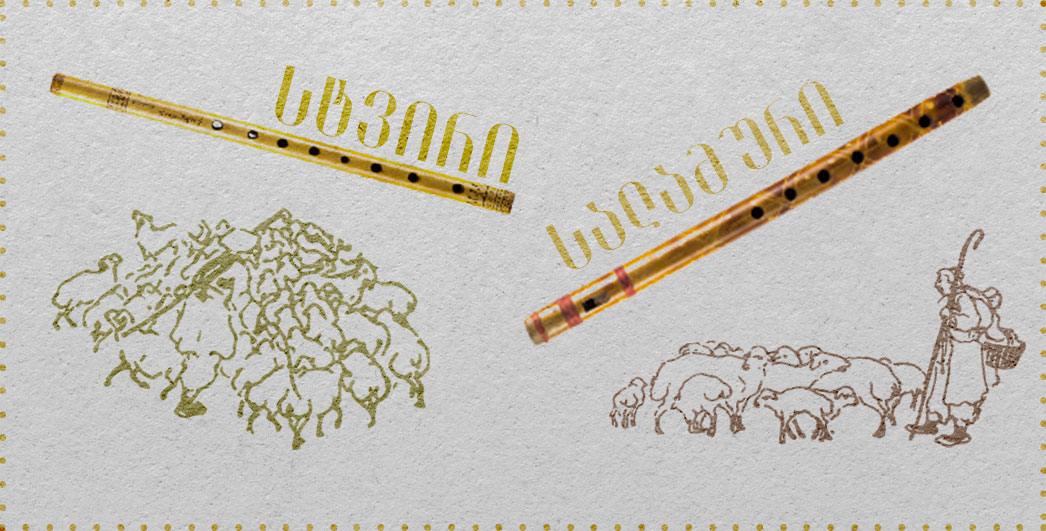
This too was a rather rare thing. My brother, Shabura — older than me, and ahead of me at university, where he also studied Philology; he is no longer with us — was given a camera as a reward for some achievement: a “Chaika,” a very small one. The frame was split in two. My interest in taking photographs went back to my early childhood. Back then, of course, you needed film, black-and-white naturally, and I still have a few photographs preserved to this day, showing my peers sitting or walking, their movements captured — the history of those years and decades preserved.
Later I got much more deeply into it, and developed these photographs together with Otar Putkaradze. When we had no drying rack, we would stick them to the wardrobes and print them in a rather primitive way.
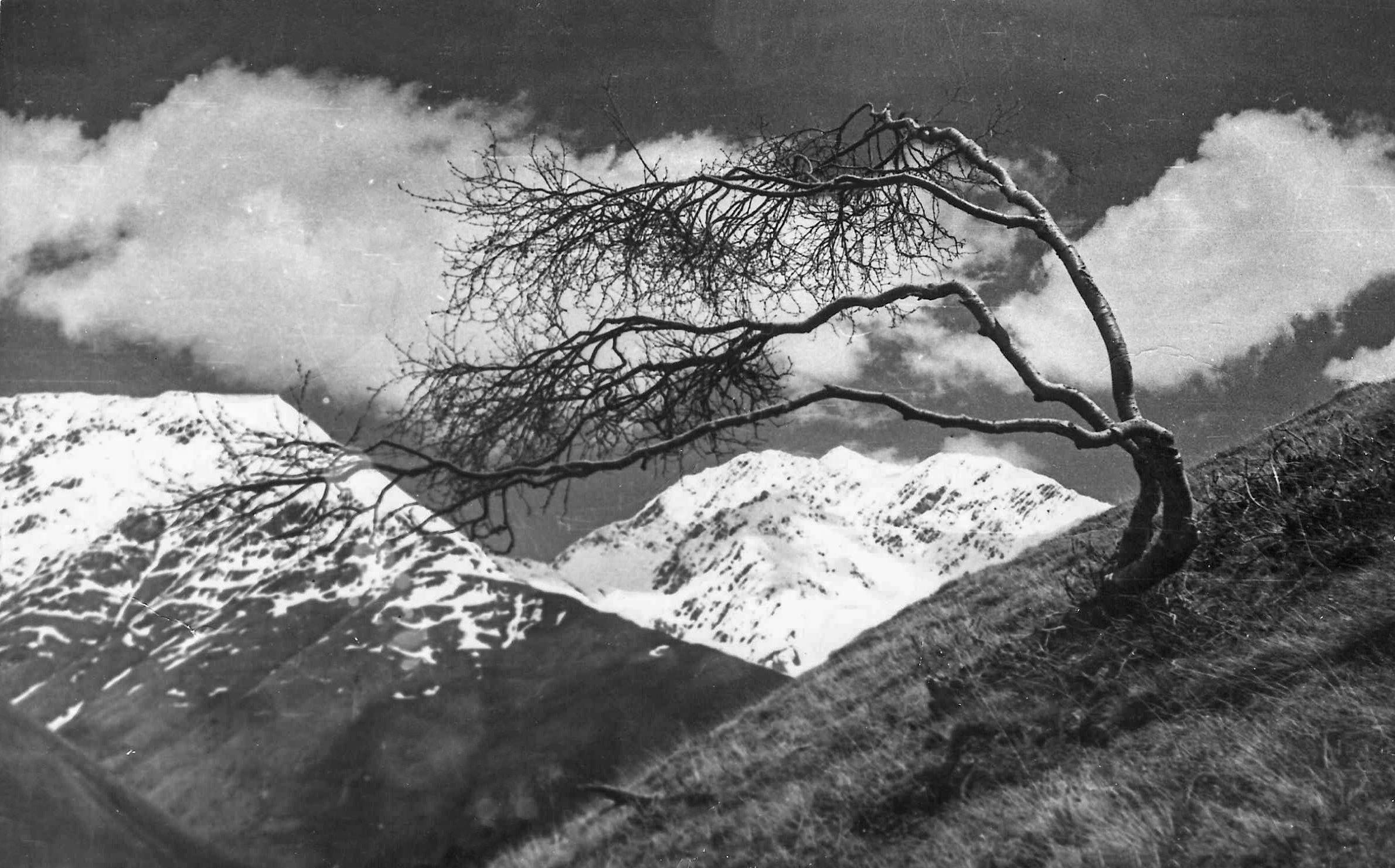
“A Lone Tree,” Juta, photo by Amiran Arabuli.
Tell us about your friendship with Goderdzi Chokheli and Zviad Gamsakhurdia.
Zviad and I were not friends, but we were colleagues at the Institute of Literature — we were separated only by a wall. We took part together in sessions, dissertation defences, and reviews. He was very interested in folklore. When I was defending my candidate’s dissertation, he even spoke.
I met Goderdzi in the student town. He lived in the eighth block, I in the seventh. He would lock himself away for hours, sometimes for days at a time, and write. Then we would find out that he had finished a novel. We spent a great deal of time together.
What role does family play for you? Your work — the expeditions, the trips away — probably didn’t leave much room for spending time with your family. How did you manage to give attention both to your children and to your work?
I cannot say it was an ideal situation. I was inexperienced. Being close to one’s family and being present within it takes years to learn. To acquire that, you have to observe a great deal, take things into account, and avoid making mistakes. I have not made any serious mistake, but there is no such thing as a person without fault. I suppose I follow this path by imitating my parents, through my relationship with them and through the oral teachings that exist in every Georgian family.
The family, after all, serves the proper upbringing of children. The methods that once existed in the mountains for raising children are unique and unrepeatable. We may no longer engage as much with this wisdom and knowledge, but nothing exists without it, even now. Some things take shape spontaneously and freely, in a way that requires no human intervention. The relationship between generations is also a very important thing in our lives.
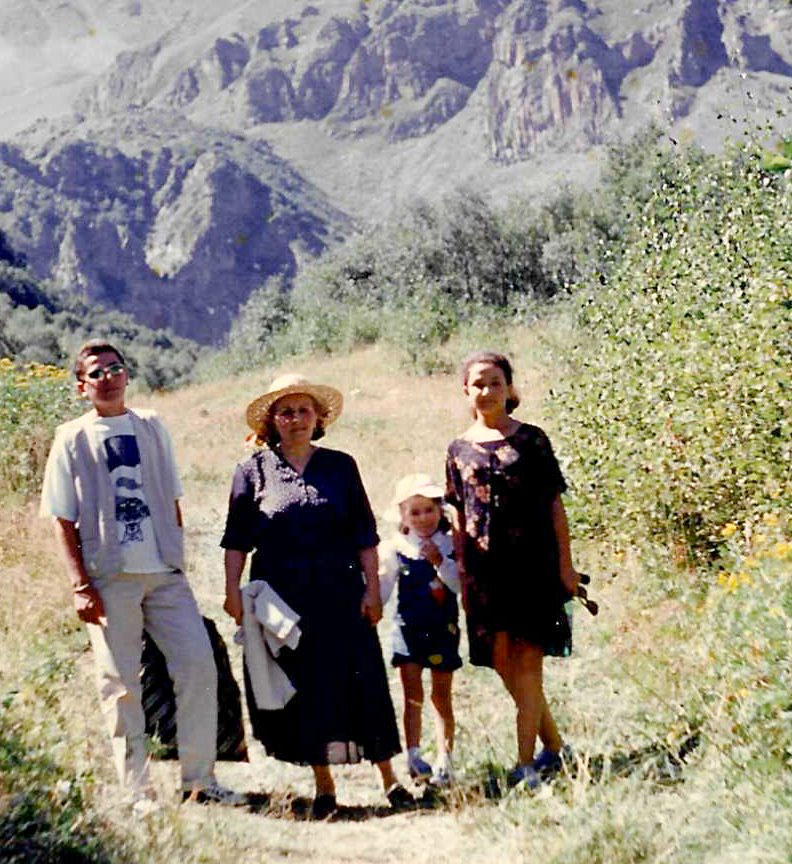
Etero Tatarаidze with her children, Gergeti Trinity Church, photo by Amiran Arabuli.
Etero — what is it like when spouses share the same interests? Did you often have to leave home together, for instance for expeditions? First of all, tell us about Etero and this professional bond within your family.
Perhaps when both spouses are in the same profession, some things are a little harder to overcome; at other times, the opposite is true — sharing the same profession can lighten the burden of the work you are devoted to. In work and in life, Etero has always tried, and still tries today, not to get in my way. She often senses this without a word being said, and I too sense when such moments arise.
We have begun a great many things that we have not yet brought to completion. It seems that thinking all of this through is not so simple. When it comes to making a choice, Etero makes an unerring choice — it is better to do this rather than that; this is more important; that will be lost sooner…
That is why we sometimes have to keep our balance and walk across precarious bridges. All the more so when you are bound to your family, when your children and grandchildren surround you, and you already have to answer to them. You cannot be isolated, you cannot be cut off; both the young and the old need you close to them. You are the link in between, and finding a place for that link is not easy.
So mutual understanding and mutual respect are essential, so that nothing essential and precious in our lives is lost.
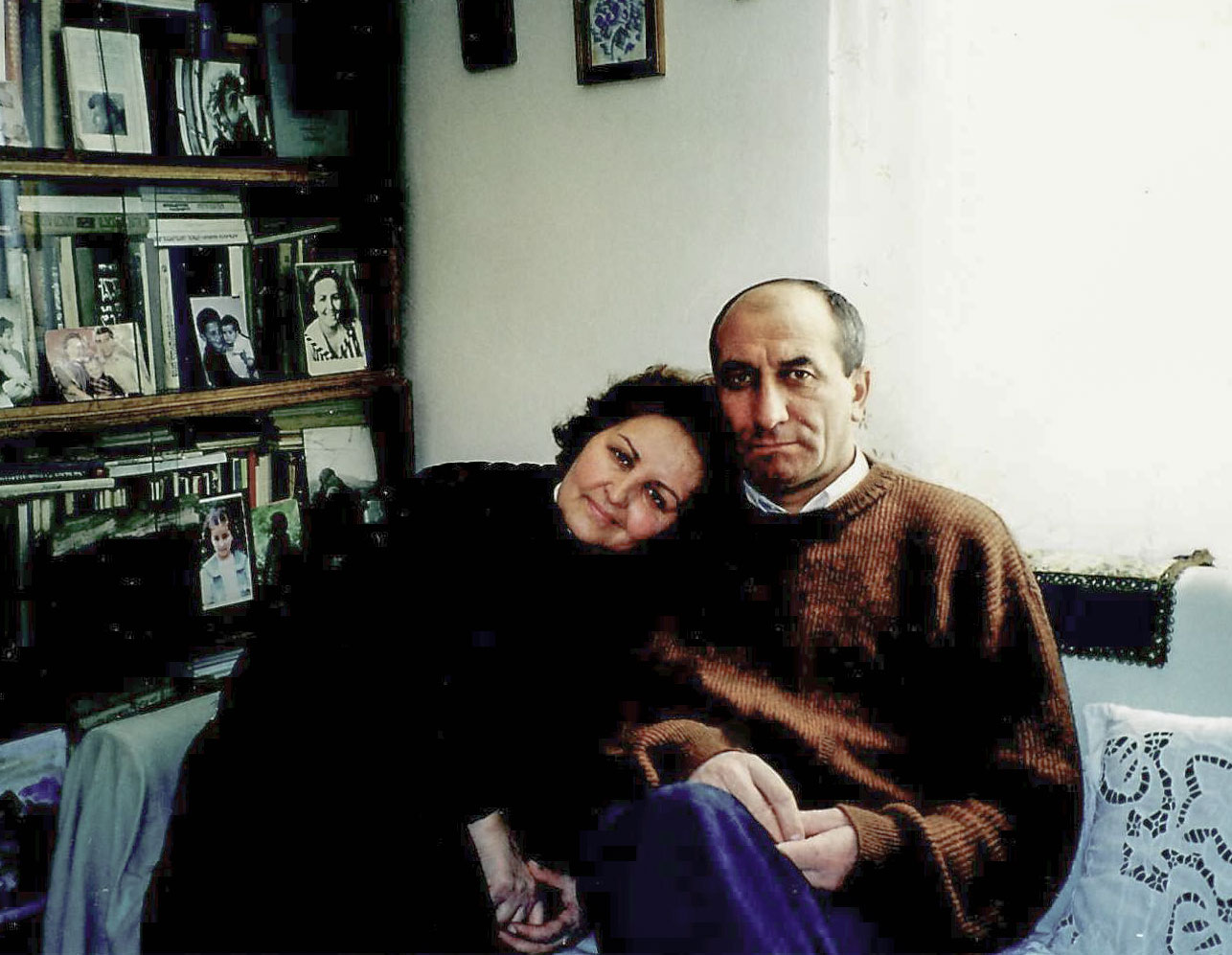
Etero Tatarаidze and Amiran Arabuli.
Looking back on your life now, is there anything that grieves you, that you feel you were unable to achieve, or, on the contrary, anything you consider a victory?
My grief is that I always want to do more, to accomplish more. Some things work out, some do not. I have published two books, “Suluktsevrad Sakitkhavi,” and I tried to tell folk stories the way I understood them, the way I had recorded them from others. As they say, these books have found their own readers.
“Suluktsevari” means books that can be read in one breath, without pausing — that is, works of limited length. I am glad that I managed to accomplish this and get it done.
If the next generation turns out to carry on my writing and my work, they will find a great deal already prepared for a larger story, a novel, or a novella.
I asked Etero the same question, and I’d like your view too — who needs the word most today?
Young people. For an old man, sharing his experience can sometimes bring only a smile. I believe it is young people who need it more, and among them we must pick out those who are especially talented and hard-working.
Hard work determines and shapes a great deal; without it, our work and our labour cannot be complete. So this knowledge, and the passing on of knowledge, must take place between the older and the younger.
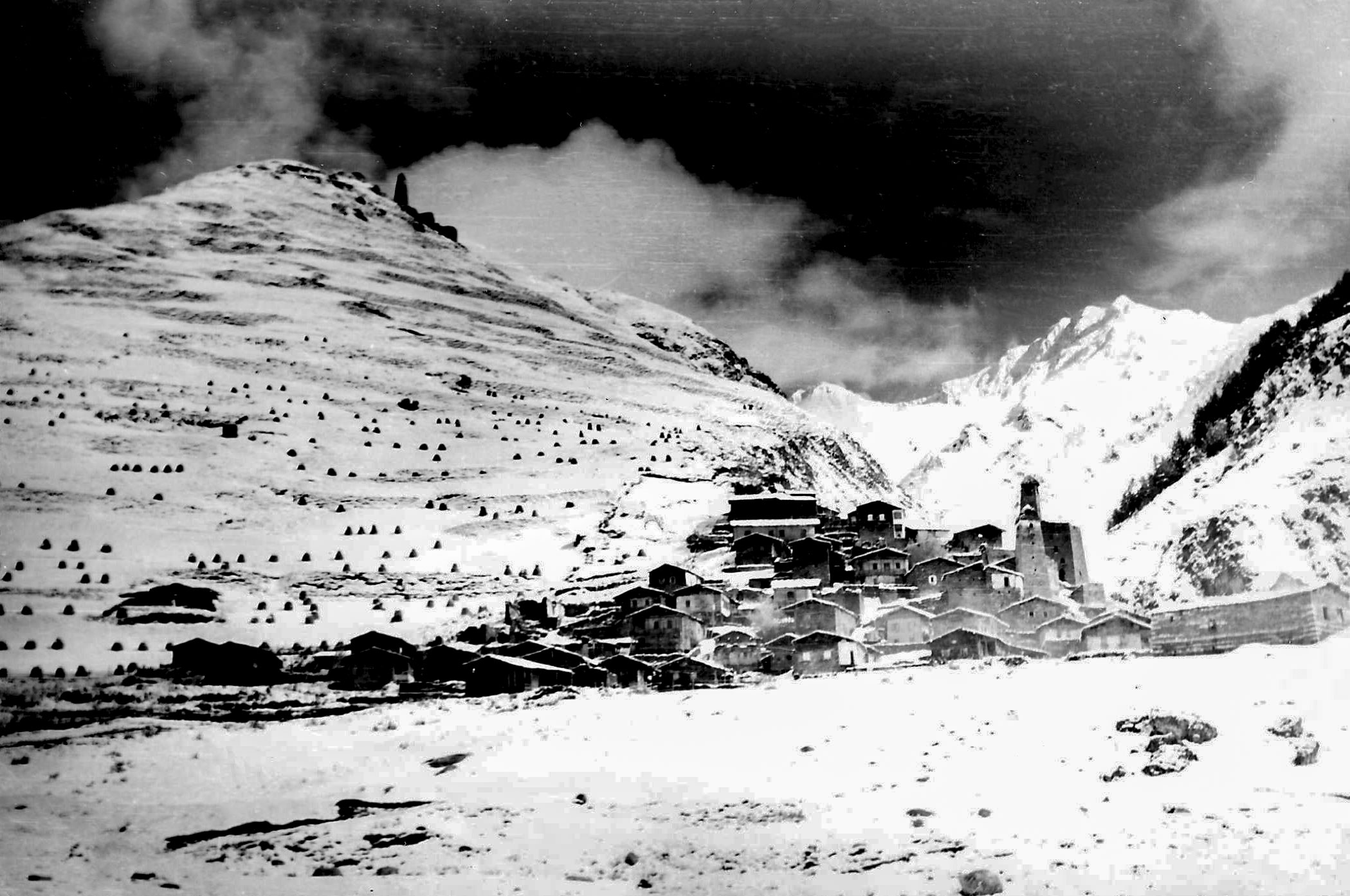
Tusheti, Dartlo and Kvavlo, photo by Amiran Arabuli.
[1] “Tulupi” was the name given to a warm garment sewn from sheepskin.